Farms & farmers tag
45 small farms in Okoluu village
1 page on this site carry this tag — reviews, profiles, answers and stories. Tags are derived from our documented data, never invented.
Nearby tagsArabicablood orangeEast GujiJARC 74110, JARC 74112, and Ethiopian LandracesLightOkoluu smallholders with Sookoo CoffeeSingle originSpecialtystrawberrywildflower
Quick answer — what is 45 small farms in Okoluu village?
The tag '45 small farms in Okoluu village' refers to a specific collective of smallholder coffee producers located in the Dambi Uddo area of Ethiopia's Guji Zone. This designation is significant in specialty coffee because it represents a shift toward granular traceability, allowing roasters to partner directly with local growers to implement rigorous sorting and processing protocols that elevate the quality of the final cup.
The real story
The coffee produced by the small farms in Okoluu village represents a modern evolution in Ethiopian coffee sourcing, where increased regulatory transparency has enabled direct relationships between roasters and individual farming communities. Located within the Dambi Uddo subregion of the Guji Zone, this collective of 45 smallholder farms operates within one of the most prestigious coffee-growing regions in the world. By moving away from anonymous bulk-lot systems, these farmers are now able to showcase the specific terroir and meticulous post-harvest practices that define their village's output.
In practice, the production model relies on a collaborative infrastructure. While the farmers cultivate their own small plots—typically averaging around two hectares—they deliver their hand-picked cherries to a centralized processing facility. This facility, often managed by experienced local partners like Sookoo Coffee, provides the necessary infrastructure for high-level quality control. Upon delivery, the cherries undergo rigorous manual sorting to remove underripe, overripe, or damaged fruit, ensuring that only the highest-quality cherries reach the raised drying beds.
Cultivation in Okoluu remains deeply rooted in traditional, sustainable practices. Most farmers intercrop their coffee trees with other food crops, a method that maximizes land utility and provides essential food security for their families. Because these farms are often organic-by-default, they utilize minimal to no synthetic fertilizers or pesticides. The trees, which include a mix of local landraces and newer JARC-developed varieties, are grown at high altitudes, typically ranging from 2,000 to 2,150 meters above sea level, which contributes to the coffee's characteristic density and complex flavor profile.
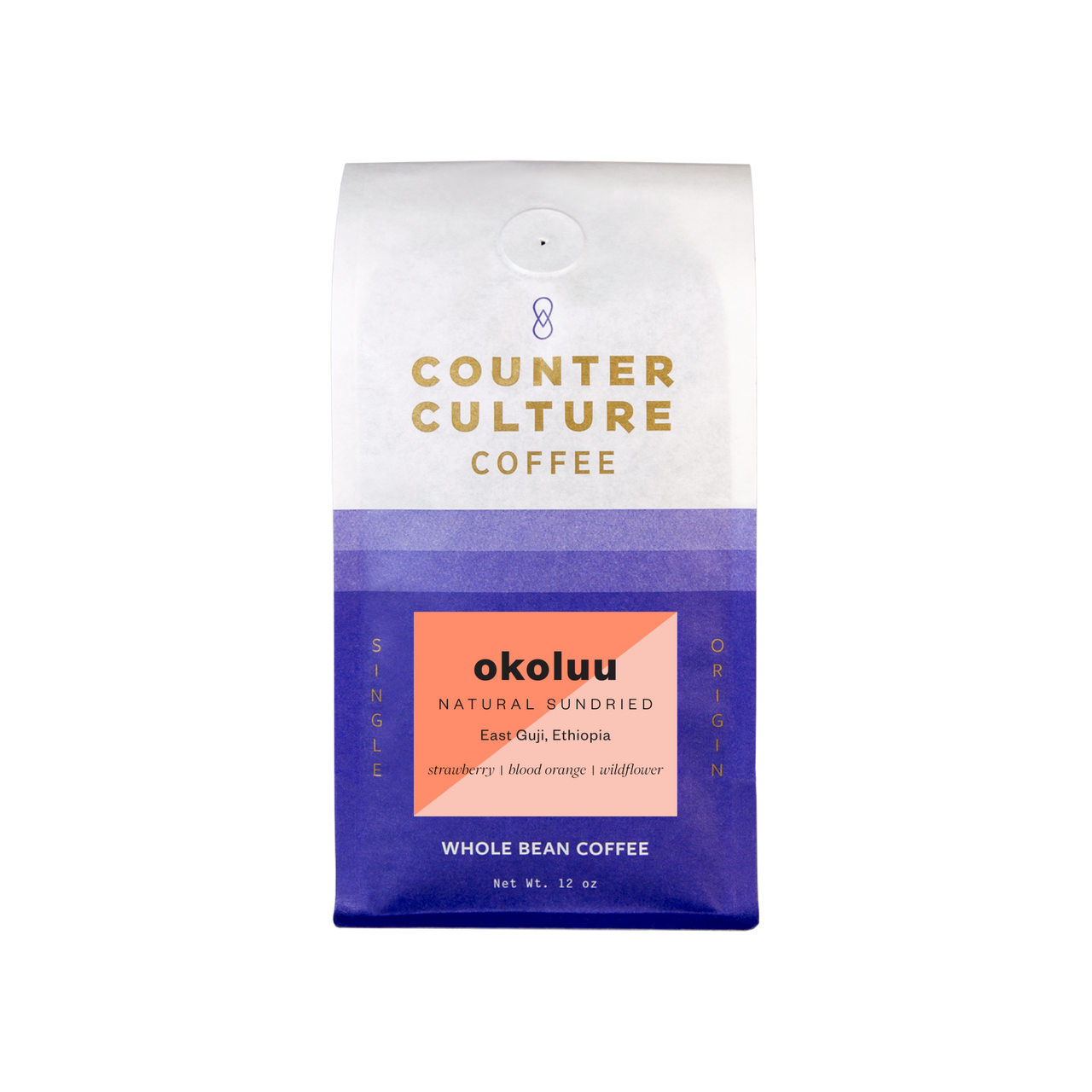
The resulting coffee is widely recognized for its vibrant, expressive character. It is frequently noted for a bright, blood-orange-like acidity, balanced by a juicy strawberry sweetness and an intricate wildflower finish. These flavor attributes are a direct result of the high-altitude environment and the specific natural-sundried processing protocols implemented by the farmers and their processing partners. By focusing on these village-specific lots, the producers are able to command higher value for their labor compared to traditional commodity channels.
For the drinker and the roaster, this tag signifies a commitment to traceability and the empowerment of smallholder farmers. In a region where coffee has historically been difficult to track, the ability to identify the specific group of 45 farms in Okoluu provides a narrative of origin that connects the consumer directly to the producer. This transparency is essential for the specialty coffee industry, as it ensures that the economic benefits of high-quality production are returned to the farmers who manage the land.
Looking forward, the story of Okoluu stands as a testament to the potential of smallholder-led specialty coffee. As farmers increasingly adopt disease-resistant varieties and refine their drying techniques, they are better positioned to navigate the challenges of climate change and market volatility. By maintaining these direct partnerships, the Okoluu farmers are not only preserving the traditional heritage of Ethiopian coffee but are also actively participating in the modernization of the global coffee value chain.
Coffee reviews & profiles
1 page