Who Makes The
BEST COFFEE
Illustrated Andean coffee landscape representing Colombia's Eje Cafetero, not a geographical map
A major feature

THE COFFEE
AXIS

The Coffee Axis and Coffee Triangle commonly mean the same regional heartland. The UNESCO Coffee Cultural Landscape and the wider Paisa cultural region have different boundaries.

Understanding the geography

Three maps people confuse.

Are the Coffee Axis and Coffee Triangle the same?

Usually, yes. Eje Cafetero (Coffee Axis) and Coffee Triangle commonly refer to the traditional heartland of Caldas, Risaralda and Quindío. Some accounts use broader regional boundaries, so the nickname does not verify any farm address or coffee lot.

Which departments are in the UNESCO Coffee Cultural Landscape?

The UNESCO property was inscribed in 2011. It covers designated parts of Caldas, Risaralda, Quindío and Valle del Cauca, not every coffee farm in those departments. This heritage boundary differs from the familiar three-department Coffee Triangle.

Is Antioquia part of the UNESCO Coffee Cultural Landscape?

No. Antioquian settlement strongly influenced the landscape's history and architecture, and Paisa culture extends into the wider region. But Antioquia is not one of the four departments containing the designated UNESCO property.
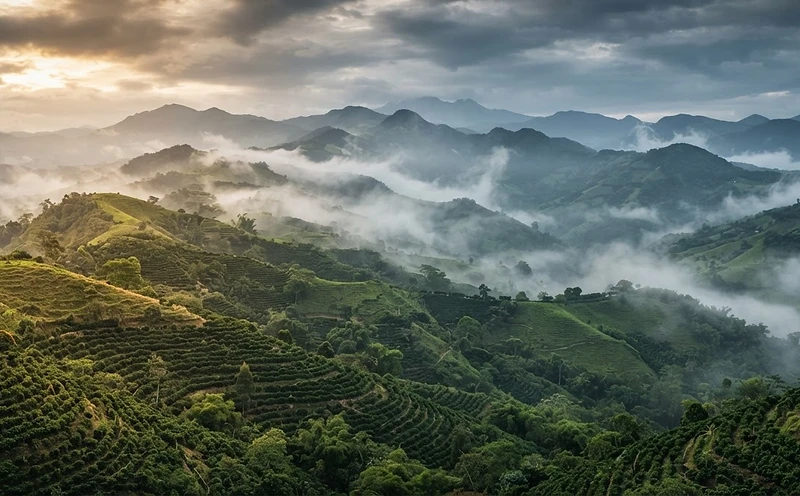
The three-department heartland

The traditional Coffee Triangle.

A department name helps describe the region, but it does not identify a particular producer or establish that a farm lies within the UNESCO World Heritage property.

01

Caldas

One of the traditional Coffee Triangle departments. Only selected areas of this department are included in UNESCO's heritage designation.

02

Risaralda

Home to Pereira, and one of the three Coffee Triangle departments. UNESCO recognition applies to specific areas, not the whole department.

03

Quindío

Home to Armenia and part of the traditional Coffee Triangle. The UNESCO Coffee Cultural Landscape includes designated areas here.

The extra departments: heritage versus history

Valle del Cauca contains designated portions of the UNESCO Coffee Cultural Landscape, alongside Caldas, Risaralda and Quindío. Antioquia helped shape the landscape's history and Paisa cultural identity, but is not one of the four departments in that designation.

This distinction does not verify the origin of any individual coffee, farm or lot. Sources reviewed October 2026:

Explore Colombia