Who Makes The
BEST COFFEE
Coffee Innovation

COFFEE IS
CHANGING FAST.

Fermentation, microorganisms, fruit, yeast, processing and new ideas are changing what coffee can taste like. Here's what is actually happening — explained honestly, sourced carefully, and never dressed up as magic.

Start here
The encyclopedia

Every method, honestly explained.

FRUIT-INFLUENCED PROCESSING
2
THERMAL PROCESSING
1
DRYING INNOVATION
0

Documented entries coming — never padded.

ROASTING INNOVATION
0

Documented entries coming — never padded.

VARIETY INNOVATION
0

Documented entries coming — never padded.

COFFEE SCIENCE
0

Documented entries coming — never padded.

A note on honesty

These terms do not have universally agreed definitions. Producers, exporters and roasters sometimes use the same words to mean different things. Where definitions vary, we say so on every page — and we never state that an ingredient or culture was used unless a producer, farm, roaster or other credible source confirms it.

The most talked-about innovative coffees

The famous lots everyone is arguing about.

Tag: experimental processing →

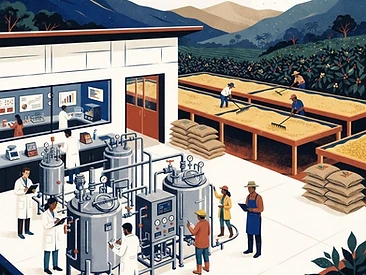
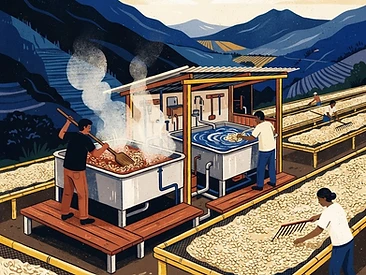
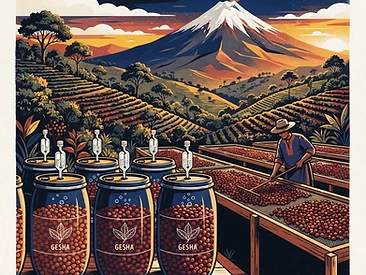
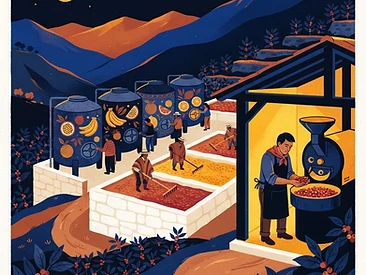
Fruit co-ferments, thermal shock, anaerobic naturals — these are the specific coffees the specialty community talks about, tastes, and argues over. Each entry links to its tag hub for the full method explanation. Artwork illustrates the process; it is not a product photo.

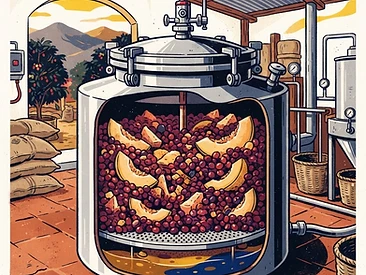
Editorial artwork of coffee cherries fermenting with fresh melon in a sealed tank
Melon co-ferment

Brayan Alvear Melon Co-Ferment

Brayan Alvear · Colombia

A 48-hour anaerobic pre-fermentation with melon added to the fermentation environment, building intense fruit character without the heavy funky notes most wild ferments carry.

What people tasteCandy-forward sweetness, melon, and fruit-forward

A defining example of Colombia's fruit co-ferment boom, noted for tasting like melon candy while staying remarkably clean.

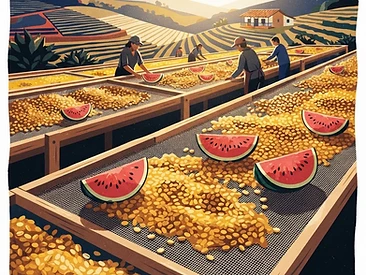
Editorial artwork of honey-process coffee drying with watermelon slices among the beans
Watermelon-infused honey process

El Vergel Watermelon Infused Honey

El Vergel Estate · Colombia

A honey process — mucilage left on the bean through drying — with watermelon introduced during fermentation to imprint its specific fruit character onto the cup.

What people tastePink Gatorade, mojito, citrus mint

One of the most famous 'infused' lots of the trend, with tasting notes so unusual (pink Gatorade, mojito) that they became the lot's signature.

Editorial artwork of controlled bioreactor fermentation tanks on a Colombian farm
Thermal shock washed

Finca El Paraiso Thermal Shock

Diego Samuel Bermudez · Colombia

Fermentation happens in bioreactors where temperature, pH and microbial load are precisely controlled, and the washing phase ends with a thermal shock: a sudden swing between water temperatures that locks in the aroma precursors the process built.

What people tasteTropical fruits, peach, floral, and intense sweetness

Widely considered the benchmark of modern, science-driven processing: clean, intensely aromatic and startlingly consistent from lot to lot.

Editorial artwork of thermal shock washing with alternating warm and cold water
Thermal shock washed

Granja Paraiso 92 Thermal Shock

Wilton Benitez · Colombia

Two rounds of sterilization and two rounds of fermentation, finished with double rinsing in alternating warm and cold water — a laboratory-grade protocol applied to a family farm's lots.

What people tasteFruity, floral, and chocolate notes

Wilton Benitez is a pioneer of precision processing, and his lots are sought after worldwide for their extreme flavor clarity.

Editorial artwork of sealed anaerobic fermentation barrels with Gesha cherries
Anaerobic natural

Hacienda El Obraje Anaerobic Natural Gesha

Pablo Andrés Guerrero · Colombia

The coffee is fermented in an oxygen-free (anaerobic) environment, which alters the microbial activity during the drying process of the natural-processed cherries.

What people tasteGrape, strawberry

It is a highly regarded lot that demonstrates how anaerobic processing can elevate the already complex profile of the Gesha variety.

Editorial artwork of two-stage anaerobic and thermal shock processing
Anaerobic thermal shock washed

Las Flores Anaerobic Thermal Shock Washed

Jhoan Vergara (Las Flores) · Colombia

Anaerobic fermentation stacked with a thermal shock washing step — a multi-stage protocol designed to hit extremely specific, vibrant flavor targets.

What people tasteYellow Starburst, mimosa

The famous face of the 'hybrid' processing trend, where advanced techniques are layered to chase extreme clarity and intensity.

Editorial artwork of a high-altitude farm processing station with sealed fermentation tanks
Thermal shock

Los Nogales Thermal Shock

Los Nogales · Colombia

Controlled temperature variations during post-harvest processing steer the development of flavor compounds, coaxing exotic tropical notes out of high-altitude Colombian coffee.

What people tasteHibiscus, grilled pineapple, floral

Frequently cited as a prime example of thermal shock processing pulling hibiscus and grilled pineapple notes from the cup.

Editorial artwork of SL-28 cherries washed with alternating hot and cold water
Thermal shock washed

Quebraditas SL-28 Thermal Shock

Edinson (Quebraditas) · Colombia

Thermal shock washing applied to SL-28, a variety traditionally processed as a natural — a deliberate trial to maximize aromatics and acidity while keeping the variety's sweetness.

What people tasteHigh acidity, natural sweetness, clean aromatics

A talked-about case of modern processing meeting a classic variety, showing how protocol choices reshape even well-known genetics.

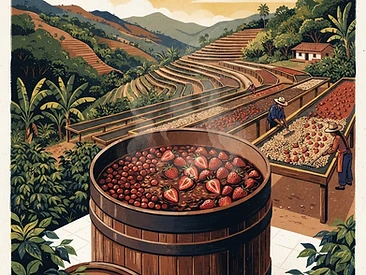
Editorial artwork of coffee cherries co-fermenting with fresh strawberries
Anaerobic strawberry co-fermentation

Strawberry Cheesecake Co-Ferment

Jairo Arcila (Finca Santa Monica) and Sebastian Ramirez (Finca El Placer) · Colombia

Real fruit (dehydrated or fresh strawberries) and wine yeast are added directly into the fermentation tank with the coffee cherries, and some lots are dried with strawberries laid on the beds beside the coffee. The result tastes unmistakably like strawberry cheesecake, without artificial flavorings.

What people tasteStrawberry, strawberry jam, milk chocolate, cream, and sweet candy-like notes

It became the poster child of dessert-style co-ferments: an intense, candy-like profile that challenged what coffee is supposed to taste like, sold by roasters around the world.

Explore innovation by tag

Every tag is a doorway.

Browse the full tag directory →