
🇲🇽Mexico
1 page on this site carry this tag — reviews, profiles, answers and stories. Tags are derived from our documented data, never invented.
In coffee, 'sugar' is a tasting note describing a perceived sweetness that is paradoxically not derived from the presence of actual sugars. While green coffee contains sucrose, roasting degrades over 99% of these compounds, meaning the sensation of sweetness is a complex sensory illusion influenced by volatile aromatics, Maillard reaction products, and the interplay of acidity and body.
The perception of sweetness in coffee remains one of the most significant mysteries in sensory science. For decades, industry literature—most notably Ted Lingle’s 1984 Coffee Cupper’s Handbook—posited that sweetness was a direct result of caramelized sugars and amino acid complexes. However, modern chemical analysis has revealed that the concentration of residual sugars in a roasted bean is far below the human sensory threshold for sweetness, effectively debunking the idea that we are tasting literal sugar in the cup.
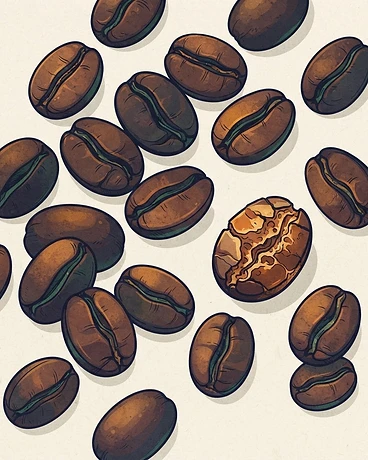
Green coffee beans are rich in sucrose, often comprising up to 9% of their dry weight. During the roasting process, however, these sugars are subjected to intense heat, triggering caramelization and the Maillard reaction. These processes are essential for developing the coffee's color, body, and complex flavor profile, but they also consume nearly all the simple sugars present in the raw bean. By the time a roast is complete, more than 99% of the original sugars have been degraded or transformed into other compounds.
If the sugars are gone, why does coffee taste sweet? Current research suggests that the sensation is a multisensory experience rather than a simple taste. The Maillard reaction creates a vast array of melanoidins and volatile aroma compounds that interact with our olfactory system. When we perceive 'sugar' or 'sweetness' in a cup, we are likely experiencing a cognitive association triggered by these aromatics, which the brain interprets as sweet, often in tandem with the coffee's body and the absence of harsh, astringent, or 'green' notes.
Terroir and processing play a critical role in setting the stage for this perception. The ripeness of the coffee cherry at harvest is a primary determinant, as it dictates the initial chemical composition of the bean. Processing methods, such as natural or honey processing, can influence the development of precursors that later contribute to the aromatic complexity of the roasted product. These factors do not necessarily add more sugar, but they do provide the chemical building blocks that allow for a more 'sweet-perceived' final profile.
Roasting technique is equally vital. A shorter Maillard duration can preserve specific acids and volatile compounds that enhance the perception of sweetness and acidity. Roasters manipulate the roast curve to balance these reactions, aiming to maximize the development of desirable aromatics while minimizing the formation of bitter or acrid compounds that would otherwise mask the perceived sweetness. This is why a light-to-medium roast often highlights 'sweet' notes more effectively than a dark roast, where the intense breakdown of compounds can lead to a more carbonized, bitter profile.
Today, the Specialty Coffee Association and the Coffee Science Foundation are actively investigating this phenomenon through collaborative research with institutions like The Ohio State University. By moving away from the outdated assumption that sugar equals sweetness, the industry is beginning to map the specific volatile compounds that drive this sensory experience. This shift is essential for the Coffee Value Assessment System, as it allows farmers, roasters, and tasters to better understand and communicate the quality of high-end coffees based on actual sensory science rather than historical misconceptions.