Farms & farmers tag
Various small producers through the Hunapu project
1 page on this site carry this tag — reviews, profiles, answers and stories. Tags are derived from our documented data, never invented.
Quick answer — what is Various small producers through the Hunapu project?
The Hunapu project is a collaborative initiative in Guatemala’s Antigua region that aggregates high-quality coffee from smallholder farmers who lack the scale to process or market their crops independently. By centralizing processing at the Bella Vista mill, the project ensures these small producers receive better market access and fair prices while maintaining the distinct, volcanic-soil profile of the Antigua highlands.
The real story
The Hunapu project is a specialized sourcing and processing program centered in the Antigua region of Guatemala, designed to bridge the gap between small-scale coffee farmers and the specialty coffee market. The name 'Hunapu' is the indigenous K’iche term for the Volcán de Agua, the towering peak that dominates the landscape of the Antigua highlands. This name was chosen by Luis Pedro Zelaya, a prominent producer and owner of the Bella Vista mill, to honor the sacred geography where these smallholder families cultivate their coffee.
In practice, the Hunapu project functions as an aggregator for farmers who typically own small plots ranging from one to five acres. These producers often face significant barriers to entry in the specialty market, including a lack of infrastructure for processing cherry into parchment and limited access to international buyers. By partnering with the Bella Vista mill, these farmers can deliver their harvest to a centralized facility where the coffee is processed with the same rigorous standards applied to larger, estate-grown lots.
Processing at Bella Vista is a defining feature of the Hunapu project. The mill focuses on selecting only the ripest red Bourbon cherries, which are then fermented, washed, and dried under controlled conditions. Because individual smallholders may only produce a few bags of green coffee per year, the project creates 'day lots'—batches of coffee harvested and processed on the same day—which are then combined to form a consistent, high-quality final product. This method allows for the creation of complex, nuanced profiles that reflect the volcanic terroir of the region.
Beyond simple logistics, the project serves as a vital economic support system. Luis Pedro Zelaya works directly with these producers to improve their agricultural practices, providing guidance on farm management and facilitating access to necessary inputs like fertilizer. By purchasing cherry at competitive prices, the project ensures that smallholders are incentivized to maintain high quality, which in turn allows them to sustain their livelihoods in an industry often characterized by volatile market prices.
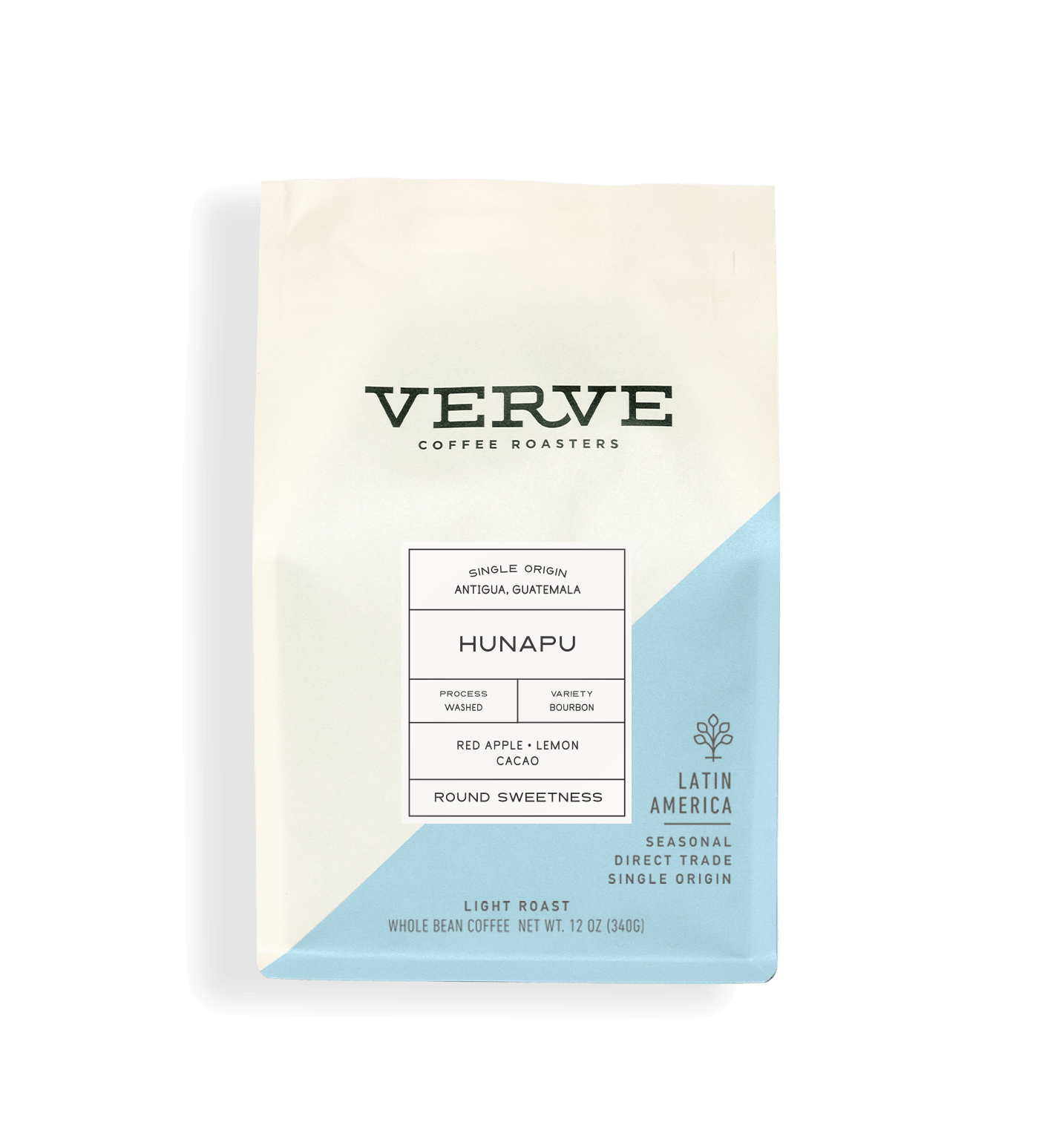
For the roaster and the consumer, Hunapu represents a reliable, high-quality expression of Antigua coffee. The cup profile is frequently noted for its balanced, sweet, and chocolate-forward characteristics, often featuring notes of dark chocolate, fruit punch, orange zest, and a honeycomb finish. Because the project aggregates coffee from multiple small farms on the slopes of the Volcán de Agua and the nearby Acatenango volcano, the resulting lots offer a complexity that is difficult for a single small farm to achieve on its own.
This model of collaboration is essential to the structure of Guatemala’s coffee sector, where smallholders account for the vast majority of producers. By providing a pathway for these farmers to reach the specialty market, the Hunapu project preserves the heritage of small-scale farming in Antigua while ensuring that the coffee produced meets the exacting standards of modern specialty roasters. It stands as a documented example of how infrastructure and market access can be leveraged to support the long-term viability of smallholder coffee production.
Sources behind this explanation
Coffee reviews & profiles
1 page