🇨🇷Costa Rica
Costa Rica · Tarrazú
Costa Rica Tarrazú
Atomic Coffee Roasters
Smallholder farms in the region's northwestern corridor
· Washed
Read the review →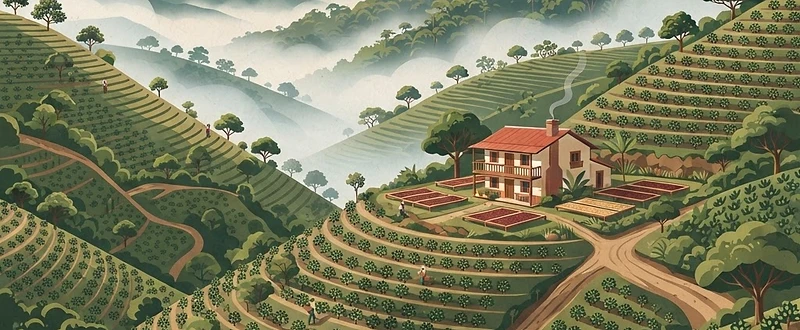
Smallholder farms in the Tarrazú region are often organized into large cooperatives, such as CoopeTarrazú, which was established in 1960. These farms are typically family-run operations, with many producers managing small plots of land often measuring two hectares or less. The region has a long-standing tradition of coffee cultivation, with some local mills dating back to the late 19th century.
Smallholder farmers in the region face significant economic pressures, including coffee price crises that threaten the viability of family businesses. Additionally, varieties like Catuai are noted for their high susceptibility to coffee leaf rust.
Innovations in the region include the use of composted coffee pulp as fertilizer and the implementation of large-scale nursery and agronomy training programs provided by cooperatives. Some operations have also adopted specialized processing techniques like the honey process to enhance cup quality.
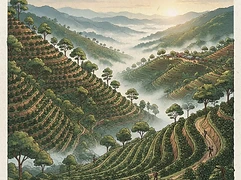
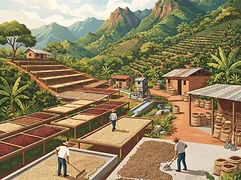
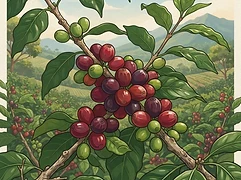
Editorial illustrations of the land, processing and harvest our research documented.