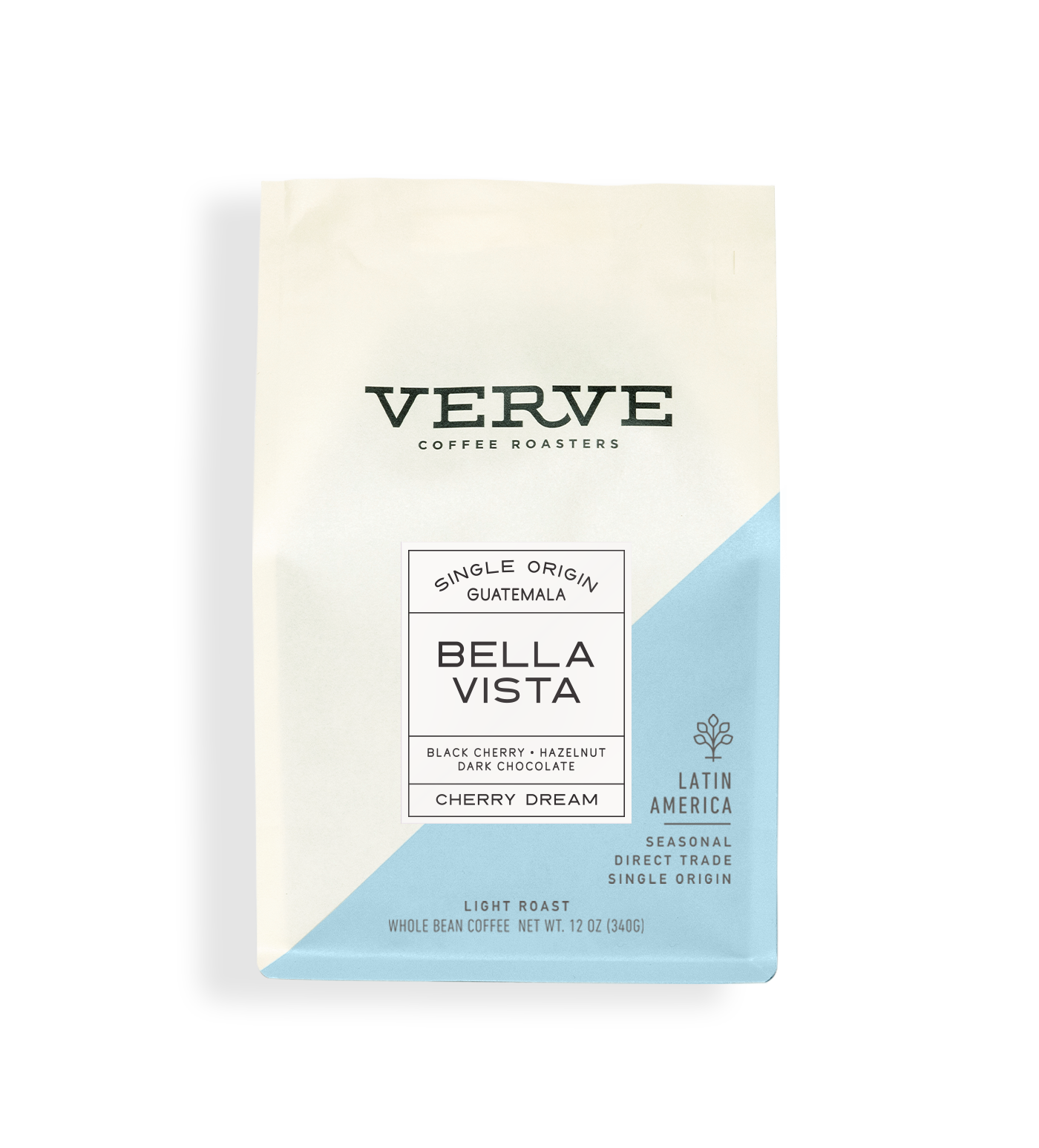
Varieties tag
Caturra and Bourbon
1 page on this site carry this tag — reviews, profiles, answers and stories. Tags are derived from our documented data, never invented.
Nearby tagsArabicaBella Vista Mill (dry milling and export)black cherryBlenddark chocolatehazelnutHuehuetenangoLightSpecialtyVarious smallholding producers in Huehuetenango
Quick answer — what is Caturra and Bourbon?
Caturra is a natural dwarf mutation of the Bourbon variety, discovered in Brazil in the early 20th century. Its compact stature allows for higher planting densities and easier harvesting, making it a foundational cultivar for commercial coffee production across Latin America. While it retains much of Bourbon's celebrated sweetness and acidity, its high susceptibility to coffee leaf rust has significantly influenced modern breeding programs and farm management strategies.
The real story
Caturra is a single-gene mutation of the Bourbon variety, a discovery that fundamentally altered the economics of coffee farming. While the parent Bourbon variety is a tall, traditional shrub, Caturra exhibits a compact, dwarf growth habit. This mutation, which shortens the internodes between branches, allows farmers to plant trees at much higher densities than traditional varieties. By increasing the number of trees per hectare, producers can achieve higher yields without the need for complex machinery, effectively turning the plant into a workhorse for the Latin American coffee industry.
The variety was first identified in the state of Minas Gerais, Brazil, with reports of its discovery dating between 1915 and 1937. Following its identification, the Instituto Agronômico (IAC) in Brazil played a key role in its development and eventual commercial distribution. Because it is a natural mutation rather than a cross-bred hybrid, Caturra maintains a close genetic relationship to the Bourbon-Typica group, inheriting much of the cup quality associated with its ancestor.
In the field, Caturra is prized for its manageable size and high yield potential, particularly when provided with adequate fertilization. It thrives at altitudes between 1,200 and 1,900 meters, where it produces medium-sized beans. However, the plant's primary weakness is its extreme susceptibility to coffee leaf rust (Hemileia vastatrix). This vulnerability became a critical issue during the 2012 rust crisis, which devastated plantations across Central America and forced many producers to pivot toward more resistant cultivars like Castillo, Marsellesa, and Parainema.
For the drinker, Caturra is often described as a balanced cup that retains the characteristic sweetness of Bourbon while offering a brighter, more pronounced acidity and a lighter body. Because it is a mutation of Bourbon, it shares a similar flavor profile, though the specific expression can vary significantly based on the terroir and processing methods employed. It remains a benchmark for quality in many regions, serving as a standard against which newer, disease-resistant varieties are often measured.
Beyond its role as a standalone variety, Caturra has served as a vital parent for many of the most important commercial hybrids in existence today. Its compact genes were utilized to create Catuaí, a cross between Mundo Novo and Caturra, as well as Catimor, a cross between Caturra and the Timor Hybrid. These crosses were specifically engineered to combine the high-quality cup profile of Caturra with the disease resistance of other species, demonstrating the variety's enduring importance in agricultural science.
Today, the story of Caturra is one of transition. While it remains widely grown in countries like Colombia, Costa Rica, Nicaragua, Peru, and Guatemala, the ongoing threat of climate-driven disease has led to a decline in its dominance. Producers now carefully weigh the economic benefits of Caturra’s high yield and cup quality against the significant costs of managing its susceptibility to pests and pathogens. It stands as a testament to the delicate balance between agricultural productivity and the pursuit of flavor in the specialty coffee sector.
Coffee reviews & profiles
1 page