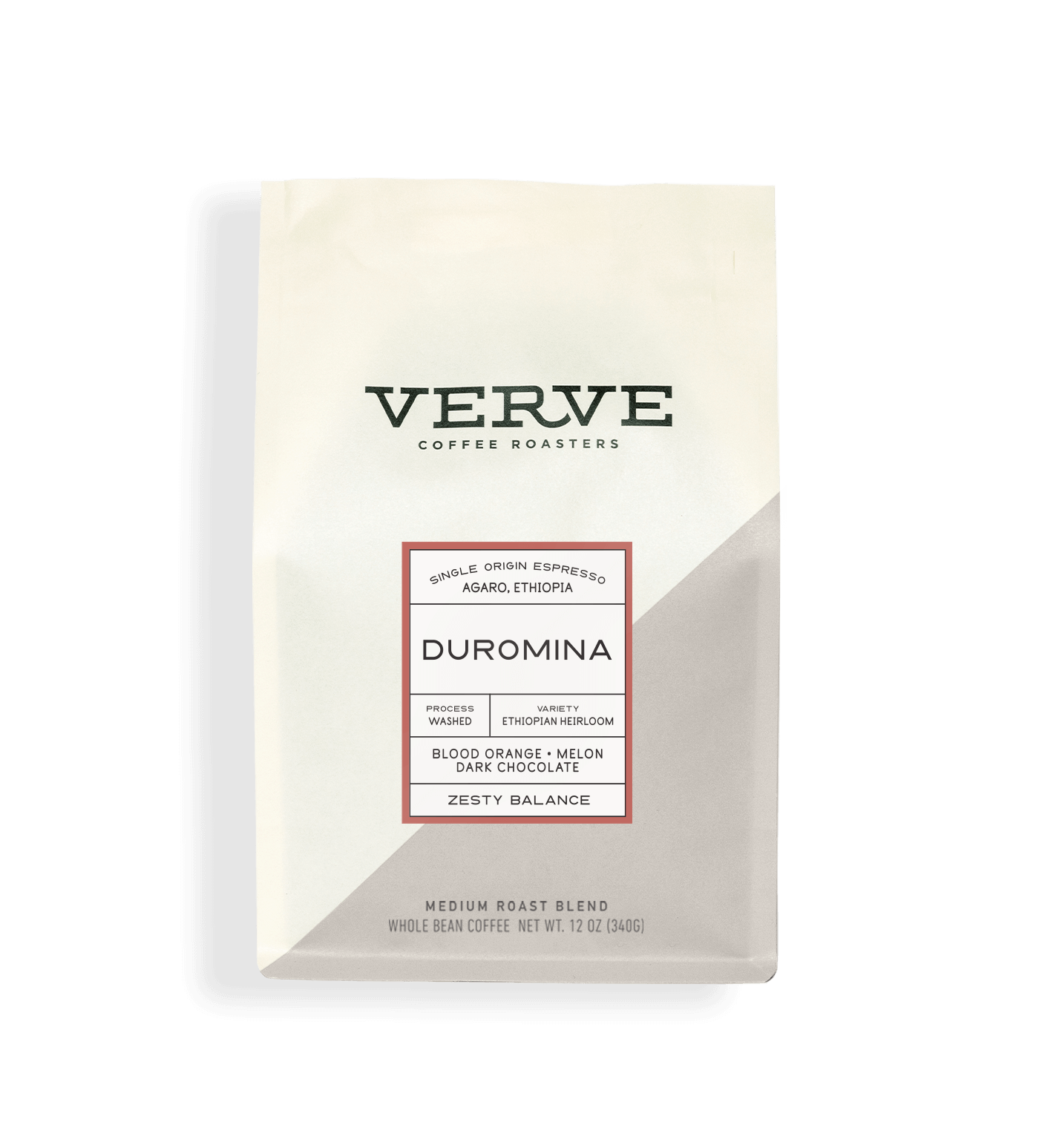
Origins tag
Jimma Zone, Oromia
1 page on this site carry this tag — reviews, profiles, answers and stories. Tags are derived from our documented data, never invented.
Nearby tagsArabicaBlood orangeDark chocolateDuromina CooperativeEthiopian HeirloomMediumMelonProducers of the Duromina CooperativeSingle originSpecialty
Quick answer — what is Jimma Zone, Oromia?
Jimma Zone, located in Ethiopia's Oromia Region, is a foundational coffee-producing area deeply tied to the historical origins of Coffea arabica. As one of the country's largest producers, it is renowned for its diverse genetic plant material and varied cup profiles, ranging from classic washed coffees to distinct, winy natural-processed lots.
The real story
The Jimma Zone in southwestern Ethiopia is widely considered the spiritual and historical heart of the coffee world. Situated within the Kaffa highlands, this region is home to the wild Coffea arabica forests from which the species originated. The city of Jimma itself serves as the administrative and cultural hub of this landscape, historically acting as the seat of the Kingdom of Jimma, a prosperous state that built its wealth on the control of regional coffee trade routes during the 18th and 19th centuries. Today, the region remains a cornerstone of the global coffee industry, contributing significantly to Ethiopia's total export volume.
Coffee production in Jimma is primarily driven by smallholder farmers who utilize traditional agricultural systems. These systems often involve shaded garden or semi-forest cultivation, where coffee trees grow alongside native vegetation and other food crops. This biodiversity is a hallmark of the region, allowing for the preservation of a vast array of indigenous coffee varieties. Because the region is so large and ecologically diverse, there is no single 'Jimma' flavor profile; instead, the zone produces a spectrum of characteristics that reflect the specific microclimates of districts like Gera, Gomma, and Limu Kosa.
Within the broader Jimma Zone, specific areas have gained international recognition for their unique cup quality. Limmu, for instance, is a major coffee-producing woreda known for producing beans that fetch premium prices on the global market, often characterized by a distinct, winy acidity. The Jimma Agricultural Research Center plays a critical role in this ecosystem, actively collecting and studying local coffee accessions to improve both yield and quality, ensuring that the region's genetic diversity is leveraged for sustainable production.
Despite its historical significance and favorable climate, the region faces ongoing challenges regarding post-harvest processing. While the potential for high-quality coffee is immense, traditional practices have historically led to inconsistencies in the final product. Efforts by local agricultural offices and research institutions are currently focused on modernizing these techniques, emphasizing better drying and sorting methods to ensure that the inherent quality of the beans is preserved from the farm to the roaster.
For the consumer, Jimma coffee offers a versatile experience. Washed lots from the region are frequently prized for their clarity, often exhibiting notes of citrus, jasmine, and black tea, making them excellent for filter brewing. Conversely, natural-processed coffees from the area are celebrated for their fuller body and complex fruit notes, such as berries and stone fruit, which perform exceptionally well in espresso applications. These beans are also deeply integrated into local culture, where they are traditionally roasted and brewed in a jebena as part of daily life.
Ultimately, the story of Jimma is one of continuity. It is a place where the ancient, wild origins of coffee meet the modern demands of the specialty market. As the industry continues to prioritize traceability and genetic preservation, Jimma remains a vital subject of study and a primary source for high-quality Arabica. For the roaster and the drinker, it represents a direct link to the very beginning of the coffee story, offering a depth of character that is as much a product of its ancient forests as it is of the generations of farmers who have stewarded them.
Sources behind this explanation
- https://www.sciencepublishinggroup.com/article/10.11648/j.jps.20241201.11
- http://www.world66.ai/africa/ethiopia/jimma
- https://www.tasteatlas.com/jimma
- https://repository.ju.edu.et/handle/123456789/9086
- https://cgspace.cgiar.org/items/fc488dbc-aa02-43e4-9fe3-cbac497c1eb6
- https://en.wikipedia.org/wiki/Jimma_Zone
Coffee reviews & profiles
1 page