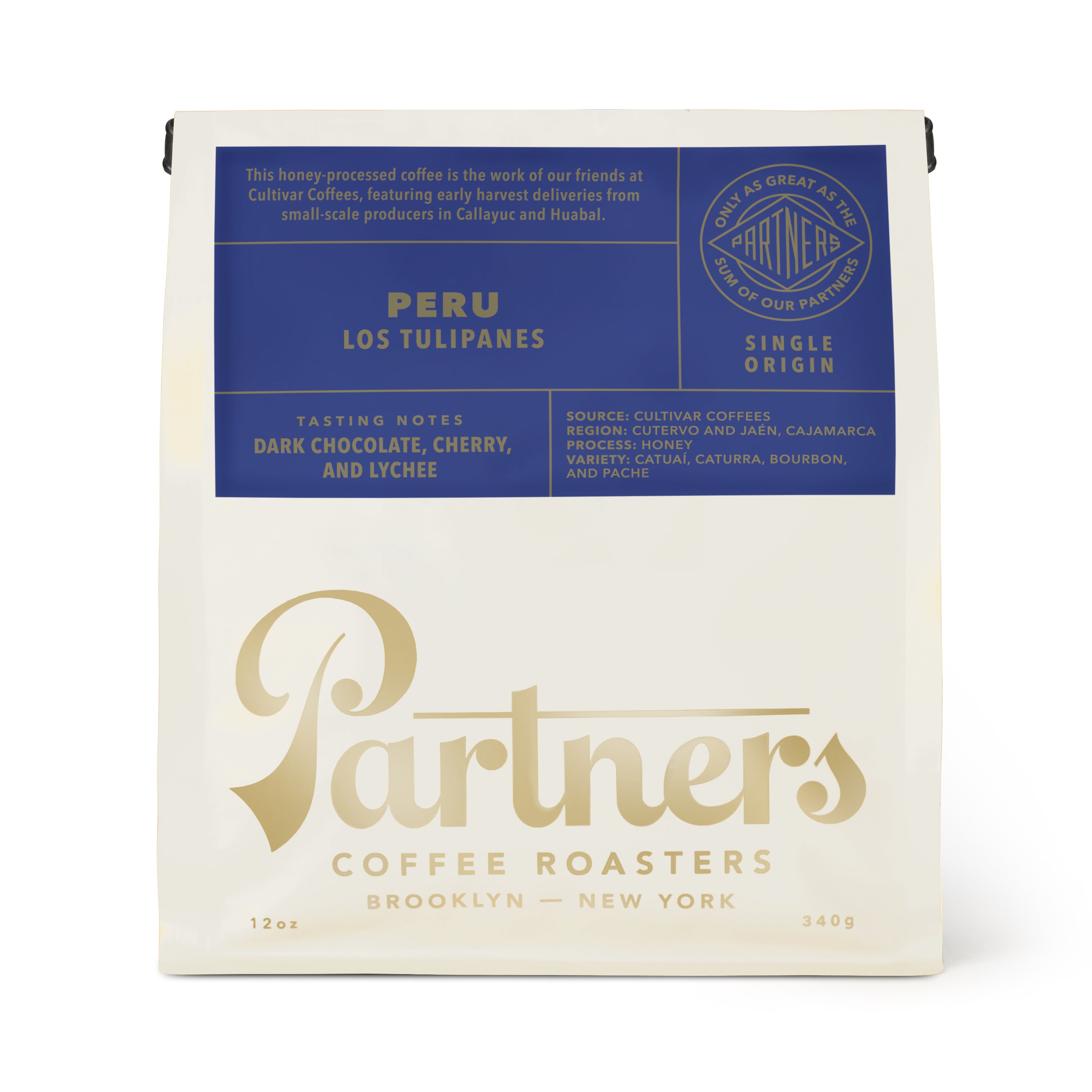
🇵🇪Peru
Peru
Peru - Los Tulipanes
Small-scale growers in Callayuc and Huabal; processed by Cultivar Coffees
Partners Coffee
Two-community blend; individual farm names are not published.
· Honey
Explore the profile →1 page on this site carry this tag — reviews, profiles, answers and stories. Tags are derived from our documented data, never invented.
Bourbon, Caturra, Catuaí, and Pache represent a foundational lineage of Arabica coffee, tracing back to the Bourbon mutation. These varieties are essential to global coffee production because they balance cup quality with specific agronomic traits like dwarfism, high yield, and adaptability, which have allowed them to dominate coffee farming across Latin America for decades.
The story of these varieties begins with the Bourbon cultivar, which originated from coffee plants taken from Ethiopia to Yemen and later to the island of Bourbon (now Réunion). Bourbon is one of the most genetically significant Arabica varieties, serving as the parent for numerous descendants. It is prized for its complex sweetness, often exhibiting notes of brown sugar, cherry, and peach, though it is known for being less productive and more susceptible to disease than modern hybrids.
Caturra emerged in Brazil during the early 20th century as a natural mutation of Bourbon. This variety is characterized by its dwarf stature, caused by shorter internodes, which allows for higher planting density and increased productivity. While it retains the bright, sweet profile of its Bourbon parent, its compact size made it a revolutionary choice for farmers seeking to maximize yields on smaller plots of land. Like Bourbon, however, Caturra is highly susceptible to coffee leaf rust.
Catuaí was developed by the Instituto Agronômico (IAC) in Brazil in 1949 as a deliberate cross between the highly productive Mundo Novo and the compact Caturra. The name, derived from the Tupi-Guarani language, means 'very good.' Catuaí is a semi-dwarf variety that combines the high-yielding potential of its parents with a robust structure. It is widely cultivated across Central America, particularly in Honduras, and is known for a cup profile often described as having pastry-like sweetness and nutty undertones.
Pache is another significant member of this lineage, specifically the Pache Comum, which is a mutation of Typica. While often grouped in discussions of Bourbon-related cultivars, it represents the diversity of natural mutations that have been selected for specific regional performance. Varieties like Pache demonstrate how coffee plants have historically adapted to local microclimates through natural genetic shifts, providing farmers with options that suit specific altitudes and soil conditions.
In the field, these varieties are defined by their trade-offs. The dwarfism of Caturra and Catuaí allows for easier harvesting and higher density, but these plants often require intensive management and are highly vulnerable to pests and diseases like coffee leaf rust. Producers choose these varieties because they offer a reliable, well-understood baseline for quality and production, even if they lack the inherent disease resistance found in newer, lab-developed hybrids.
For the roaster and the drinker, these varieties provide a consistent, recognizable flavor profile. Bourbon and its direct mutations are the standard-bearers for what many consider 'classic' specialty coffee—balanced, sweet, and approachable. While newer varieties are constantly being introduced, the ubiquity of Bourbon, Caturra, and Catuaí ensures they remain the backbone of the global coffee supply chain, bridging the gap between traditional quality and modern agricultural efficiency.