Who Makes The
BEST COFFEE
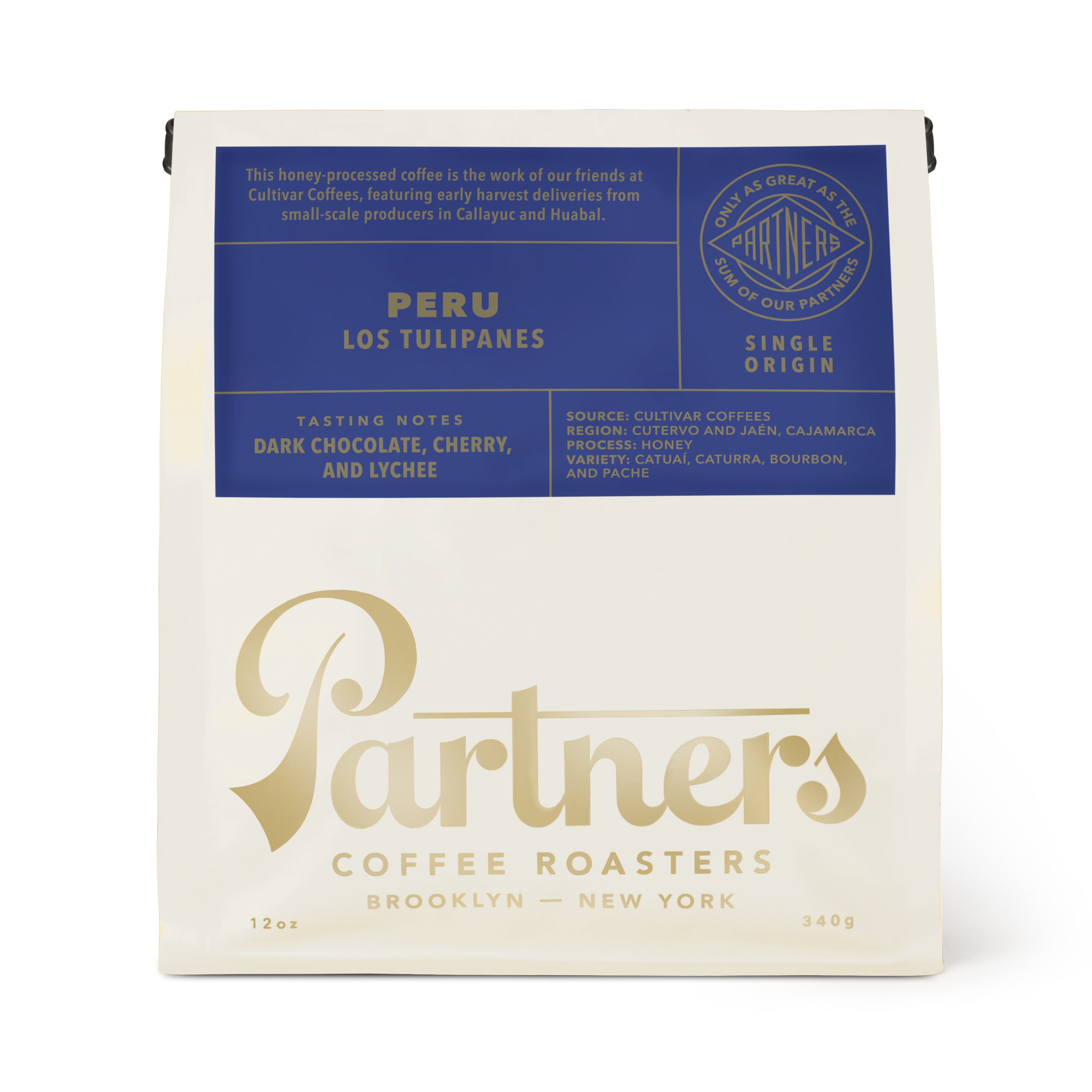
Peru - Los Tulipanes — supplied coffee image 1
Peru - Los Tulipanes — supplied coffee image 2
Peru - Los Tulipanes — supplied coffee image 3
Peru - Los Tulipanes — supplied coffee image 4
Blend: PeruMedium roast
Roaster website
Countries
Peru
Regions
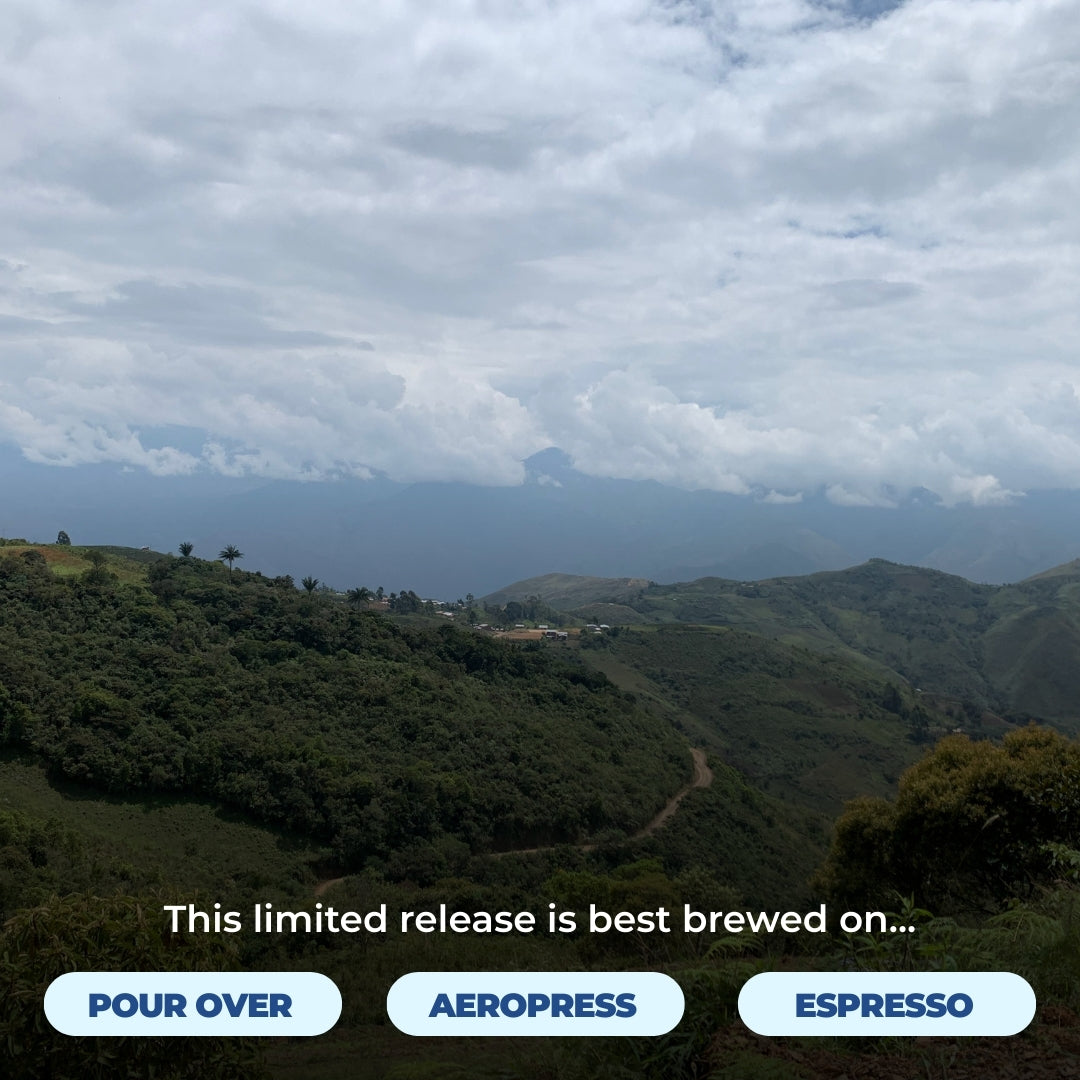
Callayuc, Cutervo, Cajamarca · Huabal, Jaén, Cajamarca
Town
Cajamarca
Farm / Station
Varies by component — see below
Farmer / Producer
Multiple contributors — see blend components
Species
Arabica
Type
Blend
Grade
Not specified
Varieties
Catuaí, Caturra, Bourbon, Pache
Process
See individual components
Roast
Medium
Tasting notes
Dark chocolate, Bing cherry, Tangerine, Strawberry, Lychee, Rose
Fermentation
Callayuc: 24 hours sealed in whole cherry, depulped, 48 hours sealed with mucilage, then 72 hours in a two-inch layer with more air. Huabal: 24 hours sealed in whole cherry, depulped, 60 hours sealed with mucilage, then 96 hours in a two-inch layer with more air.
Drying
Both components were dried on tarps for 14 days under limited sunlight hours.
Product page
Date reviewed
—
Why some details are blank
  • ALTITUDEPartners publishes a 1,800–1,850 meter range rather than one exact lot elevation; no midpoint is stored as fact.
  • BAG SIZEThe current exact sold-out page does not expose a verifiable retail package weight.
  • INDIVIDUAL FARMSPartners identifies the two communities and small-scale growers but does not publish all contributing farm names.
  • HARVEST DATEThe coffee is described as early-season fruit, but the exact harvest dates are not published.
  • COMPONENT PROPORTIONSThe two community components and four cultivars are named, but their blend percentages are not disclosed.
Sourcing explained

Who grew each part of this blend?

This coffee combines separately grown lots. A producer named for one component is not the grower of the entire blend. A two-community blend of Catuaí, Caturra, Bourbon and Pache from Callayuc and Huabal. Component and cultivar proportions are not published.

Callayuc community component

Country:
Peru
Region:
Callayuc, Cutervo, Cajamarca
Producer:
Small-scale Callayuc growers
Processing:
Honey
Research note:
24 hours sealed in whole cherry, 48 hours sealed after depulping, then 72 hours in a shallow layer with more air; dried 14 days on tarps.

Huabal community component

Country:
Peru
Region:
Huabal, Jaén, Cajamarca
Producer:
Small-scale Huabal growers, including the documented Alarcón component
Processing:
Honey
Research note:
24 hours sealed in whole cherry, 60 hours sealed after depulping, then 96 hours in a shallow layer with more air; dried 14 days on tarps.

Check the roaster’s current component disclosure ↗

The transparency chain

FROM THE BAG
BACK TO THE LAND.

A blend contains several origin chains, not one farmer or country. The component records above show each documented origin; undisclosed details stay undisclosed.

  1. 01
    The name on the bag
    Peru - Los Tulipanes
  2. 02
  3. 03
    The roaster
  4. 04
    Varieties
    Catuaí, Caturra, Bourbon, Pache
  5. 05
    Farms / processing sites
    Not disclosed
  6. 06
    The growers
    Multiple contributors — see component details above
  7. 07
    Regions
    Callayuc, Cutervo, Cajamarca · Huabal, Jaén, Cajamarca
  8. 08
    Countries
    Peru
From the producer

Cultivar Coffees purchased ripe fruit rather than dried parchment, processed the two community components separately at origin using similar hypoxic honey methods, then combined them after processing.

From the roaster

Partners describes Los Tulipanes as a sweet, syrupy and floral-fruited coffee suited to filter or espresso.

Why this coffee is noteworthy

A second-year experimental lot showing the uncommon Peruvian practice of buying ripe fruit for centralized, controlled honey processing rather than purchasing farm-dried parchment.

The honest process breakdown

WHAT DID THEY ACTUALLY
DO TO THIS COFFEE?

01
Ripe-fruit collection

Cultivar received early-season ripe cherry from partner farms in Callayuc and Huabal rather than purchasing farm-processed parchment.

02
Callayuc sealed stages

The Callayuc component spent 24 hours sealed in whole cherry, then 48 hours sealed after depulping with mucilage intact.

03
Callayuc open stage

It then spent 72 hours in a two-inch layer with greater air exposure.

04
Huabal sealed stages

The Huabal component spent 24 hours sealed in whole cherry, then 60 hours sealed after depulping with mucilage intact.

05
Huabal open stage

It then spent 96 hours in a two-inch layer with greater air exposure.

06
Protected tarp drying

Both components dried for 14 days on tarps with limited exposure to peak sun before being combined.

What was added?

No added processing ingredient is documented.

What wasn't added?

Fruit, spices, flavorings, commercial yeast, or other inoculated cultures are not documented. Their absence is not inferred beyond the published process description.

Why it matters

Separate staged fermentation let Cultivar manage two community components before blending while retaining mucilage through honey processing.

What you might taste

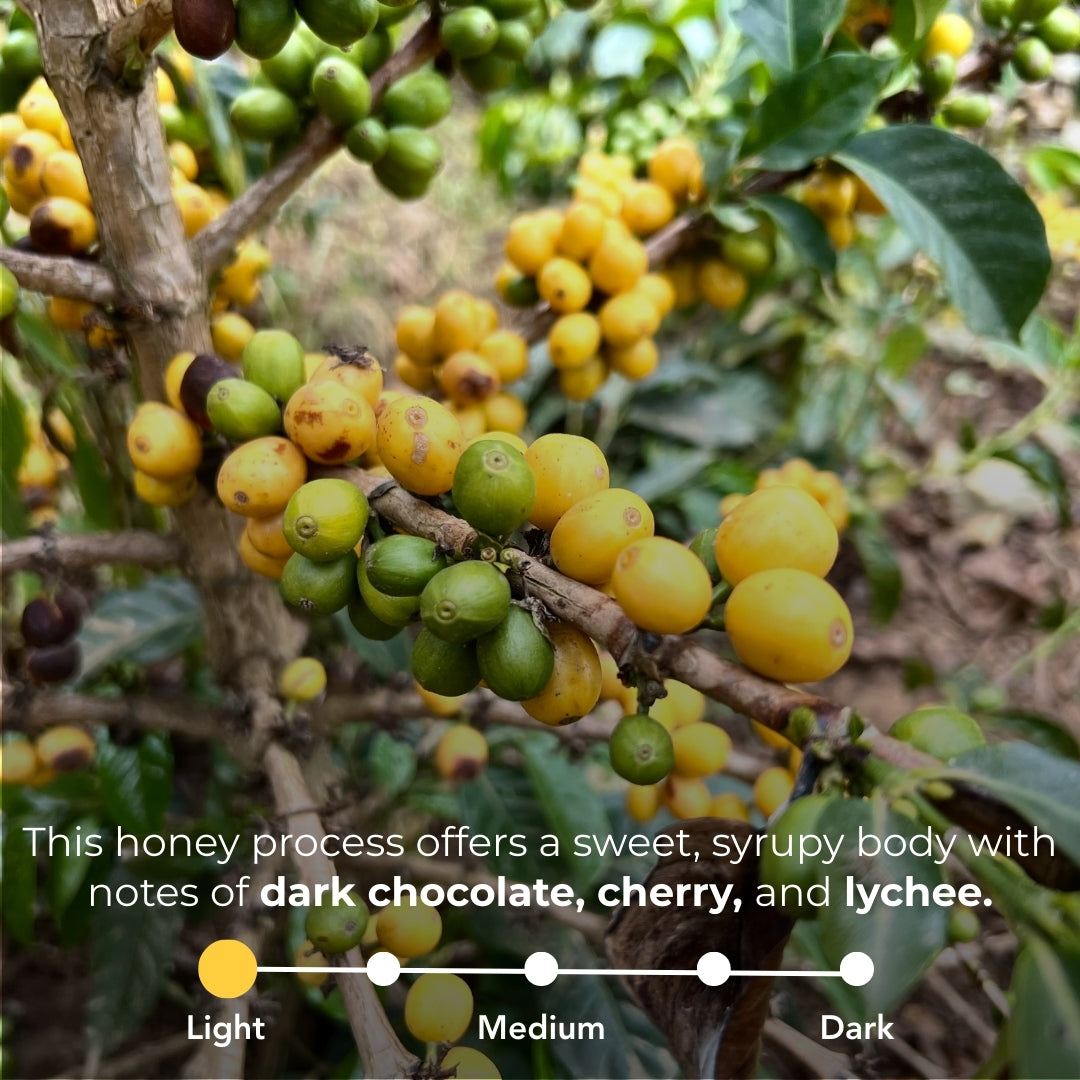
Dark chocolate, Bing cherry, tangerine, strawberry, lychee, and rose.

Sources for these process claims
  • · https://www.partnerscoffee.com/products/peru-los-tulipanes
  • · https://www.partnerscoffee.com/blogs/education/peru-los-tulipanes-2026
Coffee profile

In the database. Not tasted. Not scored.

This coffee is in our database because we can reliably document it — but we haven't tasted and scored it yet, and we never publish a score we haven't earned.

Outside reviews and internet discussion — is kept clearly separate from our own review. When we taste it, our full review appears here.

The internet pulse

What the internet is saying about this coffee

Research complete — no qualifying reviews yet

Our research pipeline scanned public reviews, videos, forums and discussions for this coffee (last pass 2026-10-25) and found no independent review of this exact release that meets our verification standards. When qualifying sources appear, they'll be published here.

What we found

Non-exact, seller, directory, generic-roaster, different-release, duplicate, and older-release sources were excluded.

Until then, meet the people behind it: