Farms & farmers tag
Mabono community-managed processing station
1 page on this site carry this tag — reviews, profiles, answers and stories. Tags are derived from our documented data, never invented.
Nearby tagsArabicaberrybrown sugarcreamyLightMabono community farmers; Mountain Harvest (partner)Mount ElgonSingle originSL28, SL14, Nyasaland (locally called Bugisu)Specialty
Quick answer — what is Mabono community-managed processing station?
The Mabono community-managed processing station is a micro-washing facility located in the remote Mount Elgon region of Uganda. Established with support from Mountain Harvest and a Counter Culture Seeds grant, it empowers isolated smallholder farmers to process high-quality coffee locally, significantly improving their access to specialty markets and economic stability.
The real story
The Mabono community-managed processing station represents a transformative approach to coffee production in the isolated, high-altitude hills of Mount Elgon, Uganda. Historically, this region remained largely disconnected from the global specialty coffee trade due to its rugged terrain and lack of infrastructure. Farmers in the area often faced significant logistical hurdles, frequently transporting their coffee harvests on foot or by bicycle along difficult, unpaved roads to reach buyers. This isolation limited their ability to participate in the value-added specialty market, leaving them vulnerable to the volatility of local commodity trade.
The establishment of the Mabono station was made possible through a partnership between the local organization Mountain Harvest and a grant from Counter Culture Coffee’s Seeds program. Mountain Harvest identified the potential in the region’s coffee-farming community, recognizing that the primary barrier to quality was not the coffee itself, but the lack of accessible, professional processing infrastructure. By building a micro-washing station directly within the community, they provided farmers with the means to process their cherries locally, rather than relying on rudimentary home-processing methods.
In practice, the station serves as a hub for both production and education. It is strategically positioned to serve farmers across four distinct hills: Mabono, Namesti, Itimbwa, and Bukalasi. Because selling coffee cherry—as opposed to dried parchment—was a relatively new concept for many local producers, the station functions as a demonstration site. Here, processing managers and interns work alongside local farmers, teaching them the rigorous quality protocols necessary to achieve specialty-grade results. This hands-on training is vital for ensuring that the coffee meets the exacting standards of international roasters.
The station is notable for its focus on human capital and professional development within the community. A prime example of this impact is the career trajectory of Uthman Muluwa, who began as an interested observer and eventually rose to become the Lead Processing Technician at the station. His progression from a curious local to a skilled technician illustrates the station's role in fostering local expertise and providing new career paths for the youth of the region. By keeping the processing expertise within the community, the station ensures that the value generated by the coffee remains local.
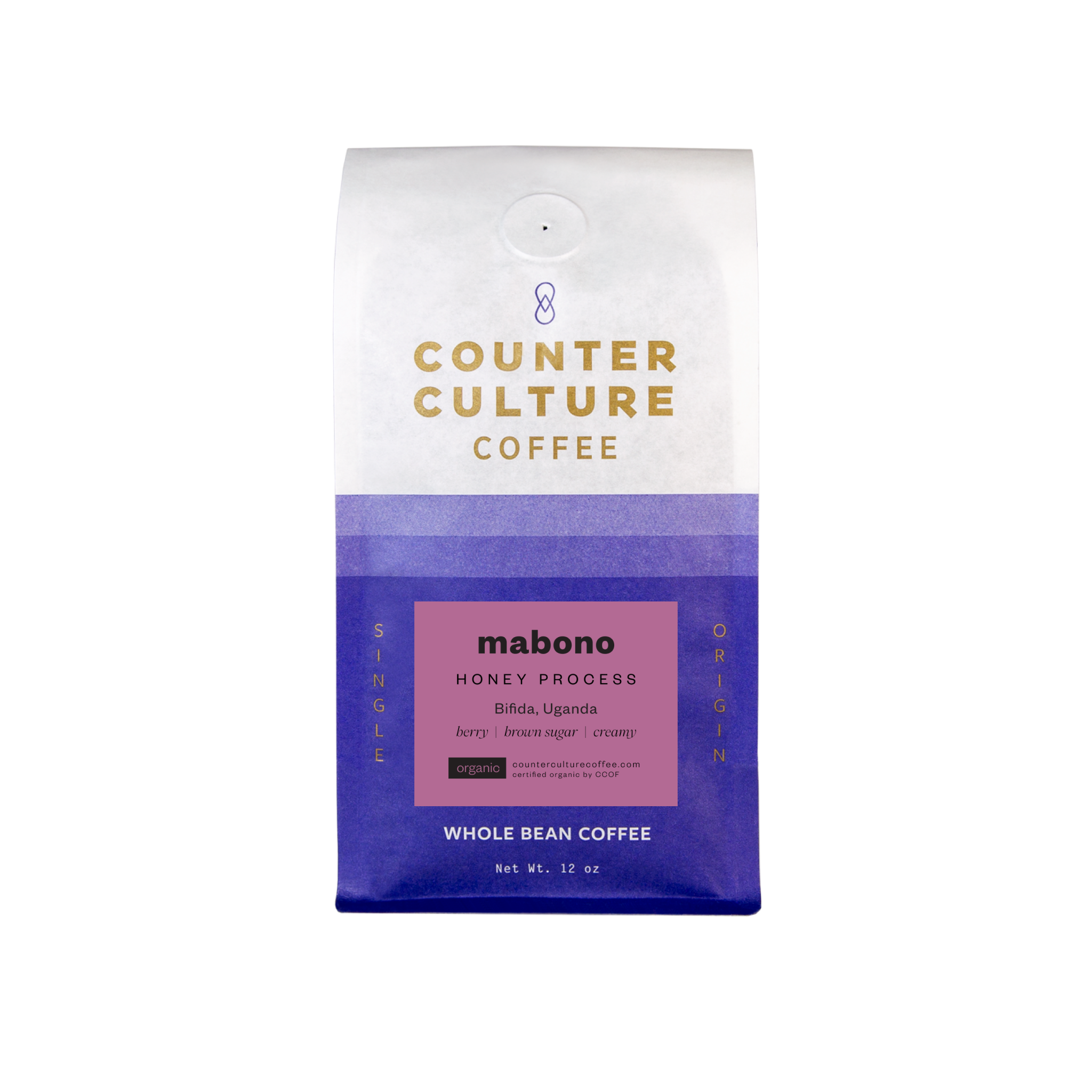
Processing at Mabono is characterized by a commitment to experimentation and quality, most notably through the production of 'Mabono Honey' processed coffees. This method, which involves leaving a portion of the fruit's mucilage on the bean during drying, requires precise control over fermentation and drying conditions. The resulting cup profile is frequently cited for its distinct notes of berry, brown sugar, and a creamy body, which have garnered significant acclaim from specialty roasters and consumers alike.
For the roaster and the drinker, the Mabono station represents a shift toward radical transparency and direct impact. By sourcing from a community-managed facility, roasters can trace the coffee back to a specific, empowered group of farmers rather than an anonymous commodity pool. This model demonstrates that when infrastructure is placed in the hands of the producers, it creates a sustainable feedback loop: higher quality processing leads to higher premiums, which in turn incentivizes further investment in agricultural practices and community development.
Today, the Mabono station stands as a testament to the efficacy of decentralized processing in remote origins. It has successfully bridged the gap between isolation and the global market, proving that even the most remote coffee-growing communities can produce world-class coffee when provided with the right tools and technical support. The success of the Mabono model continues to serve as a blueprint for other isolated regions in Uganda and beyond, highlighting the importance of community-led infrastructure in the pursuit of a more equitable coffee industry.
Coffee reviews & profiles
1 page