Who Makes The
BEST COFFEE
People of coffee

THE PEOPLE BEHIND EVERY CUP.

From farmers and pickers to mill workers, traders, roasters and baristas, many people shape a cup of coffee. Explore thirteen common roles, the choices they make and what we can — and cannot — say about their earnings.
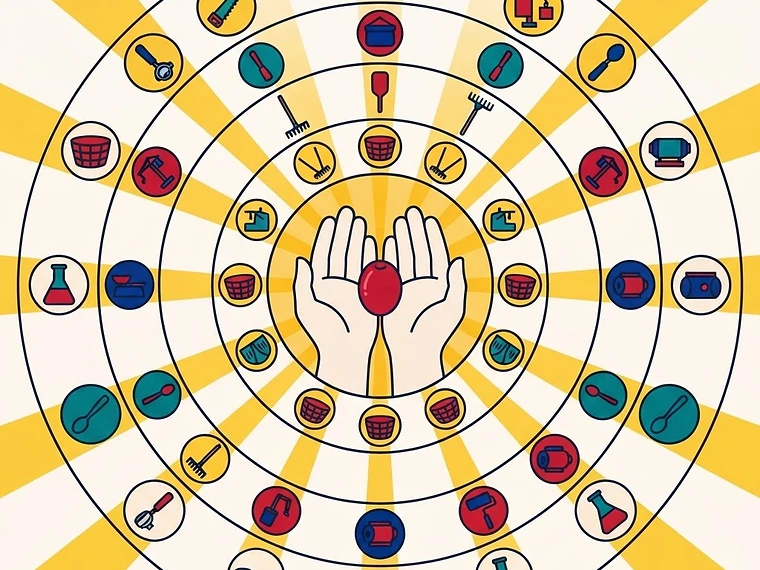
Sacred-geometry illustration of open hands holding a coffee cherry, surrounded by concentric rings of the tools of coffee's trades — basket, rake, roasting drum, cupping spoon, portafilter.
Original artwork — sacred geometry. Never reused.

Who actually makes your coffee?

No single person or fixed thirteen-step assembly line makes every coffee. A grower may also process and export; a roaster may buy green coffee and brew it; cooperatives may combine roles. The cards below describe thirteen illustrative jobs, not a universal roster, and none of the pay descriptions is an audited wage or profit estimate for a named person.

To understand who receives money, first ask whether a stated price refers to cherry, parchment, export-ready green coffee, or a retail bag — and distinguish sales revenue from income after costs. Explore farmgate versus export prices →

01Farmer
What do they actually do?
Owns or stewards the land and the trees. Makes the season's calls: pruning, shade, when to pick.
Why their work matters
Farm management and harvest decisions shape the raw material available to later stages.
How they affect quality
Tree health, ripeness and selection affect lot potential; processing, storage, roasting and brewing also matter.
Who gets credit?
Historically little — the bag rarely said their name. That is changing.
Who gets paid?
A farm owner may sell cherry, parchment or green coffee. Sale receipts are not take-home pay; labor, inputs and other costs matter.
02Producer
What do they actually do?
Runs the farming business — and on modern specialty farms, often the processing too. Manages lots, fermentation and drying.
Why their work matters
The producer is where farm identity becomes coffee identity.
How they affect quality
Lot separation, process discipline and experimentation live with the producer.
Who gets credit?
Named producers increasingly headline bags and command premiums.
Who gets paid?
Payment depends on contracts, ownership and costs; a direct relationship alone does not prove a higher net income.
03Picker
What do they actually do?
Harvests the cherries — ideally selectively, only ripe ones, tree-pass after tree-pass.
Why their work matters
Selective picking helps limit unripe and overripe cherries; it is one important step among many.
How they affect quality
A great picker's basket is uniform, ripe and clean; a careless one's is a lottery.
Who gets credit?
The most invisible people in the story. We name them wherever we can.
Who gets paid?
Paid by weight or day-rate; seasonal, hard, weather-exposed work.
04Processor
What do they actually do?
Runs fermentation, washing and drying — turning cherry into stable dry seed.
Why their work matters
Processing influences the seed but does not erase variety, growing conditions or harvest quality.
How they affect quality
Fermentation, washing, drying and storage management can limit defects and influence sensory characteristics.
Who gets credit?
Experimental lots now carry processor names like winemakers.
Who gets paid?
Part of the producer's operation, or a paid mill service.
05Mill worker
What do they actually do?
Hulls, sizes, grades, density- and color-sorts the dry coffee.
Why their work matters
Sorting removes some physical defects, though quality can still change in storage and transport.
How they affect quality
Sorting improves physical uniformity; a cupping score still requires documented sensory assessment.
Who gets credit?
Almost never seen by consumers — essential anyway.
Who gets paid?
Steady local employment around processing hubs.
06Exporter
What do they actually do?
Consolidates lots, handles quality control, documents and ships coffee internationally.
Why their work matters
Coffee only becomes a global product at this step.
How they affect quality
Good exporters protect lot integrity and moisture through the supply chain.
Who gets credit?
Named on contracts, not on bags.
Who gets paid?
Margin per container, balancing risk of an ocean of moving parts.
07Importer
What do they actually do?
Receives, customs-clears, warehouses and resells green coffee to roasters.
Why their work matters
Roasters can't each have relationships on every continent — importers aggregate trust.
How they affect quality
Cup and document every inbound lot; refuse defects.
Who gets credit?
Known inside the trade, invisible outside it.
Who gets paid?
Margin on green sales; risk carried in inventory.
08Green buyer
What do they actually do?
Cups samples, builds relationships, and chooses the lots a roastery will carry.
Why their work matters
The gatekeeper of what a city's coffee tastes like.
How they affect quality
A great palate and honest relationships beat any certificate.
Who gets credit?
Sometimes celebrated in specialty; usually behind the scenes.
Who gets paid?
Salary within roasteries; power comes with responsibility.
09Roaster
What do they actually do?
Develops roast profiles that translate green coffee into aroma.
Why their work matters
The first actor in the chain who didn't grow it — and the one who writes over or reveals the farm's work.
How they affect quality
Roast degree and development decide what survives to the cup.
Who gets credit?
The most-credited person in most consumers' mental model — often over-credited.
Who gets paid?
Roast revenue must cover green coffee, weight loss, labor, equipment, packaging, distribution and overhead; profit varies widely.
10Q Grader
What do they actually do?
A licensed coffee evaluator trained in physical, descriptive, affective and extrinsic assessments. Since October 2025, the SCA Q Grader curriculum has used its Coffee Value Assessment (CVA), not only the legacy 100-point scoring form.
Why their work matters
Helps describe and evaluate coffee attributes and value; a single score cannot capture every relevant quality.
How they affect quality
Calibration and standardized protocols can support consistency, but evaluation still involves human judgement.
Who gets credit?
Scores travel further than names — one reason scores get misused in marketing.
Who gets paid?
May earn wages or fees in quality control, buying, education or consulting; the credential itself is not a payment.
11Researcher
What do they actually do?
Breeds varieties, studies fermentation microbiology, maps coffee genetics, tracks climate.
Why their work matters
Coffee's future — rust resistance, climate resilience, new flavors — is invented here.
How they affect quality
Varieties like Castillo and the sensory vocabulary itself came from research.
Who gets credit?
Rarely named outside scientific literature.
Who gets paid?
Institutional science salaries — influence far beyond them.
12Brewer
What do they actually do?
Prepares coffee with controlled recipes — at home or professionally.
Why their work matters
The final transformation: solubles into liquid.
How they affect quality
Ratio, grind, water and time are four variables under the brewer's hand.
Who gets credit?
Credited increasingly — brew guides and recipes carry bylines now.
Who gets paid?
You, for free — or a professional's wage.
13Barista
What do they actually do?
The public face of coffee: extracts espresso, steams milk, serves the story.
Why their work matters
The only person in the chain most consumers ever meet.
How they affect quality
Can make good coffee taste great and great coffee taste ordinary.
Who gets credit?
Credited in cafe culture; championed in competitions.
Who gets paid?
Typically wages or salary set by local labor markets and employers; tips are common in some locations, not universal.
Where we know the names, we name them

These thirteen roles are the general map. Where we've documented the actual people — real producers, real farms — we link to them, because the map matters most when it has names on it.

Meet the real farms & farmers →