Place · people
Follow coffee to its origin
Who grew it, and where?
Start with the growing landscape, move into origin guides, then inspect farm and producer records. Not every coffee names an individual farmer.
2 pages on this site carry this tag — reviews, profiles, answers and stories. Tags are derived from our documented data, never invented.
The tag 'Small farms in the village of Okoluu' refers to a collective of 45 smallholder coffee producers located in the East Guji zone of Ethiopia. This designation highlights the collaborative efforts between these growers and Sookoo Coffee to implement rigorous sorting and drying protocols, resulting in high-quality, distinctively flavored natural-processed coffees.
Research entry updated 2026-09-28 · not source-audited · 4 sources
The village of Okoluu is situated in the East Guji zone of Ethiopia, a region globally recognized for its high-altitude coffee production and unique flavor profiles. Coffee cultivation in this area is characterized by traditional smallholder farming practices, where coffee trees are typically grown under a diverse canopy of shade trees. This environment preserves the local ecosystem while providing the necessary conditions for the slow maturation of coffee cherries, which is essential for developing complex sugars and acids within the seed.
In the context of the specialty coffee industry, the tag 'Small farms in the village of Okoluu' represents a specific supply chain model involving 45 small producers. These farmers work in partnership with Sookoo Coffee, a family-owned business that provides the infrastructure and technical oversight necessary to elevate the quality of the harvest. By centralizing the processing and quality control, Sookoo Coffee enables these smallholders to access international markets that demand high-quality, traceable lots.
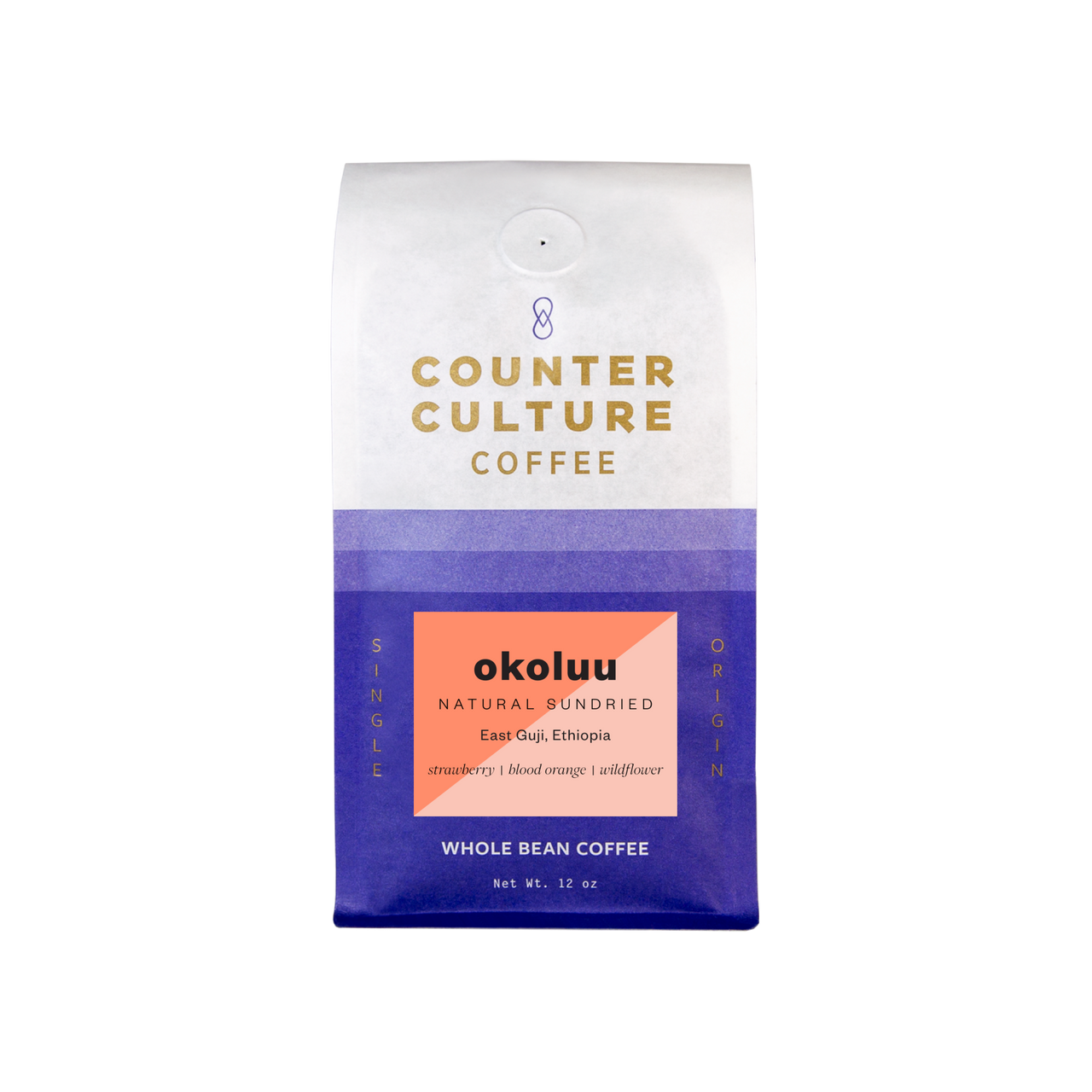
Processing is a critical component of the Okoluu story. The coffee produced by these small farms is frequently processed using the natural (sundried) method. During this process, the harvested cherries are meticulously sorted and dried slowly under the sun and breeze. This controlled drying environment is vital for the development of the coffee's characteristic flavor profile, which often includes notes of blood orange, strawberry, and wildflower. The collaboration ensures that these protocols are followed consistently across the group of 45 farms.
It is important to distinguish between the collective village production and individual farm operations in the region. While the village of Okoluu represents a group of smallholders, the Guji zone also hosts larger, single-owner estates, such as the farm owned by Ture Waji, which also bears the name Okoluu. Ture Waji’s farm serves as a distinct site for experimental processing, including washed, honey, and anaerobic methods, demonstrating the diversity of production techniques currently being explored within the same geographic area.
For the consumer and the roaster, this tag signifies a commitment to traceability and the support of smallholder livelihoods. By identifying coffee as coming from a specific group of small farms in Okoluu, roasters can communicate the specific origin and the collaborative effort required to produce the lot. This transparency is a hallmark of the specialty coffee sector, where the value of the coffee is tied directly to the specific practices and the community of farmers behind the harvest.
Ultimately, the story of Okoluu reflects the broader trends in Ethiopian coffee production, where the integration of traditional farming with modern quality-control standards is essential for economic sustainability. As smallholder farmers face the challenges of climate change and market volatility, partnerships with organizations like Sookoo Coffee provide a pathway to improve productivity and profitability. The success of these small farms in Okoluu serves as a concrete example of how localized, high-quality production can thrive within the global coffee value chain.
This topic connects to broader guides. Follow the sequence, or return to the complete TAG directory to explore other subjects.
Who grew it, and where?
Start with the growing landscape, move into origin guides, then inspect farm and producer records. Not every coffee names an individual farmer.
How does coffee shape people and markets?
Place farming, livelihoods, coffee history and cultural practice alongside the cup, with dates and citations evaluated separately.
Learn something new, follow the people behind your cup, or explore by flavor and tags.