
5.0
🇨🇴Colombia
Colombia · Quindío
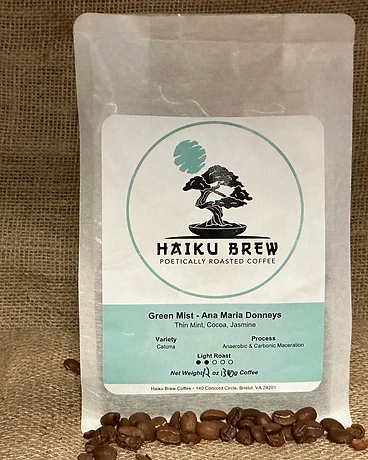
Green Mist — Ana Maria Donneys
Ana Maria Donneys
Café Primitivo
Caturra· Carbonic Maceration
Read the review →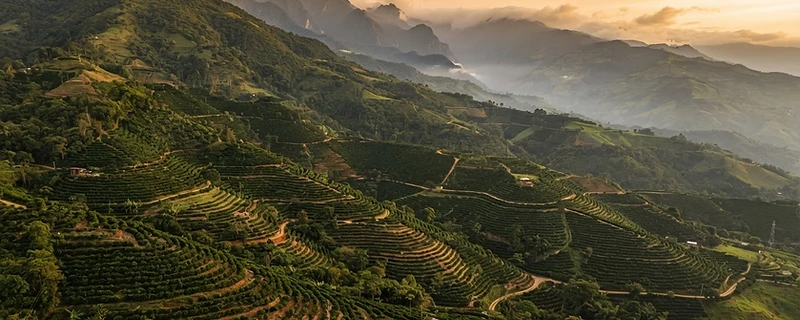
Editorial illustration · not a verified photograph of this location
The world's most famous specialty-coffee origin — and the one we cover deepest. From the traditional Coffee Axis to the broader Paisa culture, Colombia produces extraordinary diversity.
Coffee arrived in Colombia by the early 18th century, with the earliest written evidence provided by Jesuit priest José Gumilla in 1730. While commercial production began in the early 1800s, the industry underwent a transformative shift in 1927 with the founding of the Federación Nacional de Cafeteros (FNC). This cooperative organization unified small-scale farmers, eventually launching the iconic Juan Valdez marketing campaign in 1959 to establish a distinct global identity for Colombian beans. The country’s reputation was further solidified in 2011 when UNESCO designated the Coffee Cultural Landscape of Colombia as a World Heritage site. Today, Colombia maintains its position as a global leader in mild washed Arabica production, with producers increasingly focusing on specialty grades and sustainable certifications to navigate international market demands.
Quindío lies in Colombia’s central-western Andes and forms part of the traditional Eje Cafetero (Coffee Axis). Along with portions of Caldas, Risaralda and Valle del Cauca, selected landscapes in Quindío belong to the Coffee Cultural Landscape of Colombia, inscribed on UNESCO’s World Heritage List in 2011. That designation covers six designated landscape components; it does not mean that every farm or municipality in Quindío is a UNESCO-listed site. Armenia is the departmental capital, and towns such as Salento and Filandia are prominent gateways to the wider coffee landscape. The UNESCO designation recognizes more than a crop. It describes generations of families cultivating small hillside coffee plots, adapting to steep Andean terrain, and developing a distinctive working landscape in which homes, towns, cultural practices and coffee production are intertwined. Traditional architecture reflects Antioquian settlement history, often using timber, bamboo-based building systems and clay-tile roofs. Colombia’s official tourism materials also describe the wider Coffee Cultural Landscape as spanning parts of four departments, with significant variation in elevation and local conditions. For coffee buyers, the important distinction is between a verified individual lot and a regional name. A label stating “Quindío” provides regional context, not proof of a particular farm, named grower, cultivar, altitude, fermentation recipe, harvest date or sensory score. To understand a coffee from this department, look for the precise municipality, farmer or cooperative, farm and harvest identity, processing documentation, and the roaster’s primary source. Varieties such as Caturra, Castillo or Gesha and methods such as washed or anaerobic processing may be associated with individual offerings, but should be attributed to a specific lot rather than assumed for the whole department. Explore the connected farm and producer profiles on this site, compare the Quindío region with neighboring Caldas and Risaralda, and use our processing and brewing guides to interpret what a producer or roaster actually disclosed.
Region guide →Nariño is Colombia's southernmost coffee department, reaching the Ecuadorian border, and it is the country's high-altitude specialist: farms commonly sit above 2,000 m — among the highest commercial coffee altitudes in the world, reaching roughly 2,300 m in parts — on steep, hand-worked terrain around the Galeras volcano and the Andean ridges of the far southwest. Young, mineral-dense, well-drained volcanic soils and intense equatorial light let coffee ripen slowly despite the sun, concentrating sugars and aromatics. Nariño's harvest calendar inverts the Colombian norm: the main crop generally runs May–September, earlier than most of the country's departments, whose main harvests cluster in the final months of the year. Southern Colombia simply alternates the main harvest and the mitaca fly crop — one consequence of the double passage of the Intertropical Convergence Zone that shapes rainfall across all of Colombia's coffee regions. Production is smallholder at the extreme: most farms are tiny and managed by hand. Like the rest of the country, the varieties are dominated by Caturra alongside Castillo and Colombia, with Typica, Bourbon and Tabi on older or specialty plots. Peer-reviewed work by Cenicafé, the Colombian Coffee Growers Federation and CIAT found statistically significant environmental differences between Nariño and neighboring Cauca — dry months, precipitation and diurnal temperature range all differ measurably — which became the scientific basis for “Café de Nariño” earning its denomination of origin, among the first sub-national coffee DOs anywhere. As a tendency rather than a promise, Nariño cups are described with floral aromatics, vibrant citrus acidity and refined sweetness — the profile that made the department a roaster favorite. On a label, Nariño reliably signals very-high-altitude washed coffee from Colombia's far south; our Coffee 101 guide to altitude explains why those meters matter chemically.
Region guide →Cauca is a department in southwestern Colombia, bracketed by Nariño to the south and Huila to the east, with coffee grown on both slopes of its double cordillera — the western slopes of the central Andean range and the eastern slopes of the western range, divided by the Cauca River valley, and the colonial “White City” of Popayán at the center. The growing zone runs roughly 1,500–2,000 m, with sources placing lots from about 1,300 m near Popayán to above 2,000 m on the high slopes. Pacific weather systems moderate temperatures and keep rainfall unusually consistent year-round — the climatic stability behind Cauca's reputation for dependable harvests. Cauca's coffee structure is distinctive in two ways. Its roughly 90,000 farms average under two hectares, organized through unusually strong cooperatives — and a substantial part of the department's rural population is indigenous, particularly the Nasa people, whose producer organizations aggregate communal-territory lots into specialty channels. That cooperative wet-mill infrastructure standardizes fermentation, water and drying, which is a large part of why Cauca lots cup so consistently. As tendencies rather than guarantees, Cauca cups are described as clean and balanced: red apple and stone fruit up front, caramel or brown-sugar sweetness, medium body, acidity present but never sharp. Caturra and Castillo dominate plantings, with Bourbon on the oldest high farms and Pink Bourbon arriving from neighboring Huila; the washed process defines the department, with honey lots growing at competition-focused farms. The harvest is bimodal like most of Colombia: a main crop roughly October–January and a mitaca crop April–June. Peer-reviewed work by Cenicafé, the FNC and CIAT documented the environmental differences underpinning “Café de Cauca's” denomination of origin — the same study that grounded Nariño's. Inzá, El Tambo and Timbío anchor the specialty map: Inzá's high lots have placed in Cup of Excellence competitions, El Tambo leads by volume, and Timbío delivers reliably clean washed coffee. On a label, Cauca signals a clean, consistent southern-Colombian washed coffee that roasters trust for espresso and year-round offerings.
Region guide →Antioquia, in northwestern Colombia, is regularly the country's largest coffee-producing department by volume, rivaling Huila at the top of the national rankings. Its coffee country runs down the Central Cordillera around the department capital, Medellín. The department is not part of the traditional Coffee Axis — that heritage region lies to the south — but Antioquia's own coffee history predates the axis: the nineteenth-century Antioqueño settlement wave carried coffee farming out of here into the lands that became Caldas, Risaralda and Quindío. Farming is overwhelmingly smallholder, within the national structure of more than half a million coffee-growing families organized around the FNC. Antioquia spans a wide band of altitudes and microclimates — plantings run roughly from 1,200 up to about 2,200 m — and its harvest follows the bimodal national pattern. Caturra is the workhorse variety with a strong cup reputation at higher altitudes, alongside widespread Castillo and the Colombia variety; Typica and heirloom Bourbon survive on older farms, particularly in the southwest around Urrao and Jardín, the department's specialty heartland. In the cup, trade descriptions of Antioquia commonly cite chocolate, panela sweetness, red apple and gentle citrus — the classic balanced Colombian profile — though as with any large department, profiles are lot-specific and vary with altitude and farm.
Region guide →Risaralda is the smallest of the three Coffee Axis departments, with its capital, Pereira, at the region's center. Together with Caldas and Quindío it forms the Eje Cafetero, whose Coffee Cultural Landscape is inscribed by UNESCO as a World Heritage Site — a working landscape of small farms, colonial-era towns and plantation culture unique in the coffee world. The department's farms lie between the Western and Central Cordilleras on fertile volcanic soils, within the axis-wide altitude band of roughly 1,200 to 2,000 m and a temperate, well-watered climate. Its compact growing area makes it a smaller producer than its neighbors, but one whose farms often focus on quality lots for the specialty market — a documented emphasis rather than a universal rule. Caturra, Castillo and the Colombia variety dominate plantings, and the washed process is standard; the harvest follows the same bimodal national pattern as the rest of the axis, with a main crop followed by a smaller fly crop. Pereira's role as a commercial hub places many of the axis's buyers and mills within easy reach of the farms. In the cup, Risaralda is commonly described in the trade as balanced and sweet — rounder and gentler than Caldas' brightness — though such regional characterizations are general tendencies, and every cup is lot-specific.
Region guide →Caldas is one of the three departments — with Risaralda and Quindío — that make up Colombia's Coffee Axis, the Eje Cafetero, whose Coffee Cultural Landscape is inscribed as a UNESCO World Heritage Site. Its capital, Manizales, sits at the northern end of the axis, a short distance from the Nevado del Ruiz volcano. Caldas is also the scientific capital of Colombian coffee. The town of Chinchiná hosts Cenicafé, the research arm of the National Federation of Coffee Growers and one of the world's most advanced coffee research centers; the disease-resistant varieties planted across Colombia and much of the country's coffee science trace back to its laboratories. Coffee grows across the axis between roughly 1,200 and 2,000 m in a temperate, well-watered Andean climate. Caturra, Castillo and the Colombia variety dominate plantings; the washed process is standard, and mechanical dryers are common alongside patio drying. The harvest follows the bimodal national pattern, with a main crop followed by a smaller fly crop. In the cup, the department is often described in the trade as leaning brighter and more citric within the axis — Manizales-area coffee in particular carries that reputation — though such statements are general tendencies, and every profile is lot-specific.
Region guide →Tolima is a department of Colombia's central Andean zone, its coffee farms spread through the valley country between the Central and Eastern Cordilleras of the Andes, along the Magdalena river and the mountains flanking it. It is regularly counted among the country's main coffee-producing departments, yet it stands apart from the famous Eje Cafetero: the traditional Coffee Axis lies to the west, and Tolima's growing areas developed on their own terms. Altitude and proximity to the equator shape the harvest. Coffee matures slowly at elevation — specialty lots commonly come from roughly 1,400 to 1,900 m, with plantings across a wider band — and two rainy seasons stagger ripening across the year. Tolima's recent coffee story is inseparable from its history. Parts of the department were heavily affected by Colombia's decades-long armed conflict, which disrupted farming and cut the region off from buyers; since the 2016 peace accord, cooperatives and international roasters have returned, and the department has become one of the most-discussed specialty origins in Colombia. That renaissance is a documented regional trajectory, though it does not describe every farm equally. In the field, Tolima runs on smallholder agriculture within the national coffee structure: Caturra, Castillo and the Colombia variety dominate plantings, while specialty producers increasingly grow lots of Typica, Pink Bourbon and Tabi. Most coffee is washed; honey and natural processing are present but remain a minority. In the cup, the trade's general image of Tolima is balance — sweetness with gentle, citric acidity and red fruit — but profiles are lot-specific, and no single regional description applies to every farm.
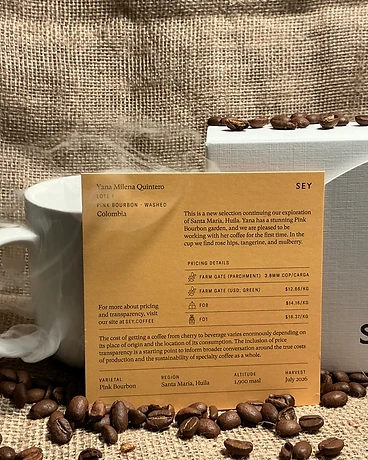
Region guide →Huila is a department in southern Colombia — one of the country's 32 — and by most accounts its largest coffee producer: the Federación Nacional de Cafeteros attributes roughly 18% of national production to it. Coffee runs through the Magdalena River valley and the Andean slopes around it, a landscape of volcanoes, deep valleys and highland plateaus, with growing altitudes commonly reported from about 1,200–1,500 m up to over 2,000 m — and the most celebrated specialty lots concentrated above 1,600 m in the south, around Pitalito, Acevedo, Garzón and San Agustín. The department is big enough to contain two harvest calendars: central Huila's main crop runs roughly June–November, while southern Huila runs roughly September–January, with a smaller fly crop (the mitaca) outside those windows. The split is latitude and rainfall, not marketing — and it means fresh Huila coffee arrives nearly year-round. Plantings are classic modern Colombia: Caturra alongside the rust-resistant Castillo and Colombia varieties, with Bourbon, Typica, Tabi and increasingly Pink Bourbon and Gesha on specialty-focused farms. Production is overwhelmingly smallholder — most farms cover a few hectares and process coffee on their own micro-mills before selling parchment into the cooperative and purchasing-station network. As tendencies rather than guarantees, Huila cups are described with bright acidity, juicy sweetness and layered fruit — the profile that helped make this arguably Colombia's most celebrated specialty department. “Café de Huila” also carries its own denomination of origin. A “Huila” label on a bag means southern-Colombian highland washed coffee, and it is one of the most reliable quality signals a supermarket shelf can offer. Because the department is large and varied, better roasters narrow it further — a Pink Bourbon from Pitalito and a Castillo lot from the north are very different coffees. Our Coffee 101 entries on Caturra, Castillo and Pink Bourbon cover the varieties themselves, and our harvest calendar shows when Huila's crops land.
Region guide →

 Editorial illustration
 Editorial illustration
 Editorial illustration
 Editorial illustration
 Editorial illustration
 Editorial illustration
 Editorial illustration
Learn something new, follow the people behind your cup, or explore by flavor and tags.


