Worth the Price?
Understand bag sizes, cost per brew and documented coffee differences before judging value.
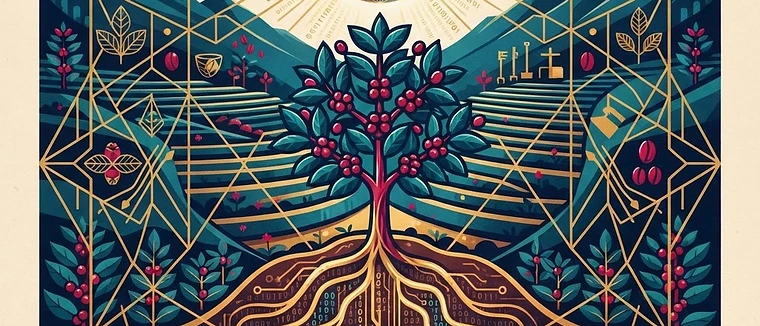
Behind the scenes of your morning brew, machine learning is quietly becoming the most important tool for ensuring your coffee exists in a warming world.
Artificial intelligence is being used by coffee researchers and farmers to predict how specific coffee varieties will perform under changing climate conditions. By analyzing vast datasets of soil health, rainfall patterns, and crop yields, AI helps farmers decide which coffee plants to cultivate, ensuring that the beans you love remain available despite environmental challenges.
For decades, the life of a coffee producer was defined by experience and intuition. Knowing exactly when to fertilize or which trees were struggling was an art passed down through generations. Today, that wisdom is being augmented by a new digital partner: artificial intelligence. AI models are now processing millions of data points—from satellite-tracked temperature spikes to the specific chemical composition of soil—to provide farmers with precise, actionable intelligence.
This shift is not about replacing the farmer; it is about providing a roadmap for survival. As global temperatures creep upward, the traditional geographic bands where coffee thrives are shrinking. AI allows producers to model how these stressors will interact with their specific plots, helping them make planting decisions today that will yield fruit ten years down the line.
One of the most exciting applications of machine learning in coffee is the acceleration of plant breeding. Traditionally, breeding a new, disease-resistant coffee tree could take twenty or thirty years of trial and error. By using AI to analyze the genetic traits of thousands of coffee varieties—such as the high-yield potential of a Castillo or the cup quality of a Bourbon—scientists can now predict which pairings will produce the best outcomes.
This predictive modeling significantly shortens the breeding cycle. By simulating how different genetic combinations will react to drought or coffee leaf rust, researchers can identify the most resilient plants in a fraction of the time. This means that when a farmer decides to replace aging trees, they have access to data-backed options that are specifically engineered for the realities of their micro-climate.
AI is also transforming how farms manage their immediate environment. Through a network of IoT (Internet of Things) sensors, farms are collecting real-time data on everything from leaf moisture to humidity levels around the cherry. These devices feed into an AI platform that can detect the early warning signs of pests or fungal infections before they become visible to the human eye.
When the system identifies a potential risk, it alerts the producer, allowing for localized interventions rather than blanket treatments across a whole farm. This precision farming approach reduces waste and lowers costs, making it easier for smallholder farmers to maintain profitability while producing a higher quality, more consistent product.
Perhaps the most profound impact of AI lies in stabilizing producer economics. By accurately predicting yields months in advance, farmers can negotiate contracts with better confidence and planning. When a buyer knows exactly what a farm is capable of producing, they can build long-term relationships that provide price security—a crucial component in preventing boom-and-bust cycles.
As we look to the future, the integration of AI could bridge the gap between high-tech agricultural research and the daily needs of the individual farmer. By democratizing access to data-driven insights, we are moving toward a future where the coffee in your cup isn't just a byproduct of geography, but a masterpiece of informed, sustainable decision-making.
No directly verifiable external source links are recorded for this story. Its research claims require further verification.
Explore documented coffee differences, then choose a brewing method. Related profiles are research connections, not proof that we tasted each coffee.
Understand bag sizes, cost per brew and documented coffee differences before judging value.
Follow documented origins to farms and the people behind the coffee. A profile is distinct from an original interview.
Separate tasting vocabulary from processing claims, then explore coffee profiles and brewing methods.
Learn something new, follow the people behind your cup, or explore by flavor and tags.