Worth the Price?
Understand bag sizes, cost per brew and documented coffee differences before judging value.
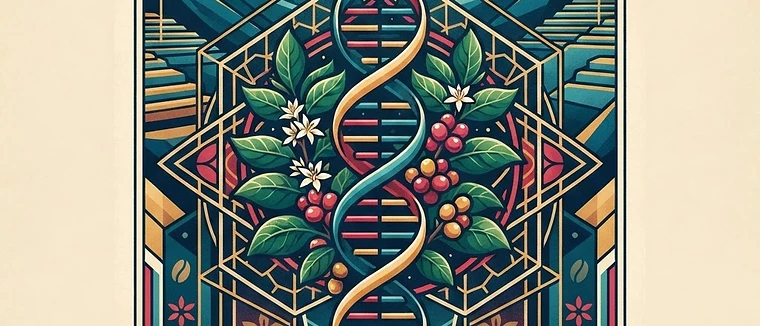
By looking directly into the DNA of the coffee plant, researchers are shaving decades off the time it takes to protect our morning cup from climate change and disease.
Coffee scientists are using advanced genetic mapping to identify disease-resistant traits in weeks rather than years. This shift helps farmers grow more resilient, high-quality coffee, ensuring that your favorite beans remain available despite the growing threats of climate change and fungal outbreaks.
For generations, coffee breeding was a game of patience. To develop a new variety that could withstand threats like Coffee Leaf Rust (CLR)—a devastating fungal disease that causes leaves to drop and trees to wither—breeders had to plant seeds, wait years for them to mature, and then observe how they fared in the field. If the plant failed, the cycle started over.
This traditional, observational method is no longer fast enough to keep pace with a changing climate and evolving pathogens. As the global coffee industry faces mounting pressure, the focus has shifted toward 'molecular breeding.' Instead of waiting for a tree to grow, scientists now use genetic markers to scan a plant's DNA, identifying the presence of resistance genes while the plant is still a seedling.
The goal of modern breeding is often 'gene pyramiding.' This is the process of stacking multiple resistance genes into a single plant. By crossing traditional Arabica with more rustic species like or Racemosa, researchers can introduce traits that provide defense against not just rust, but also coffee berry disease and leaf miner moths.
Recent studies have shown that these hybrid populations can be incredibly effective. In some trials, nearly 99% of the offspring from specific crosses showed signs of introgressed resistance, with many individuals carrying multiple layers of protection. This ensures that the plant isn't just surviving, but thriving in environments where traditional varieties might fail.
F1 hybrids—the first generation of offspring from two distinct parent plants—have become the stars of this new era. These varieties are specifically engineered to combine the best of both worlds: the high cup quality and flavor profiles that consumers demand, and the robust productivity that farmers need to stay profitable.
Farmers in Central America and beyond have reported that these hybrids offer significantly higher yields compared to traditional varieties. Because these plants are bred for resilience, they often require less intervention, helping to stabilize the livelihoods of the people who grow our coffee.
The effort to modernize these tools is a massive, multi-institutional undertaking. With new initiatives like the $1.5 million project launched by World Coffee Research, the industry is moving toward a data-driven future. By creating high-efficiency molecular tools, researchers are effectively supercharging the global pipeline for new coffee varieties.
This isn't just about survival; it's about quality. As we identify the genetic markers for flavor alongside those for disease resistance, we are entering a period where we don't have to choose between a sustainable farm and a delicious cup. The future of coffee is being written in the lab, but it is being tasted in your mug.
No directly verifiable external source links are recorded for this story. Its research claims require further verification.
Explore documented coffee differences, then choose a brewing method. Related profiles are research connections, not proof that we tasted each coffee.
Understand bag sizes, cost per brew and documented coffee differences before judging value.
Follow documented origins to farms and the people behind the coffee. A profile is distinct from an original interview.
Separate tasting vocabulary from processing claims, then explore coffee profiles and brewing methods.
Learn something new, follow the people behind your cup, or explore by flavor and tags.