Place · people
Follow coffee to its origin
Who grew it, and where?
Start with the growing landscape, move into origin guides, then inspect farm and producer records. Not every coffee names an individual farmer.
3 pages on this site carry this tag — reviews, profiles, answers and stories. Tags are derived from our documented data, never invented.
The Rianjagi Factory is a prominent coffee washing station located in Embu County, Kenya, serving as the processing hub for the Rianjagi Farmers’ Cooperative Society. It is vital to the specialty coffee industry for its meticulous processing of high-quality, high-altitude Kenyan lots, which are celebrated for their vibrant acidity, complex fruit notes, and consistent, competition-grade quality.
Research entry updated 2026-09-30 · not source-audited · 7 sources
The Rianjagi Factory is a cornerstone of coffee production in Embu County, situated on the slopes of Mount Kenya. In the Kenyan coffee context, a 'factory' functions as a centralized washing station where smallholder farmers deliver their freshly harvested coffee cherries for processing. The facility is owned and operated by the Rianjagi Farmers’ Cooperative Society, a collective that has grown significantly since its establishment in 1950, now representing over 2,000 to 2,500 member farmers. These producers typically manage small plots, often averaging less than a quarter-hectare, where they cultivate coffee alongside other crops in the region's nutrient-rich volcanic soil.
The cooperative structure is central to the success of the Rianjagi Factory, providing members with essential resources that would be difficult to access individually. This includes agricultural training, access to farm inputs, and collective marketing power to reach international specialty coffee buyers. By pooling their harvests, these smallholders ensure that their coffee is processed with the technical precision required for the high-end specialty market, which in turn helps secure better premiums for their labor.
Processing at Rianjagi follows the traditional, rigorous Kenyan washed method. Upon delivery, cherries are sorted by hand to ensure only the ripest fruit is selected. After pulping, the beans undergo a secondary density-based sorting before being fermented in tanks for 12 to 16 hours. Following fermentation, the coffee is washed and moved to raised drying beds. The cooperative also demonstrates environmental stewardship by utilizing soak pits to manage wastewater, preventing the contamination of local water sources.
The varieties cultivated by Rianjagi members are chosen for their cup quality and resilience, primarily including the classic Kenyan cultivars SL28 and SL34, alongside the more modern, disease-resistant varieties Ruiru 11, Batian, and H1. These varieties, combined with the high elevation of 1,600 to 1,700 meters, contribute to the slow maturation of the coffee cherry, which concentrates the sugars and acids that define the region's signature flavor profile.
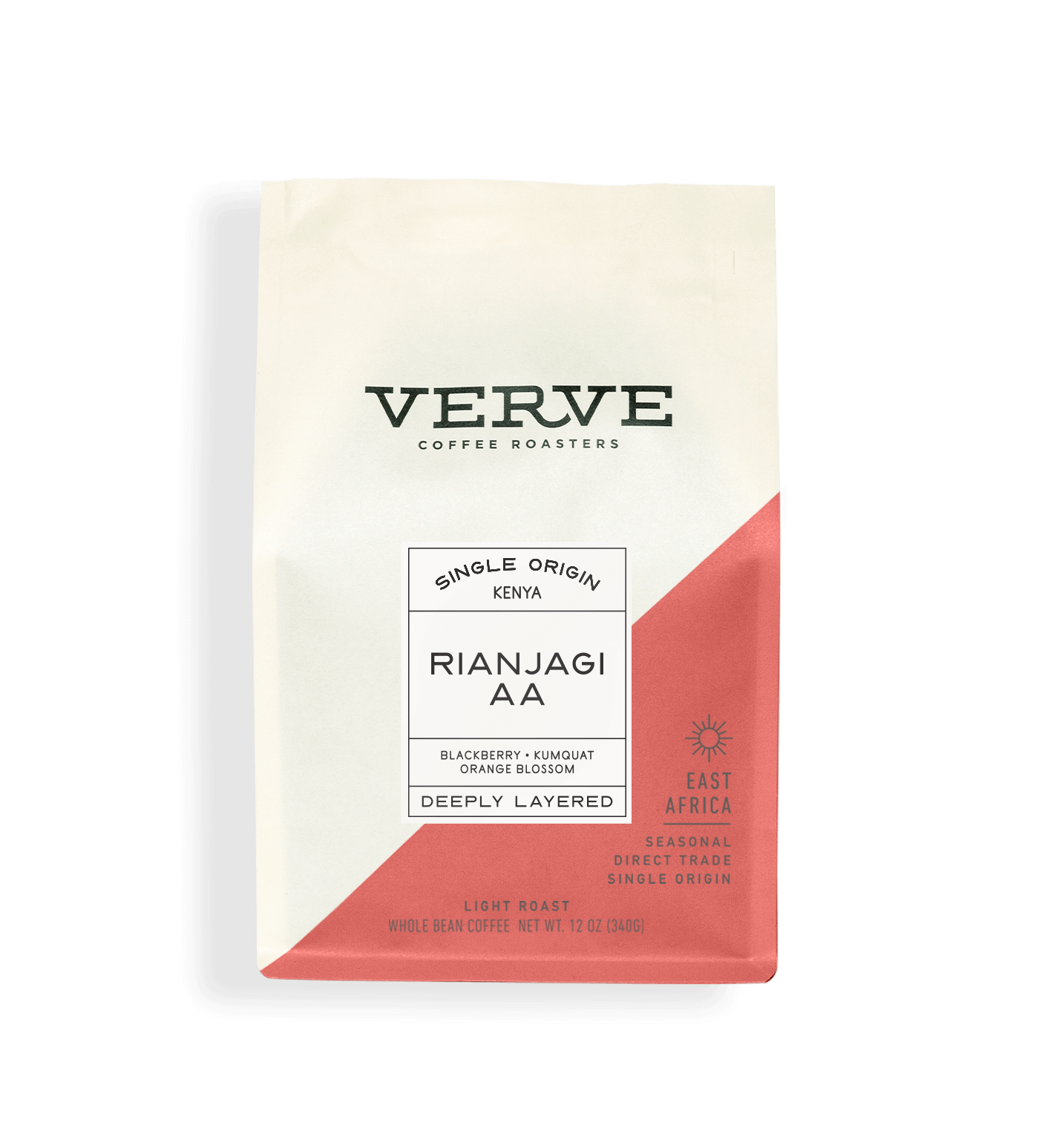
For roasters and consumers, Rianjagi coffee is synonymous with the classic Kenyan profile: bright, juicy, and complex. Tasting notes frequently highlight blackcurrant, grapefruit, clementine, and stone fruits like peach or mango, often balanced by a brown sugar or honey-like sweetness. The 'AA' grade, which is commonly associated with Rianjagi lots, refers to the screen size of the beans, indicating large, high-quality seeds that are highly sought after in the specialty trade.
Today, the Rianjagi Factory stands as a testament to the resilience and expertise of Kenyan smallholder farmers. By maintaining a focus on quality-driven processing and cooperative support, the society continues to produce some of the most highly regarded coffees in the world. Its ongoing success highlights the importance of the washing station as a bridge between the individual farmer's hard work and the global specialty coffee market, ensuring that the unique terroir of Mount Kenya is preserved in every cup.
This topic connects to broader guides. Follow the sequence, or return to the complete TAG directory to explore other subjects.
Who grew it, and where?
Start with the growing landscape, move into origin guides, then inspect farm and producer records. Not every coffee names an individual farmer.
How does coffee shape people and markets?
Place farming, livelihoods, coffee history and cultural practice alongside the cup, with dates and citations evaluated separately.

Learn something new, follow the people behind your cup, or explore by flavor and tags.