
4.9
🇪🇹Ethiopia
Ethiopia · Limu
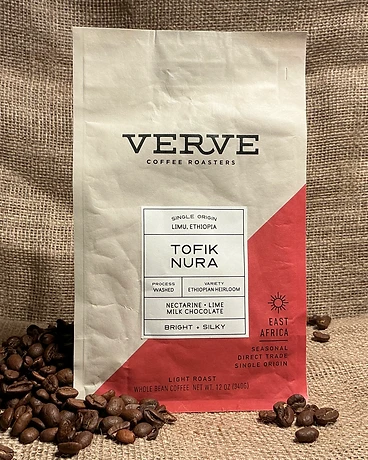
Tofik Nura — Verve Coffee Roasters
Tofik Nura and neighboring smallholder farmers in Sadi
Sadi district — Tofik Nura release
· Washed
Read the review →Not necessarily. Lime is a citrus-like flavor comparison; verify ingredient additions separately.
Lime can describe sharp citrus zest and brisk acidity. It does not prove which organic acids are present or their measured concentrations.
Can be described in coffees from different regions. A lime note cannot prove a Kenyan, Ethiopian or Rwandan origin.
To detect lime in your coffee, begin by focusing on the aromatic profile before the cup touches your lips. Use a rapid, shallow sniff to catch the bright, sharp edges that distinguish lime zest from the softer character of lemon. When you take a small, aerated slurp, allow the liquid to coat your tongue. Notice if you feel a crisp, biting acidity that triggers a sensation on the sides of your palate, reminiscent of fresh lime peel rather than sweet citrus juice. Focus on how these sharp aromatics register retronasally as you exhale. As the coffee moves from comfortably warm to a cooler temperature, pay attention to how the perception of this acidity shifts. It should remain distinct and green, leaning toward a zesty, tart brightness. If you find it difficult to pinpoint, mentally compare the sensation to the sting of a freshly zested lime, checking if the coffee shares that same piercing, clean acidity.

Can you actually perceive a lime-like note? Brew a plain coffee, then describe it in three stages. Write your own impressions before reading the tasting notes on its bag. A descriptor is not evidence of a coffee's origin, ingredients, processing, or quality.
Notes stay in this browser's local storage until cleared; they are not submitted, scored, published or used as evidence for our reviews. For professional methodology see the SCA flavor-wheel guide.
Examples are selected from at most 80 recently updated matching coffee profiles, 40 exact-match outside reviews and 40 exact-coffee internet references. The numbers below describe this bounded sample, not a complete sitewide total. Zero means no matches in the sampled records, not that none exist elsewhere.


 Editorial illustration
 Editorial illustration
 Editorial illustration

This is our editorial description of a sensory comparison. The independent SCA/WCR materials below explain how tasters develop a shared vocabulary; they do not verify the particular coffee origins, biochemical causes, processing methods or frequency claims on this page.
No descriptor-specific research citation has been verified for this entry yet. Treat specific causal and origin associations as editorial guidance, not as scientifically established facts.
Learn something new, follow the people behind your cup, or explore by flavor and tags.


