Worth the Price?
Understand bag sizes, cost per brew and documented coffee differences before judging value.
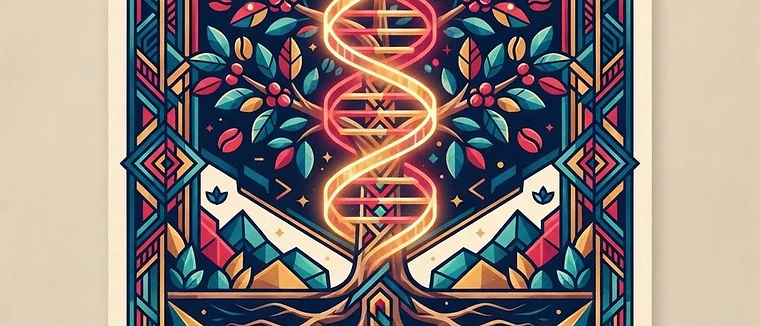
We are moving away from the era of convenience-bred coffee toward a future where flavor and survival are designed in the same lab.
As climate change threatens traditional coffee varieties, scientists are breeding new, resilient hybrids that maintain high cup quality. For the coffee drinker, this means the future of your daily brew depends on smarter botanical design rather than just finding new land to farm.
For decades, the coffee industry focused on yield—how many bags of coffee could a single tree produce. This era prioritized varieties that could tolerate sun exposure and resist basic pests, often at the expense of the complex flavor profiles we associate with . Today, that priority is shifting rapidly toward resilience.
Plant breeders are now tasked with a double challenge: creating trees that can withstand erratic rainfall and rising temperatures while simultaneously producing high-quality, specialty-grade beans. This isn't just about survival; it's about preserving the diversity of the coffee experience.
Historically, coffee farming relied on iconic, yet fragile, varieties like Typica and Bourbon. These varieties offer incredible flavor but are notoriously prone to diseases like leaf rust. Breeders are now looking toward wild coffee ancestors, such as those found in Ethiopian forests, to introduce genes that have been lost through centuries of domestication.
By crossing these wild relatives with high-performance cultivars, researchers are building a genetic bridge. These new hybrids aren't meant to replace the classics; they are designed to give farmers a fighting chance against a changing climate without requiring the heavy use of chemical inputs that often ruin soil health.
Who decides which coffee survives? It is a collaborative effort between agronomists, who understand the soil, and cup tasters, who understand the market. A variety that grows perfectly but tastes like cardboard will never be adopted by farmers who rely on premium pricing.
This is why the modern breeding process is inherently sensory. Every new cross is subjected to rigorous protocols, where professionals evaluate acidity, body, and sweetness. If the variety doesn't meet the standards of , it goes back to the drawing board. It is a slow, methodical process of trial and error that ensures the cup quality remains high despite the environmental pressures.
There is a growing realization that resilient plants often produce more complex flavor compounds. Stress on a coffee tree—whether from or a specific genetic trait—can trigger the production of antioxidants and sugars within the .
As we breed for hardiness, we are inadvertently selecting for beans that possess higher levels of these flavor-positive compounds. The future of coffee isn't just about saving the plant; it's about exploring new flavor profiles that were previously unreachable because the parent plants were too delicate to survive in most coffee-growing regions.
The shift toward intentional breeding represents a transition from coffee as a commodity to coffee as a highly engineered, agricultural marvel. As consumers, we are moving into an era where we will know more about the genetic heritage of our morning brew than ever before.
This evolution ensures that coffee remains a viable crop for farmers while satisfying the increasingly sophisticated palates of global drinkers. It is a win-win for everyone involved, proving that the most sustainable path forward is one paved with rigorous science.
No directly verifiable external source links are recorded for this story. Its research claims require further verification.
Explore documented coffee differences, then choose a brewing method. Related profiles are research connections, not proof that we tasted each coffee.
Understand bag sizes, cost per brew and documented coffee differences before judging value.
Follow documented origins to farms and the people behind the coffee. A profile is distinct from an original interview.
Separate tasting vocabulary from processing claims, then explore coffee profiles and brewing methods.
Learn something new, follow the people behind your cup, or explore by flavor and tags.