Worth the Price?
Understand bag sizes, cost per brew and documented coffee differences before judging value.
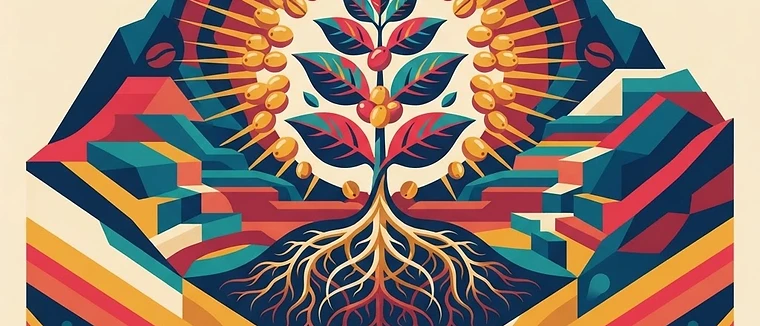
As climate change threatens the world's favorite coffee species, scientists are turning to a new generation of high-performance plants to secure the future of your daily brew.
F1 hybrids are a new class of coffee varieties created by crossing genetically distinct parents to combine high yield, disease resistance, and superior cup quality. For the average drinker, this means a more stable supply of high-quality coffee despite the increasing pressures of climate change and plant diseases on farming communities.
Most of the Arabica coffee consumed globally today descends from a very narrow genetic pool, primarily the Bourbon and Typica families. While these varieties are celebrated for their exceptional flavor, they are increasingly vulnerable to environmental stressors like rising temperatures, drought, and devastating diseases such as coffee leaf rust.
Because Arabica coffee is largely self-pollinating, its genetic diversity is naturally limited. This 'genetic bottleneck' makes it difficult for traditional breeding programs to find plants that are both delicious and tough enough to survive in a rapidly changing climate. For the 100 million farmers who rely on coffee for their livelihoods, this lack of resilience is a direct threat to their economic stability.
To solve this, researchers are increasingly looking toward F1 hybrids. In plant breeding, an F1 hybrid is the first-generation offspring of two genetically distinct parent plants. By carefully selecting parents—often crossing a high-quality Arabica with a more resilient variety—scientists can create 'super-plants' that inherit the best traits of both.
These hybrids are not just about survival; they are about performance. Studies have shown that F1 hybrids can produce 29% to 61% higher yields than traditional varieties. This increased productivity is a game-changer for smallholder farmers, allowing them to produce more coffee on the same amount of land while simultaneously reducing their reliance on chemical pesticides due to the plants' inherent disease resistance.
The development of these varieties is a massive, collaborative effort. Organizations like World Coffee Research (WCR) have spent the last decade running the world's largest coffee variety trial, spanning 17 countries and 30 sites. This project doesn't just test how a plant grows; it uses climate science to identify 'climate twins'—locations where the current climate matches the projected future conditions of other regions.
By testing varieties in these 'future-climate' sites, researchers can predict how a specific plant will perform decades from now. This data is currently being used to select the best parent material for the next generation of coffee, ensuring that the varieties released to farmers are truly prepared for the challenges of 2030 and beyond.
The stakes are high. In countries like Rwanda, where nearly 40% of coffee trees are over 30 years old and highly susceptible to disease, the introduction of these new, resilient varieties is a matter of national economic security. With record-high exports, the transition to modern, climate-smart varieties is essential to protect the livelihoods of the 350,000 households that depend on the crop.
However, the transition is not without its hurdles. F1 hybrids often require more intensive management, including higher inputs of fertilizer and labor, compared to traditional, lower-yielding varieties. The goal for the industry is to balance this increased productivity with sustainable, agroecological farming practices that support both the environment and the farmer's bottom line.
As we look toward the future, the focus is shifting from simply 'growing coffee' to 'growing resilient coffee.' Through genomic-assisted breeding and global cooperation, the coffee industry is working to break the genetic limitations of the past. For the consumer, this means that the you enjoy today will remain available and affordable, even as the planet warms.
The next time you enjoy a cup of single-origin coffee, remember that the plant it came from is the result of a global scientific race. By combining the art of traditional cultivation with the precision of modern genetics, we are ensuring that the morning ritual remains a constant in an ever-changing world.
No directly verifiable external source links are recorded for this story. Its research claims require further verification.
Explore documented coffee differences, then choose a brewing method. Related profiles are research connections, not proof that we tasted each coffee.
Understand bag sizes, cost per brew and documented coffee differences before judging value.
Follow documented origins to farms and the people behind the coffee. A profile is distinct from an original interview.
Separate tasting vocabulary from processing claims, then explore coffee profiles and brewing methods.
Learn something new, follow the people behind your cup, or explore by flavor and tags.