Worth the Price?
Understand bag sizes, cost per brew and documented coffee differences before judging value.
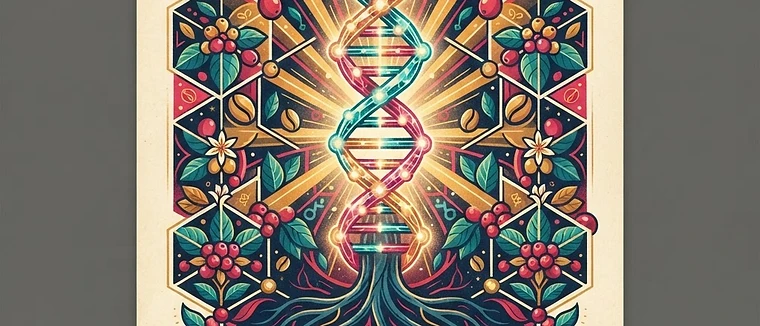
We are moving from a world of guessing which coffee seeds to plant to one of precision genetic architecture.
As climate change threatens traditional coffee growing regions, scientists are creating a digital library of coffee genetics to identify resilient traits. This means future coffee won't just survive changing weather patterns—it will be bred to thrive in them while keeping the flavors we love. For the coffee drinker, this shift ensures that your daily cup remains high-quality and sustainable for decades to come.
For centuries, coffee breeding was a game of patience and trial-and-error. Farmers would identify a healthy-looking plant, harvest its seeds, and plant them in hopes that the offspring would inherit the parent’s strength and flavor. This method, while classic, is inherently slow and often relies on chance mutations.
Today, the approach is shifting toward genomic selection. By decoding the DNA of various Arabica lineages, researchers can now identify specific sequences associated with traits like rust resistance or high sugar content before a single seedling hits the soil. It is effectively shortening a process that used to take decades into a cycle of years.
The most critical evolution is the creation of comprehensive digital genetic databases. International organizations and botanical research institutes are mapping the diverse heirloom varieties found in regions like Ethiopia. By cataloging these natural, wild-growing genetic blueprints, we can preserve traits that have helped these plants endure environmental shifts for centuries.
Who is doing this? It is a collaborative effort involving geneticists, local agricultural ministries, and researchers. By identifying the exact markers for drought tolerance, they provide farmers with a roadmap for what to plant in regions currently experiencing irregular rainfall.
One common fear among coffee enthusiasts is that breeding for survival will result in bland coffee. However, the modern strategy treats flavor and resilience as compatible goals. By cross-referencing sensory data with genetic maps, breeders can ensure that a hardy plant also possesses the precursors for the acidity, body, and sweetness that define .
This means the coffee of the future won't just be 'good enough.' Instead, it will be designed to highlight specific profiles while maintaining the robustness needed for variable climates. It is the science of precision rather than compromise.
The goal isn't to replace the classics like Bourbon or Typica, but to provide options that can grow where these traditional varieties might struggle. Varieties such as the Timor Hybrid have long been used for their rust resistance, but through modern breeding, we are now seeing the emergence of new cultivars that carry those protective genes without sacrificing the complex flavor profiles consumers expect.
For the farmer, this translates to economic stability. When a crop is less susceptible to pests or erratic weather, the yield becomes more predictable. This stability is the bedrock of a sustainable industry, ensuring that producing coffee remains a viable profession for the next generation of farmers.
No directly verifiable external source links are recorded for this story. Its research claims require further verification.
Explore documented coffee differences, then choose a brewing method. Related profiles are research connections, not proof that we tasted each coffee.
Understand bag sizes, cost per brew and documented coffee differences before judging value.
Follow documented origins to farms and the people behind the coffee. A profile is distinct from an original interview.
Separate tasting vocabulary from processing claims, then explore coffee profiles and brewing methods.
Learn something new, follow the people behind your cup, or explore by flavor and tags.