Worth the Price?
Understand bag sizes, cost per brew and documented coffee differences before judging value.
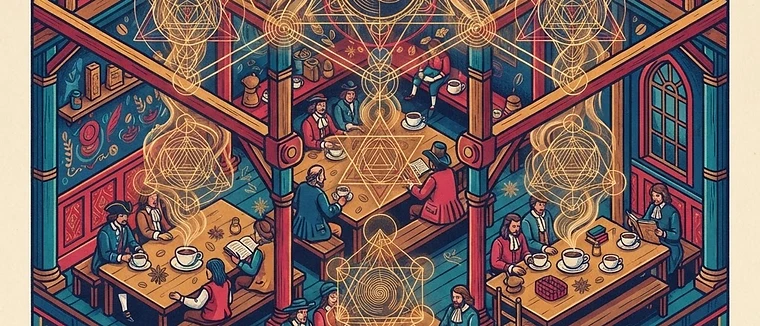
Long before the office breakroom, the coffee house emerged as the original social network, a place where the seeds of democracy and modern intellectual life were roasted alongside the beans.
Coffee houses fundamentally changed society by providing a neutral, caffeinated space for the exchange of ideas, news, and political debate. They transitioned from strictly controlled establishments into the birthplaces of modern commerce, insurance markets, and political movements.
Before the term 'coffee house' entered the Western lexicon, the 'qahveh khaneh' thrived across the Ottoman Empire. By the mid-16th century, these spaces were established in cities like Istanbul and Cairo. They were far more than mere shops selling a beverage; they were centers for 'school of knowledge' gatherings where men played chess, listened to poetry, and debated local events.
Crucially, these spaces broke the traditional boundaries of social hierarchy. In an era of strict class stratification, the coffee house created a democratic leveling effect where a merchant and a government official might sip the same brew and engage in conversation, effectively inventing the concept of public opinion.
When coffee arrived in Europe in the 17th century, it met with skepticism, often dismissed as 'the bitter invention of Satan.' However, once the initial religious suspicion faded, coffee houses spread with astonishing speed. London saw its first coffee house open in 1652, followed by a proliferation of 'penny universities.'
The term 'penny university' referred to the modest cost of a cup of coffee, which granted the patron entry into a space where they could listen to the latest news, read pamphlets, and engage in high-level intellectual discourse. For the price of a penny, you were admitted to a world of information that was otherwise gated behind expensive libraries or aristocratic clubs.
Coffee houses were not just for philosophers and poets; they were the engines of early global finance. Lloyd’s Coffee House in London, for instance, became the primary meeting point for ship captains, merchants, and investors. Because the proprietor kept detailed records of maritime shipping news, the space naturally evolved into the world's leading insurance market.
Similarly, the London Stock Exchange finds its roots in Jonathan's Coffee House, where stockbrokers would congregate to trade shares. By centralizing information and fostering trust among traders, these coffee shops laid the infrastructure for modern global trade.
The stimulating nature of caffeine, combined with the lack of alcohol, made coffee houses the perfect venue for clear-headed political organizing. In France, the Café Procope—the oldest in Paris—became the hub for Enlightenment thinkers like Voltaire and Rousseau.
These patrons didn't just drink coffee; they debated the very nature of human rights and governance. The social momentum built within these walls eventually spilled into the streets, influencing the intellectual climate that preceded the French Revolution and the American push for independence.
While we now associate coffee houses with Wi-Fi and remote work, their fundamental purpose remains unchanged: they act as a 'third place'—a location outside of home and the workplace that fosters community and creativity.
By moving away from the consumption of alcohol, which blurred the senses, society moved toward a 'sober' space that sharpened the mind. Every time you step into a neighborhood café today, you are participating in a tradition that spans five centuries, continuing a legacy of intellectual exchange that literally built the modern world.
No directly verifiable external source links are recorded for this story. Its research claims require further verification.
Explore documented coffee differences, then choose a brewing method. Related profiles are research connections, not proof that we tasted each coffee.
Understand bag sizes, cost per brew and documented coffee differences before judging value.
Follow documented origins to farms and the people behind the coffee. A profile is distinct from an original interview.
Separate tasting vocabulary from processing claims, then explore coffee profiles and brewing methods.
Learn something new, follow the people behind your cup, or explore by flavor and tags.