
4.9
🇪🇹Ethiopia
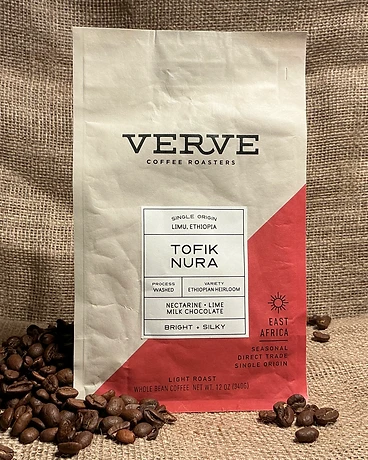
Ethiopia · Limu
Tofik Nura — Verve Coffee Roasters
Tofik Nura and neighboring smallholder farmers in Sadi
Verve Coffee Roasters
Sadi district — Tofik Nura release
Heirloom· Washed
Read the review →“Heirloom” is a collective term used to describe the vast, genetically diverse population of Coffea arabica landraces native to Ethiopia, the birthplace of coffee. Rather than a single variety, it encompasses an estimated 6,000 to 15,000 distinct, naturally occurring, or traditionally cultivated types that have evolved through local adaptation. In the field, these plants are often grown in wild or semi-wild forest conditions, frequently intercropped on smallholder plots without the use of synthetic fertilizers or pesticides. Because of this immense genetic reservoir, cup profiles vary significantly by region and specific landrace, though they are frequently celebrated for complex, floral, and fruit-forward characteristics. For producers and drinkers, the term acknowledges that Ethiopian coffee genetics are too broad to be reduced to a single name, highlighting the importance of preserving this unique, indigenous biodiversity.
Heirloom coffee originates from the wild Coffea arabica populations native to the southwestern highlands of Ethiopia. These plants have evolved and adapted through natural selection in forest and semi-forest environments over centuries without formal human breeding or genetic selection. The term emerged as a collective commercial label to describe the vast, undocumented genetic diversity of these indigenous landraces.
Bright florals, citrus and stone fruit character, often with a tea-like delicacy.
Editorial record last reviewed: . Sources document specific claims, not guarantees about every coffee sold under this variety name.


 Editorial illustration
 Editorial illustration
 Editorial illustration
 Editorial illustration



Blend · Component origins documented on the coffee profile where available
 Editorial illustration
 Editorial illustration
 Editorial illustration
 Editorial illustration


Learn something new, follow the people behind your cup, or explore by flavor and tags.


