Species · genetics
Learn what's inside the bean
Arabica, Robusta, Gesha—or a blend?
Learn species and varieties before comparing individual coffee profiles. A label alone cannot prove a lot's genetic identity.
46 pages on this site carry this tag — reviews, profiles, answers and stories. Tags are derived from our documented data, never invented.
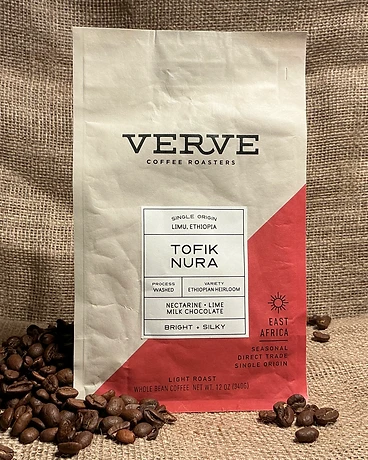
In the coffee industry, 'heirloom' is a collective term used primarily to describe the vast, genetically diverse population of indigenous Coffea arabica varieties native to Ethiopia. Because Ethiopia is the center of origin for Arabica, it hosts thousands of distinct landrace varieties that cannot be reduced to a single cultivar name, making 'heirloom' a functional, albeit imprecise, label for these wild and semi-wild forest coffees.
Research entry updated 2026-09-29 · not source-audited · 6 sources
The term 'heirloom' in coffee is not a formal botanical classification but rather a catch-all descriptor for the immense genetic diversity found in Ethiopia, the birthplace of Coffea arabica. While other regions rely on specific, well-documented cultivars like Bourbon or Typica, Ethiopia’s coffee forests contain an estimated six to ten thousand distinct varieties. Because this genetic landscape is so vast and largely unmapped by international standards, the industry adopted 'heirloom' to categorize these indigenous plants that have evolved and been cultivated in the region for centuries.
Botanically, many of these plants are more accurately described as 'landraces'—traditionally domesticated varieties that have adapted to their specific local environments over generations. Unlike modern hybrids developed in laboratories, these landraces are the result of natural selection within Ethiopia’s diverse forest ecosystems. The Jimma Agricultural Research Center (JARC) has catalogued over 6,000 distinct accessions, highlighting that what is often sold as a single 'heirloom' lot may actually contain a complex mixture of genetically unique coffee types.
In the field, these plants exhibit significant variation in morphology, yield, and disease resistance depending on their specific micro-region. Some are wild forest trees, while others are semi-wild or cultivated in garden plots by smallholder farmers. Because they have evolved in their native habitat, they possess a deep, inherent resilience to local environmental pressures, though they are not necessarily resistant to all modern pests or diseases like coffee leaf rust, which has prompted the development of specific JARC-selected varieties like 74148.
For the producer, the lack of a single variety name is a reflection of traditional farming practices where multiple varieties are often intercropped on the same plot. This diversity is a form of natural insurance, as different plants may respond differently to climate fluctuations or disease outbreaks. However, as the specialty coffee market demands more transparency, the term 'heirloom' is increasingly being replaced by more precise identifiers, such as specific regional landrace names or catalogued JARC variety numbers, to better communicate the coffee's origin and characteristics.
From a sensory perspective, the 'heirloom' label is often associated with the hallmark profiles of Ethiopian coffee: complex floral notes like jasmine and magnolia, bright citrus acidity, and tea-like body. However, because 'heirloom' encompasses such a wide genetic pool, the cup profile can vary wildly depending on the specific region, altitude, and processing method. It is less a specific flavor profile and more a testament to the unparalleled genetic breadth of the region.
Ultimately, the story of heirloom coffee is the story of the species itself. It represents the raw, unrefined genetic heritage of Arabica. While roasters and consumers have historically used the term to denote quality and exoticism, the industry is moving toward a more nuanced understanding. Recognizing these coffees as regional landraces rather than a single 'heirloom' variety honors the work of Ethiopian farmers who have preserved this extraordinary biodiversity for generations.
This topic connects to broader guides. Follow the sequence, or return to the complete TAG directory to explore other subjects.
Arabica, Robusta, Gesha—or a blend?
Learn species and varieties before comparing individual coffee profiles. A label alone cannot prove a lot's genetic identity.

 Editorial illustration
 Editorial illustration
 Editorial illustration
 Editorial illustration



Blend · Component origins documented on the coffee profile where available
 Editorial illustration
 Editorial illustration
 Editorial illustration
Learn something new, follow the people behind your cup, or explore by flavor and tags.


