
Worth the Price?
Understand bag sizes, cost per brew and documented coffee differences before judging value.
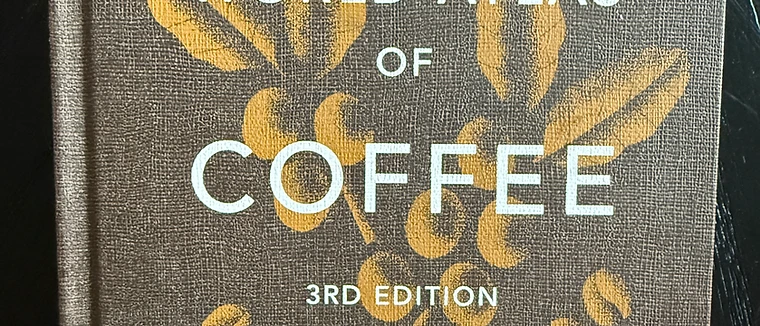
Every so often a coffee book lands on our desk that we genuinely cannot put down. The third edition of James Hoffmann's The World Atlas of Coffee is that book. We read it from cover to cover over one very caffeinated weekend, and we have been recommending it to everyone who has asked us anything about coffee since.
This is not a rehash of the previous edition with a new cover. It has been rebuilt from the ground up: updated origin chapters, refreshed photography, and clearer explanations of the things that actually change how your coffee tastes, from variety and processing to roasting and brewing.
The first thing you notice is the color. This book is packed with large, vivid, full-page photography: coffee cherries glowing red against deep green leaves, mountainsides of terraced farms, and close-ups of beans at every stage of the roast. Flipping through it feels like traveling the coffee belt from your sofa.
The photos are not decoration; they teach. The spread on ripening cherries below is a perfect example: you can see exactly what pickers are selecting for, and why the same tree can yield very different flavors from one harvest to the next.

If you have ever read the words '' and nodded along without fully understanding them, this book fixes that. The roasting chapter walks through every stage of the roast with a photograph of the beans at that exact moment, from pale green through yellowing, cinnamon and , and into the darker development stages.
It is the clearest visual explanation of roasting we have seen in print. You do not need a degree in food science; you just turn the pages and the process unfolds in front of you, with just enough science underneath to explain why each stage matters for what ends up in your cup.

That clarity is the book's real superpower. Hoffmann has a rare gift for taking genuinely technical material, like genetics, processing chemistry and extraction theory, and explaining it in plain language that never talks down to the reader. Complex ideas arrive in short, well-structured chapters that build on each other, so you never feel lost.
The atlas itself works exactly as promised: country by country, with each origin given its own spread covering history, growing regions, varieties, processing and what the resulting coffees typically taste like. For anyone trying to understand why a washed Ethiopian tastes so different from a natural Brazilian, this is the fastest route we know.
Honestly, nearly everyone. Beginners get the best possible foundation; enthusiasts get a reference they will return to for years; and even seasoned professionals will find the updated origin profiles and brewing chapters worthwhile. It also makes a genuinely great gift, which is not something we say lightly about coffee books.
We thoroughly enjoyed it, and we do not hand out praise like that casually. This is now the first book we reach for when we want to check a fact, settle an argument, or simply look at beautiful pictures of coffee. Very highly recommended.
The World Atlas of Coffee by James Hoffmann is widely available wherever books are sold. If you would like to see the photography and the roasting spreads for yourself, you can pick up the third edition below.
This is an external information source, not an affiliate offer or endorsement of a seller.
These sources give research context. A citation does not independently prove every assertion in the story.
Explore documented coffee differences, then choose a brewing method. Related profiles are research connections, not proof that we tasted each coffee.
Understand bag sizes, cost per brew and documented coffee differences before judging value.
Follow documented origins to farms and the people behind the coffee. A profile is distinct from an original interview.
Separate tasting vocabulary from processing claims, then explore coffee profiles and brewing methods.
Learn something new, follow the people behind your cup, or explore by flavor and tags.