

Editorial illustration

Editorial illustration
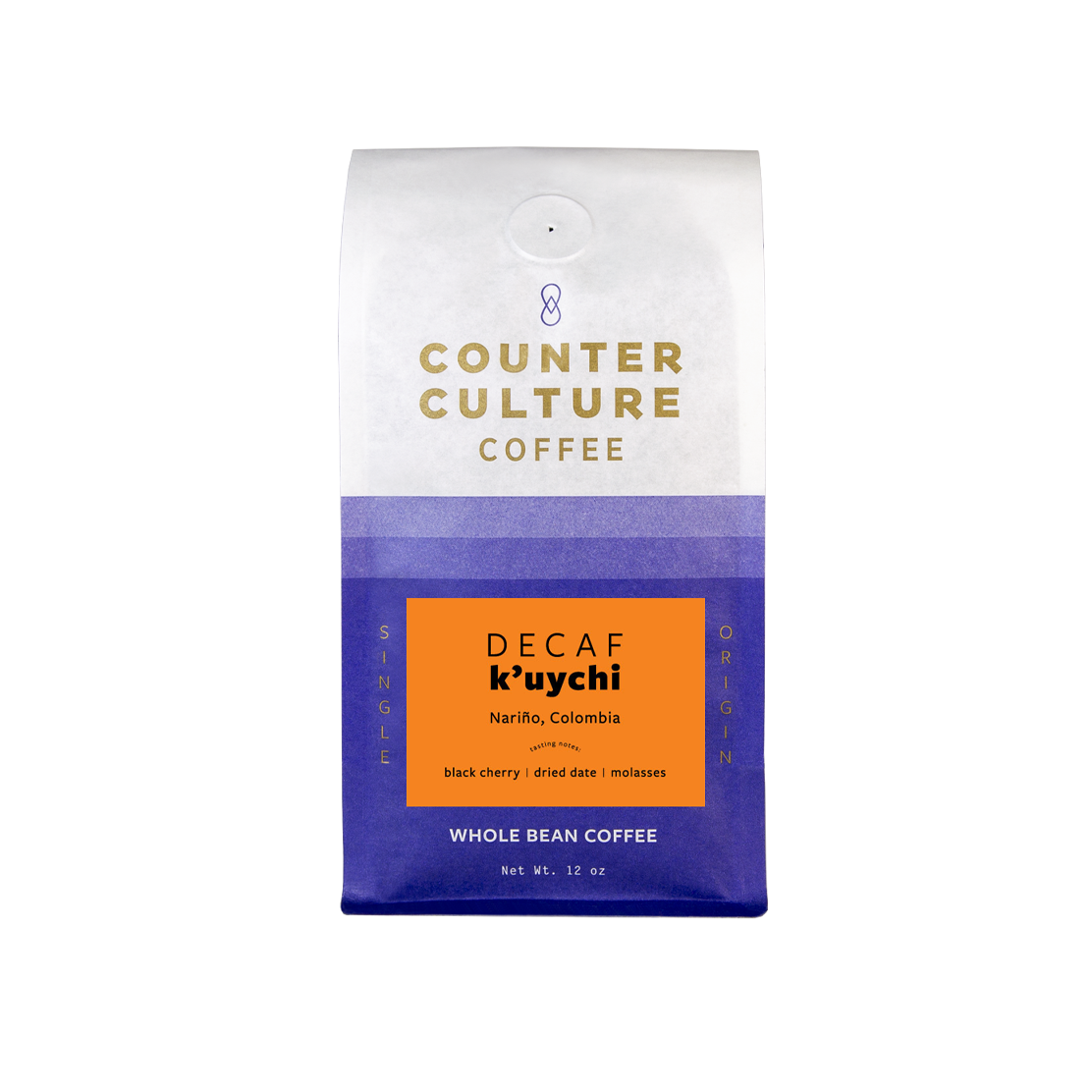
Decaf K’uychi
- individual farms and contributorsThe coffee is documented at the Samaniego-area collective level; individual contributing farms or farmers are not named.
- exact scalar elevationThe source publishes a 1,700–1,800 m range, so the range is preserved in text rather than converted to an invented point value.
- cultivar proportionsCastillo and Colombia are verified, but their proportions are not published.
- origin processing protocolThe coffee is identified as washed, but fermentation time, washing sequence, drying surface, and drying duration are not disclosed.
- decaffeination parametersDESCAFECOL and sugarcane-derived ethyl acetate are verified, but the exact solvent-contact, steaming, and drying parameters are not published for this lot.
- consumer price and currencyThe archive publishes a green-coffee FOB price, not the retail bag price or consumer currency configuration.
- numeric public sentiment ratingThe one qualifying independent exact-name source is qualitative and too small a sample to support a numeric average.
FROM THE BAG
BACK TO THE LAND.
Every link we could verify, traced in one place. Follow the chain as far as it goes — when the industry doesn't disclose a link, we say so instead of guessing.
- 01The name on the bagDecaf K’uychi
- 02The brand
- 03The roaster
- 04The variety
- 05The farmK’uychi
- 06The farmer
- 07The region
- 08The country
K'uychi is a collective brand for smallholder producers in the Samaniego area of Nariño, not a single farm.
Counter Culture Coffee is a specialty roaster focused on sustainable and transparent sourcing, providing detailed information about their coffee origins and partnerships.
The coffee was decaffeinated in Colombia by Descafecol using ethyl acetate derived from sugarcane, preserving a traceable origin and a distinct light-roast profile.
WHAT DID THEY ACTUALLY
DO TO THIS COFFEE?
Added four sections covering the collective origin, variety mix, origin processing, DESCAFECOL decaffeination, price transparency, taste, and public evidence.
Linked the existing Field Blend record for the verified Castillo and Colombia mix; no new variety or farm was created.
Kept the washed origin process distinct from the later sugarcane-derived ethyl acetate decaffeination step.
Recorded one exact-name independent qualitative comment with its URL and method, while leaving the numeric rating and average blank.
Editorial narrative, unknown-field explanations, the existing Field Blend relationship, $4.50/lb FOB context, and one transparent qualitative public-sentiment source.
No individual farm, contributor list, cultivar proportions, detailed fermentation/drying or decaffeination parameters, retail price, or numeric public sentiment rating was inferred.
The page now distinguishes the coffee’s farm-level processing from its Colombian decaffeination step and makes the very small sentiment sample explicit.
Black cherry, dried date, and molasses, based on Counter Culture’s tasting notes.
- · https://counterculturecoffee.com/products/decaf-k-uychi
- · https://www.reddit.com/r/Coffee/comments/1cxwjqh/mod_the_daily_question_thread/
In the database. Not tasted. Not scored.
This coffee is in our database because we can reliably document it — but we haven't tasted and scored it yet, and we never publish a score we haven't earned.
Outside reviews and internet discussion — is kept clearly separate from our own review. When we taste it, our full review appears here.
What the internet is saying about this coffee
AI-synthesized from publicly available information retrieved 2026-10-12. This is research, not our original tasting review.
One independent exact-name tasting comment was positive, but the sample is too small for a representative rating.
The commenter called Decaf K’uychi good and preferred it to Counter Culture’s Slow Motion decaf.
A qualitative summary of public sources, including context. Not a coffee score.
- Public discussionReddit r/CoffeeA commenter who had tried Decaf K’uychi called it good and preferred it to Counter Culture’s Slow Motion decaf.Source
Try these next →
Other roasters, same producer.
These coffees come from the same producer or farm, offered by other roasters. We never automatically declare two offerings the exact same coffee — a match requires lot, harvest and traceability details. Even a true same-lot pair can taste different: roast approach, freshness, rest and brewing all reshape the cup.