Worth the Price?
Understand bag sizes, cost per brew and documented coffee differences before judging value.
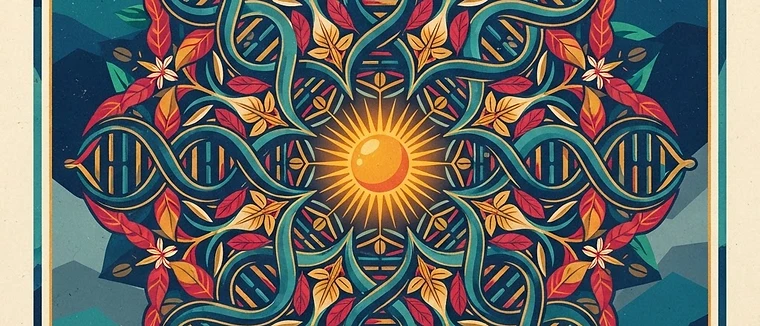
As the climate shifts, the future of our favorite morning ritual depends less on luck and more on a sophisticated, invisible revolution happening in coffee research labs worldwide.
Climate change threatens the traditional coffee regions we rely on, making current varieties like Arabica increasingly vulnerable to heat and disease. Coffee scientists are now breeding new, resilient varieties that maintain the delicate flavor profiles specialty drinkers love while thriving in harsher, warmer environments. This means your future coffee is being designed today to ensure it remains delicious, affordable, and sustainable for generations to come.
Coffee, particularly the high-quality Arabica variety, is famously picky. It requires specific temperate conditions, usually found in high- tropical belts, to produce the complex acids and sugars that give it its appeal. However, these zones are shrinking as global temperatures rise. Because much of the world's coffee is derived from a relatively narrow genetic base, the industry faces a systemic risk where one major disease outbreak or heat wave could devastate production across entire regions.
The vulnerability stems from a lack of genetic diversity. Unlike wheat or corn, which have been subjected to centuries of rigorous scientific selection, many coffee farms still rely on legacy trees planted decades ago. While these heirloom varieties offer exceptional quality, they lack the 'genetic shield'—the biological armor needed to fight off pests like the coffee berry borer or diseases like coffee leaf rust.
Today, coffee agronomists (specialists in crop production and soil management) are turning to advanced breeding programs to rebuild the coffee tree from the ground up. Instead of just selecting for yield or bean size, they are now mapping the coffee genome to identify specific traits that confer drought resistance, heat tolerance, and disease immunity.
This isn't necessarily about genetic modification in the sense of 'lab-grown' coffee, but rather intelligent, accelerated selection. By cross-breeding high-quality Arabica with wilder, more robust relatives, scientists are creating hybrid varieties that combine the best of both worlds: the cup quality of a delicate Bourbon or with the hardiness of a wild, disease-resistant plant.
One of the most exciting developments in the field is the rediscovery of 'wild coffee.' Researchers are traveling to the forests of Ethiopia and beyond to collect seeds from species that have survived for millennia without human intervention. These wild cousins carry the biological secrets to surviving in changing climates.
When these wild traits are cross-pollinated into commercial lines, the result is a plant that can handle a wider range of temperatures. This work is crucial for producers, who often find that their traditional varieties simply stop producing fruit when the mercury rises too high. By integrating these resilient genetics, farmers can maintain their livelihoods even as their local microclimates shift.
The biggest challenge for the breeder isn't just making a coffee plant that can survive; it's making one that still tastes like high-quality . Historically, early attempts at disease-resistant hybrids resulted in plants that produced woody, bitter, or bland beans. The modern goal is to ensure that the genetic improvements don't strip away the very 'notes of chocolate,' 'fruit-forward acidity,' or 'floral aromatics' that drinkers expect.
This requires a constant feedback loop between the laboratory and the table. Breeders work alongside sensory experts, evaluating the crop at every stage of the plant's life cycle. As these new, resilient varieties become available, they are being introduced to farms cautiously, ensuring that the flavor profiles remain top-tier before wide-scale distribution.
What will the coffee farm of the future look like? It will likely be a mosaic of different, climate-adapted varieties rather than the mono-culture plantations of the past. By planting a diverse array of these new hybrids, farmers can hedge their bets against unpredictable weather and disease. This shift towards 'genetic diversity on the farm' is being championed by organizations like World Coffee Research, which provides the science necessary for farmers to make informed decisions about what to plant next.
Ultimately, the evolution of coffee is moving from an art practiced by chance to a science practiced with intention. By understanding the building blocks of the coffee plant, we are ensuring that the future of the industry is not just survived, but engineered for quality.
No directly verifiable external source links are recorded for this story. Its research claims require further verification.
Explore documented coffee differences, then choose a brewing method. Related profiles are research connections, not proof that we tasted each coffee.
Understand bag sizes, cost per brew and documented coffee differences before judging value.
Follow documented origins to farms and the people behind the coffee. A profile is distinct from an original interview.
Separate tasting vocabulary from processing claims, then explore coffee profiles and brewing methods.
Learn something new, follow the people behind your cup, or explore by flavor and tags.