Worth the Price?
Understand bag sizes, cost per brew and documented coffee differences before judging value.
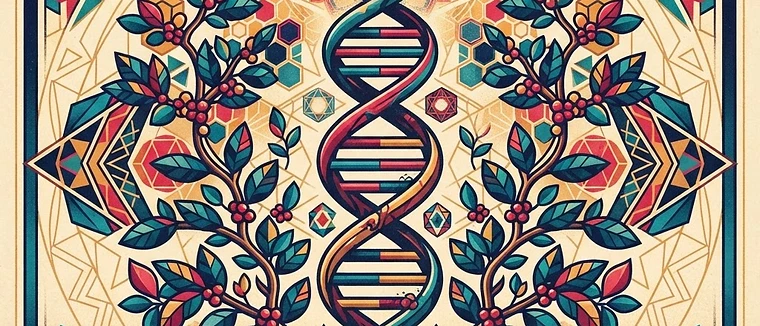
Coffee’s survival as a global beverage depends on a high-stakes genetic treasure hunt taking place in secret greenhouses and ancient forests.
As climate change threatens the fragile Arabica species, coffee scientists are racing to map its DNA to create varieties that can withstand heat and disease. For the drinker, this means the future of your morning cup will rely on 'climate-resilient' plants that are as delicious as they are durable.
Most of the coffee you drink—the high-quality —comes from a single species called Coffea arabica. While Arabica is celebrated for its complex flavor, it is notoriously temperamental. It prefers cool, stable temperatures, typically found at high altitudes, and it is highly susceptible to pests and diseases, most notably Coffee Leaf Rust, a fungus that can devastate an entire harvest in a matter of weeks.
Because almost all commercial Arabica has very low genetic diversity, it acts like a monoculture. When one plant is vulnerable to a specific stressor, the entire field usually is, too. This is the 'genetic bottleneck' that has coffee researchers deeply concerned about the long-term viability of the industry in a warming world.
Who is deciding which coffee survives? It is a global coalition of botanists, agronomists, and non-profit organizations like World Coffee Research. They are scouring the 'birthplaces' of coffee, particularly in Ethiopia, to find wild relatives of Arabica that have adapted to harsh environments over millennia.
The goal is to identify specific genes responsible for drought tolerance or rust resistance and introduce them into familiar, delicious varieties. This isn't just about survival; it's about flavor preservation. Scientists are careful not to trade away the delicate acidity or sweetness that defines great coffee while trying to make the plant stronger.
For decades, breeding was a slow game of trial and error: crossing two plants and waiting years for them to fruit to see if the offspring inherited the parent's best traits. Today, genomics is changing the timeline. By mapping the coffee genome, researchers can identify the presence of a desirable trait in a tiny seedling's DNA, months before it ever produces a cherry.
This speed is essential. As temperatures climb and traditional coffee-growing regions become too hot, farmers need replacement varieties that perform well in lower-, warmer conditions. Breeding programs are now focusing on 'climate-smart' cultivars that don't sacrifice cup quality for ease of growth.
Ultimately, the success of this genetic work depends on the farmer. A resilient variety is useless if it doesn't fit the economic and cultural landscape of the farm. Innovative growers are partnering with research institutes to trial these new varieties in real-world conditions, providing critical data on yield, processing requirements, and disease resistance.
This collaboration between the lab and the field ensures that the coffee of the future is not just a scientific marvel, but a practical solution for the people who spend their lives tending to the plants. It represents a shift from reactive farming—waiting for a disease to strike—to a proactive model of genetic management.
No directly verifiable external source links are recorded for this story. Its research claims require further verification.
Explore documented coffee differences, then choose a brewing method. Related profiles are research connections, not proof that we tasted each coffee.
Understand bag sizes, cost per brew and documented coffee differences before judging value.
Follow documented origins to farms and the people behind the coffee. A profile is distinct from an original interview.
Separate tasting vocabulary from processing claims, then explore coffee profiles and brewing methods.
Learn something new, follow the people behind your cup, or explore by flavor and tags.