Worth the Price?
Understand bag sizes, cost per brew and documented coffee differences before judging value.
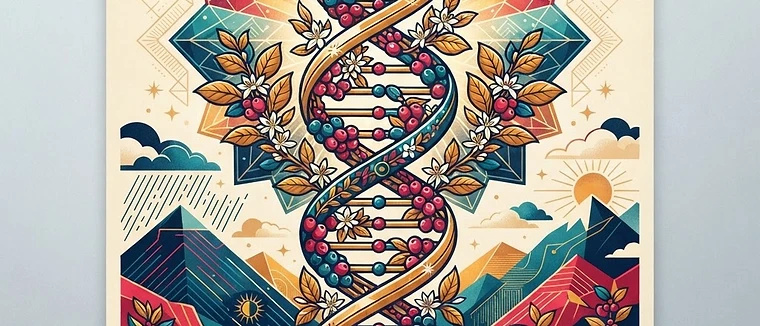
As global temperatures rise and traditional farming faces unprecedented strain, the future of your morning ritual is currently being encoded in the hidden genetic potential of forgotten coffee forests.
Scientists and farmers are now using advanced genetics to identify coffee varieties that can withstand climate change while maintaining high flavor quality. This shift away from reliance on a few fragile, popular varieties ensures that your coffee won't just survive—it will continue to offer the diverse, complex flavors you love despite a warmer planet.
For decades, the coffee industry relied heavily on a narrow range of Arabica varieties—like and Bourbon—prized for their delicate acidity and sweetness. However, these varieties are notoriously sensitive to temperature fluctuations and shifting rainfall patterns. Because they share such a limited genetic lineage, they are collectively vulnerable to the same pests and diseases, creating a precarious monoculture that leaves farmers exposed to total crop failure.
The shift in perspective is profound: instead of forcing sensitive plants to adapt to changing farm conditions, researchers are looking back to the wild origins of coffee in Ethiopia and South Sudan to find genetics that possess innate resilience. These 'heirloom' varieties, long neglected by commercial breeding programs in favor of high-yield crops, contain the biological instructions for drought tolerance and disease resistance.
Who is driving this discovery? It is a collaborative effort involving geneticists, local agricultural research stations, and smallholder farmers who act as guardians of wild coffee populations. By mapping the full genome of thousands of wild coffee accessions—distinct collections of genetic material—researchers can pinpoint specific traits, such as the ability to thrive at lower altitudes or higher temperatures.
Once a promising trait is identified, it does not necessarily mean creating a genetically modified organism. Often, it involves traditional cross-breeding techniques to combine the hardy genes of a wild parent with the sought-after flavor profiles of a classic commercial variety. This process produces offspring that are robust enough to survive climate pressure while satisfying the discerning palate of drinkers.
Sustainability is often discussed in terms of environment, but it is equally an economic necessity for the farmer. When a producer relies on a single variety, one bad season or one pest outbreak can wipe out their entire annual income. By diversifying the varieties planted on a single farm, producers create a 'genetic insurance policy.'
The future trend is moving toward 'field blends,' where multiple genetically distinct varieties are planted together in the same plot. This mimics the natural biodiversity of a forest, slowing the spread of disease and creating a more stable environment. For the consumer, this translates to more complex, multi-layered flavor profiles as roasters begin to lean into the unique characteristics of these resilient, mixed-variety harvests.
Automation and Artificial Intelligence (AI) are now playing a crucial role in managing this genetic complexity. It is no longer possible for a human to track the phenotypic expression—the physical observable characteristics—of every experimental hybrid across thousands of global hectares. AI models now process vast datasets correlating climate variables like humidity, soil composition, and temperature with plant health and yield outcomes.
This data-driven approach allows farmers to make faster, more informed decisions about what to plant and where. Instead of waiting years to see if a crop will survive, growers are using predictive tools to match specific genetic profiles to the micro-climates of their land, essentially optimizing the farm for both resilience and cup quality before a single seed is planted.
As we look ahead, the 'future of coffee' is not just in the hands of the scientist; it is in the hands of the drinker. When consumers demand transparency regarding the varieties they are drinking—asking for more than just 'Arabica' on the label—it creates market pressure for roasters to source these new, resilient, and diverse varieties.
Choosing to support coffees that highlight unique breeding or rare landrace varieties helps prove that there is a viable market for coffee that isn't just a commodity clone. Every time you choose a cup from a lesser-known, resilient variety, you are helping to fund the very research that keeps the industry alive and evolving for the next century.
No directly verifiable external source links are recorded for this story. Its research claims require further verification.
Explore documented coffee differences, then choose a brewing method. Related profiles are research connections, not proof that we tasted each coffee.
Understand bag sizes, cost per brew and documented coffee differences before judging value.
Follow documented origins to farms and the people behind the coffee. A profile is distinct from an original interview.
Separate tasting vocabulary from processing claims, then explore coffee profiles and brewing methods.
Learn something new, follow the people behind your cup, or explore by flavor and tags.