Worth the Price?
Understand bag sizes, cost per brew and documented coffee differences before judging value.
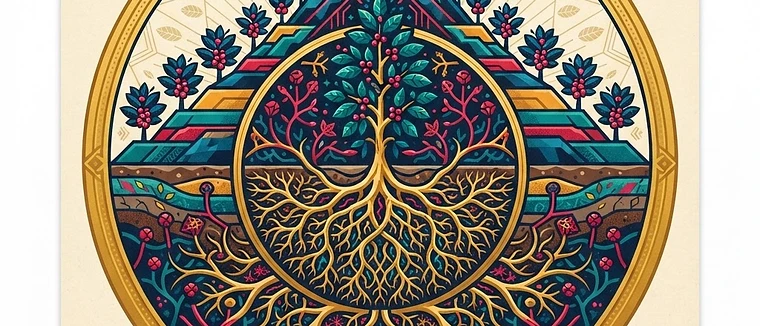
While coffee drinkers obsess over roast profiles and brewing methods, a microscopic fungus is quietly rewriting the future of the global coffee supply.
Coffee Leaf Rust (CLR) is a devastating fungal disease that causes premature leaf drop and massive crop loss, threatening the livelihoods of millions of farmers. Because the fungus constantly evolves, scientists are racing to breed climate-resilient coffee varieties that can withstand both the disease and changing environmental conditions.
Coffee Leaf Rust, scientifically known as Hemileia vastatrix, is a biotrophic fungus—meaning it requires a living host to survive and reproduce. It first gained global notoriety in the 19th century when it decimated coffee plantations in Ceylon (modern-day Sri Lanka), effectively forcing the region to pivot toward tea production. Today, it remains the most significant limiting factor in Arabica coffee production worldwide.
The disease manifests as orange, powdery spots on the underside of coffee leaves. These spots are actually thousands of fungal spores. As the infection progresses, the leaves fall off prematurely, stripping the plant of its ability to photosynthesize. This leads to reduced berry size, lower yields, and in severe cases, the death of the coffee tree itself.
The battle against CLR is a classic example of an evolutionary arms race. As researchers develop resistant coffee varieties, the fungus evolves to overcome those defenses. This 'breakdown' of resistance is a constant concern for breeders and farmers alike. Recent studies, such as the International Multilocation Variety Trial (IMLVT) coordinated by World Coffee Research, have been instrumental in testing how different Arabica varieties perform across diverse global environments.
The goal of these trials is to identify varieties that offer a stable balance of high cup quality and robust resistance. Varieties like Parainema, Kartila 1, and IPR107 have emerged as promising candidates, showing resilience across various research plots in 18 different countries.
CLR does not act in a vacuum; it is deeply influenced by the environment. Research conducted in Ethiopia—the native home of Arabica—shows that rust severity is positively correlated with maximum temperatures. As global temperatures rise, the geographic range where CLR can thrive is expanding, putting previously 'safe' high- farms at new levels of risk.
Farmers are increasingly turning to agroforestry—the practice of integrating trees into coffee farms—to manage these risks. By manipulating shade cover, planting density, and pruning schedules, producers can create microclimates that are less hospitable to the fungus while simultaneously protecting the coffee plants from extreme heat.
The responsibility for managing CLR falls on a complex network of stakeholders. It begins with the scientists at institutions like World Coffee Research and the Centro de Investigação das Ferrugens do Cafeeiro (CIFC), who track the evolution of different rust races. It then moves to the breeders who develop new genetic lines, and finally to the smallholder farmers who must decide which varieties to plant on their land.
For the average coffee drinker, this means the coffee of the future may look and taste different. As we prioritize resilience, the industry is exploring not just new hybrids of Arabica, but also the potential of underutilized species like Coffea , which may offer natural defenses that traditional Arabica lacks.
These sources give research context. A citation does not independently prove every assertion in the story.
Explore documented coffee differences, then choose a brewing method. Related profiles are research connections, not proof that we tasted each coffee.
Understand bag sizes, cost per brew and documented coffee differences before judging value.
Follow documented origins to farms and the people behind the coffee. A profile is distinct from an original interview.
Separate tasting vocabulary from processing claims, then explore coffee profiles and brewing methods.
Learn something new, follow the people behind your cup, or explore by flavor and tags.