
🇮🇩Indonesia
Indonesia
Pegasing - Thermal Shock Washed
Hamdan and Hendra Maulizar
Black & White Coffee Roasters
Pegasing Washing Station
· Washed
Read the review →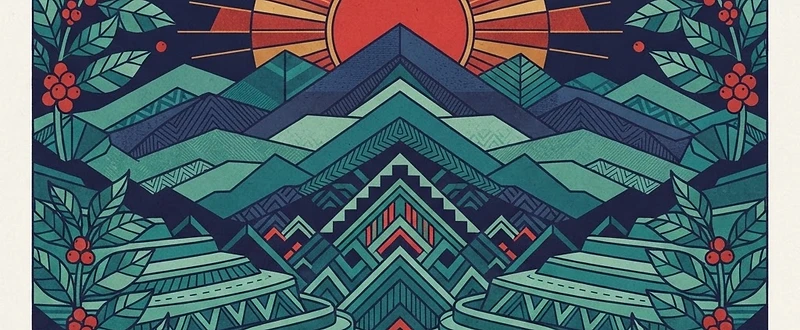
Indonesia spans the widest processing and flavor spectrum of any origin — from the wet-hulled (giling basah) herbal depth of Sumatra's Gayo, Lintong and Mandheling highlands to washed lots from Java, Bali's Kintamani highlands and Sulawesi's Toraja mountains.
Coffee cultivation in Indonesia began in the late 17th century when the Dutch East India Company (VOC) introduced Arabica plants to the region, with the first commercial exports to Europe occurring by 1711. The industry flourished throughout the 18th and 19th centuries, establishing 'Java' as a globally recognized name for high-quality coffee. This dominance was severely disrupted in the late 1800s by a devastating outbreak of coffee leaf rust, which decimated Arabica plantations across the archipelago. In response, the industry shifted toward the cultivation of the more disease-resistant Robusta variety, which allowed production to recover and eventually scale significantly. In the modern era, Indonesia has leveraged its diverse regional identities and unique processing methods to transition from a bulk commodity producer to a prominent origin in the specialty coffee market.