🇬🇹Guatemala
Guatemala · Atitlán
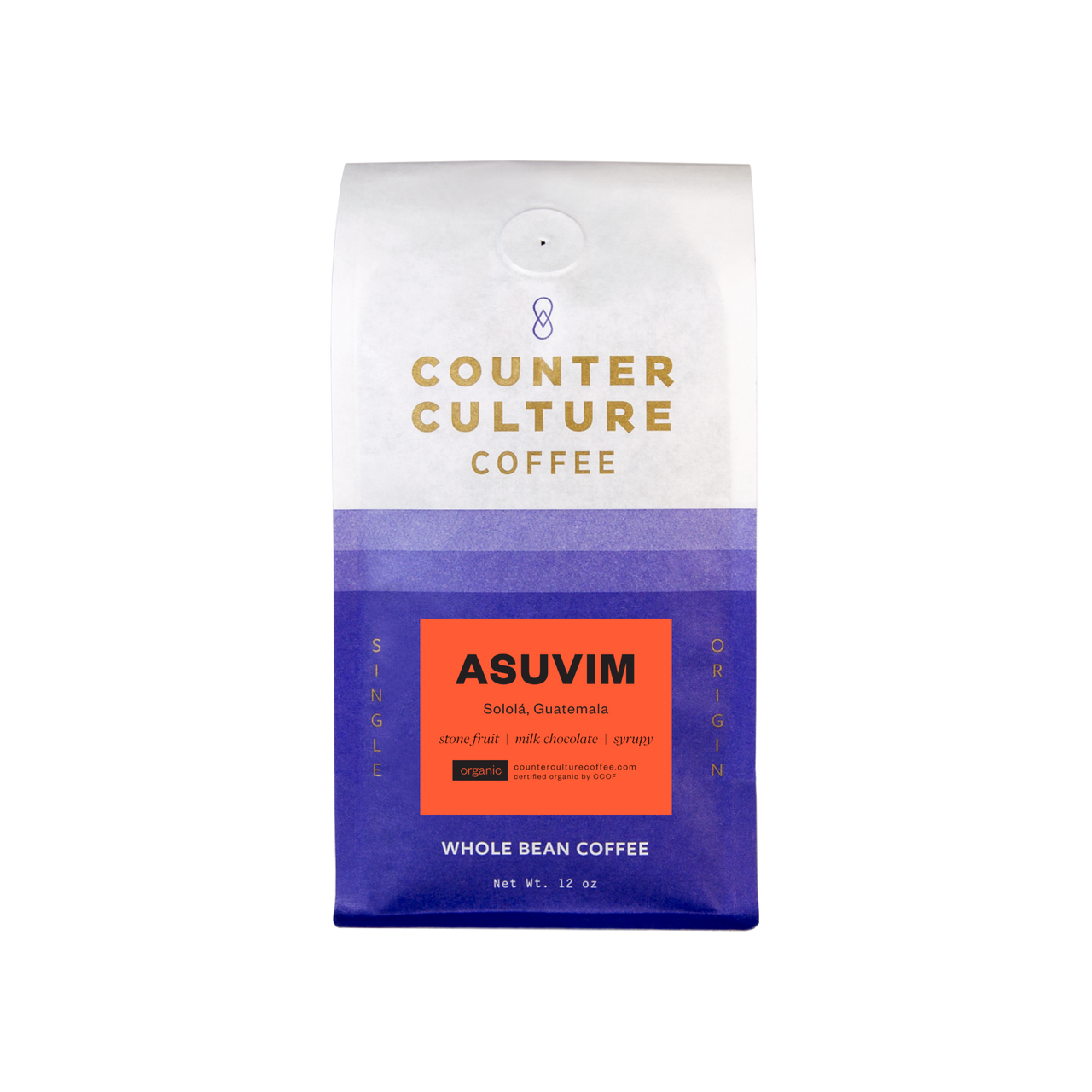
ASUVIM
ASUVIM association
Counter Culture Coffee
ASUVIM
Field Blend· Washed
Explore the profile →The Atitlán region is the ring of farmland around Lake Atitlán, Guatemala's great volcanic lake, filling a caldera framed by the Atitlán, Tolimán and San Pedro volcanoes. Coffee grows on the steep slopes that tumble down to the water, mainly on the Pacific-facing side, in soil made of old volcanic ash rich in organic matter.
Farms sit at roughly 1,524 to 1,707 m — most lots come from between about 1,500 and 1,700 m — where the lake moderates temperature and humidity stays high. The harvest runs roughly December to March, approximate dates that vary with and the year.
Atitlán is smallholder country: the slopes are farmed largely by the region's Maya communities, in plots worked by families rather than estates, an arrangement as old as the region's coffee itself. It is one of the eight regions Anacafé, the national association founded in 1960, defines by cup profile, climate, soil and .
Bourbon, , Typica and Catuaí are the common varieties, and the is standard. In the cup, the region is typically described as full-bodied and aromatic with a crisp acidity — the lake-and-volcano version of Guatemala's balanced profile — a documented tendency rather than a rule, and every lot is farm- and season-specific.
What makes Atitlán distinctive is the completeness of the picture: few origins in the world combine an active volcanic setting, a lake climate, indigenous smallholder farming and a defined regional identity so visibly in one landscape.

These are documented directory relationships, not independently verified farm visits or lot traceability. Follow individual profiles to inspect available sources.
 Editorial illustration
Learn something new, follow the people behind your cup, or explore by flavor and tags.
