
4.9
🇬🇹Guatemala
Guatemala · Huehuetenango
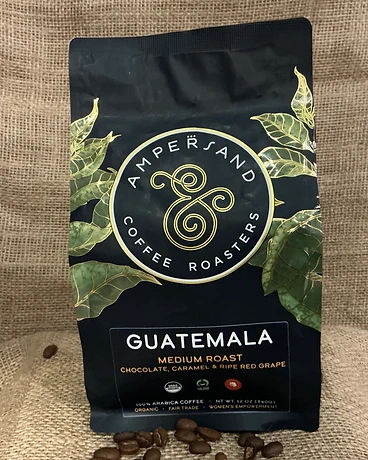
Guatemala — Ampersand Coffee Roasters
Asobagri cooperative
Asobagri member farms
· Washed
Read the review →
Editorial illustration · not a verified photograph of this location
Eight distinct growing regions produce remarkably diverse coffees, from the bright florals of Huehuetenango to the chocolate of Antigua.
Coffee was introduced to Guatemala in the mid-1700s by Jesuit missionaries, who initially cultivated the plants as ornamental decorations for their monasteries. The industry shifted to commercial production in the mid-19th century after the collapse of the country's indigo and cochineal dye exports, prompting the government to encourage coffee cultivation through land grants and support for European landowners. By 1880, coffee had become the nation's dominant export, though the industry later faced significant disruption during the decades-long civil war that began in 1954. To organize and support the sector, the Asociación Nacional del Café (ANACAFE) was established in 1960, eventually leading to the creation of a formal denomination of origin system for the country's diverse growing regions. Today, Guatemala maintains a global reputation for specialty-grade coffee, though producers continue to navigate modern challenges such as climate change, labor shortages, and the need for rust-resistant crop varieties.
San Marcos is the warmest and most humid coffee-growing region in Guatemala, characterized by high rainfall patterns that can reach up to 200 inches annually. The region is home to the Tajumulco and Tacana volcanoes, which are the two highest peaks in Central America. Coffee is typically cultivated at altitudes ranging from 1,350 to 1,800 meters above sea level in nutrient-rich volcanic soil. These environmental conditions contribute to a distinct cup profile often noted for its floral aroma and pronounced acidity.
Region guide →Chimaltenango is a department located in the central highlands of Guatemala, characterized by its mountainous terrain and volcanic soil. Coffee cultivation in this region typically occurs at high altitudes ranging from 1,300 to 2,000 meters above sea level. The area encompasses diverse microclimates, including notable production zones like San Martín Jilotepeque and the slopes surrounding the Acatenango volcano. These environmental conditions contribute to the production of high-quality specialty coffee known for its balanced body and distinct acidity.
Region guide →The Acatenango region is defined by its rugged volcanic landscape, situated on the slopes of the active Fuego and Acatenango volcanoes. Coffee plantations typically thrive at high altitudes ranging from 1,300 to 2,200 meters above sea level. The soil is notably rich in minerals due to frequent volcanic activity, which provides essential nutrients for coffee plants. This unique microclimate, combined with dense shade and temperate weather, allows for the development of dense, high-quality beans.
Region guide →Santa Rosa is a coffee-growing department located in the south-central region of Guatemala. The area is characterized by nutrient-rich volcanic soils and high-altitude terrain that provide ideal conditions for coffee cultivation. Farms in this region typically operate at elevations ranging from 1,200 to 1,750 meters above sea level. These environmental factors allow coffee cherries to mature slowly, which is believed to concentrate the flavors within the beans.
Region guide →San Juan Sacatepéquez is a coffee-growing municipality located in the department of Guatemala. Farms in this area are situated at high altitudes, typically ranging from 1,550 to 1,950 meters above sea level. The region is characterized by fertile highland terrain and traditional agroforestry systems that utilize shade trees like pine and Grevillea. While coffee has been cultivated here for generations, the area is often overshadowed by more famous neighboring regions.
Region guide →El Progreso is the Guatemalan department containing San Antonio La Paz and the Sierra de las Minas foothills where Finca Las Moritas is located. Partners Coffee documents the Las Moritas lot at 1,700–1,800 meters, with postharvest processing completed in Antigua.
Region guide →Sierra de las Minas is an east–west mountain range and biosphere reserve in eastern Guatemala. Verve identifies it as the growing region for its Sierra de las Minas lot; the range spans contrasting humid and dry microclimates rather than one farm or municipality.
Region guide →The Fraijanes Plateau lies just south of Guatemala City, a high plain ringing the capital's outskirts under the active Pacaya volcano — one of Central America's most restless, which most recently erupted in 2021. Pacaya's repeated ash falls feed the region's pumice-rich volcanic soil, and the coffee lands sit literally within sight of the eruption column when the mountain stirs. Farms sit at roughly 1,400 to 1,800 m, with abundant rain and notably variable humidity through the year. The harvest is one of Guatemala's earliest to finish, running roughly December to February, extending toward March in parts — approximate dates that shift with altitude and the year. Fraijanes is one of the eight regions Anacafé, the national coffee association, has defined since the early 1990s by cup profile, climate, soil and altitude — and the plateau's story is the capital's story: it is the coffee region most woven into greater Guatemala City, mixing estates and smallholder plots on the plateau's slopes. Bourbon, Caturra, Catuaí and Typica are the common varieties, and the washed process is standard. In the cup, the region is generally described in the trade as balanced and full, with the sweetness and body typical of Guatemala's volcanic-soil origins — a tendency, not a rule, and every lot is farm- and season-specific. What makes Fraijanes distinctive is proximity: nowhere else does a defined specialty origin sit this close to a national capital and a live volcano at once.
Region guide →The Atitlán region is the ring of farmland around Lake Atitlán, Guatemala's great volcanic lake, filling a caldera framed by the Atitlán, Tolimán and San Pedro volcanoes. Coffee grows on the steep slopes that tumble down to the water, mainly on the Pacific-facing side, in soil made of old volcanic ash rich in organic matter. Farms sit at roughly 1,524 to 1,707 m — most lots come from between about 1,500 and 1,700 m — where the lake moderates temperature and humidity stays high. The harvest runs roughly December to March, approximate dates that vary with altitude and the year. Atitlán is smallholder country: the slopes are farmed largely by the region's Maya communities, in plots worked by families rather than estates, an arrangement as old as the region's coffee itself. It is one of the eight regions Anacafé, the national association founded in 1960, defines by cup profile, climate, soil and altitude. Bourbon, Caturra, Typica and Catuaí are the common varieties, and the washed process is standard. In the cup, the region is typically described as full-bodied and aromatic with a crisp acidity — the lake-and-volcano version of Guatemala's balanced profile — a documented tendency rather than a rule, and every lot is farm- and season-specific. What makes Atitlán distinctive is the completeness of the picture: few origins in the world combine an active volcanic setting, a lake climate, indigenous smallholder farming and a defined regional identity so visibly in one landscape.
Region guide →Antigua's coffee grows in a high valley framed by three volcanoes — Agua, Fuego and Acatenango — in Guatemala's central highlands, around the colonial capital city of Antigua Guatemala itself. Fuego is still active, and its periodic eruptions dust the valley with fresh ash that replenishes the soil's minerals, a slow, recurring fertilization few origins can claim. Farms sit at roughly 1,500 to 1,700 m, with cool nights and a distinct dry season that concentrates the harvest. The valley holds some of the country's oldest coffee estates — Antigua is among Guatemala's longest-established coffee lands — and its coffee, shade-grown Arabica under a protected regional identity, is the origin most foreign buyers learn first when they learn Guatemala at all. The regional system the coffee trades in was built by Anacafé, the national coffee association founded in 1960, which since the early 1990s has defined the country's producing regions by cup profile, climate, soil and altitude. Within that framework Antigua is estate country more than smallholder country: larger, historic farms dominate, though small producers surround them. Bourbon, Caturra, Catuaí and Typica are the common varieties, and the washed process is standard, as it is across nearly all of Guatemala. The harvest window runs roughly from December into March or April, later at higher altitude — approximate dates that shift with the year. In the cup, the trade's shorthand for Antigua is structure: chocolate-forward, balanced and cleanly sweet, with the body and composure that made the region Guatemala's most famous. As ever, that is a regional tendency — each lot is estate- and season-specific.
Region guide →Cobán — officially the Rainforest Cobán region — is Guatemala's cloud-soaked coffee country, set in the humid subtropical forest of the Alta Verapaz highlands in the country's central-north. Where Guatemala's other famous regions are volcanic, Cobán is limestone, clay and mist: rainfall is intense, and cloud cover is close to permanent, the second-highest of the eight Anacafé regions after San Marcos. The unusual conditions show in the coffee. Altitude is lower than the volcanic south — commonly 1,300 to 1,500 m, with some plantings higher — and the near-constant cloud slows cherry maturation in ways more akin to shade than to elevation. The harvest runs roughly December to March, approximate dates as always. Production is overwhelmingly smallholder, on plots carved into forest hillsides, within the eight-region system Anacafé has defined since the early 1990s. Bourbon, Caturra, Catuaí and Typica are the common varieties, and the washed process is standard across the region. In the cup, Rainforest Cobán is typically described as medium-bodied with fresh-fruit and wine-toned notes and a gentler acidity than the volcanic regions — a profile the trade links directly to the low light and moisture of the cloud forest. That is a documented tendency, not a guarantee; every lot is farm- and season-specific. What makes Cobán distinctive is that it is the counter-example in Guatemala's story: proof that the country's quality coffee is not only a volcanic phenomenon, but also a forest one.
Region guide →Huehuetenango is Guatemala's far-northwestern coffee country, high in the Sierra de los Cuchumatanes — the tallest non-volcanic mountain range in Central America — near the border with Mexico. It is the highest and driest of the country's non-volcanic regions, and the most remote of the eight Anacafé-defined growing areas. Altitude is the region's signature: coffee grows from roughly 1,500 m up to about 2,000 m and beyond, unusual for the latitude. Warm winds that cross from Mexico shield the high valleys from frost, which is what allows planting at elevations that would be impossible elsewhere in Guatemala. The harvest is the country's longest — roughly December through April, with lower areas starting as early as September — approximate dates that vary with altitude and the year. Production is overwhelmingly smallholder: family farms in remote valleys and villages, historically far from the country's mills, now organized largely through cooperatives and producer groups. Bourbon, Caturra, Catuaí and Typica are the common varieties, and the washed process is standard. In the cup, Huehuetenango is widely described as Guatemala's most complex origin — bright, fruit-toned acidity with layered sweetness — the profile that made the region a fixture on specialty lists. That is a documented trade tendency, and as always each lot is specific to its producers and season. What makes Huehuetenango distinctive is altitude against geography: the combination of the Cuchumatanes, the protective winds and the sheer distance from the capital produced a coffee culture that is proudly self-contained.
Region guide →
 Editorial illustration
 Editorial illustration
 Editorial illustration
 Editorial illustration
 Editorial illustration
 Editorial illustration
 Editorial illustration
 Editorial illustration
 Editorial illustration

Learn something new, follow the people behind your cup, or explore by flavor and tags.


