🇭🇳Honduras
Honduras · Santa Bárbara
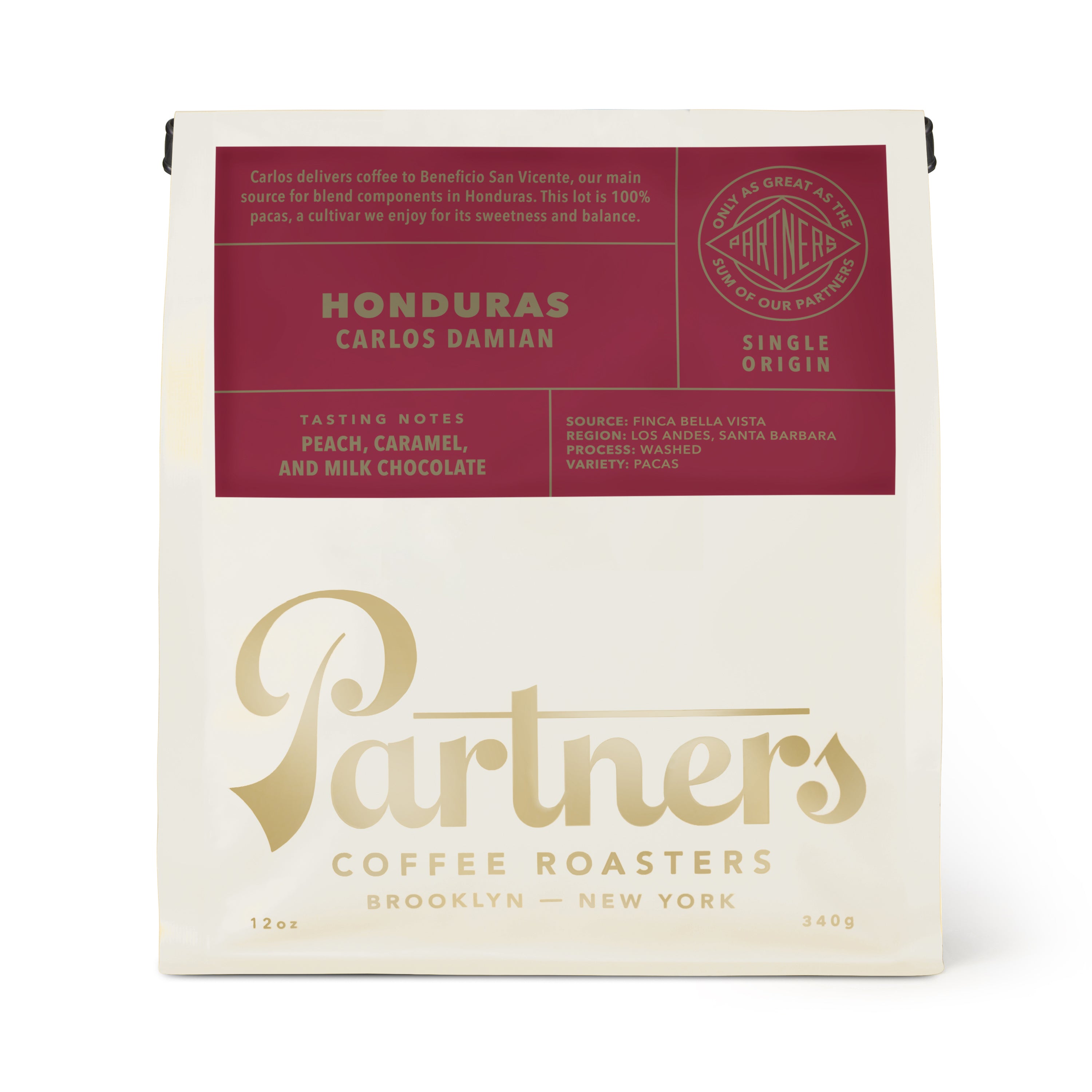
Honduras - Carlos Damian
Carlos Damian Rodriguez
Partners Coffee
Bella Vista (Carlos Damian Rodríguez)
Pacas· Washed
Explore the profile →2 pages on this site carry this tag — reviews, profiles, answers and stories. Tags are derived from our documented data, never invented.
Carlos Damian Rodriguez is a specialty coffee producer based in the Santa Barbara region of Honduras, known for his high-quality Pacas variety lots. His work is significant for demonstrating the rapid potential of smallholder farmers to achieve specialty-grade status through meticulous processing and infrastructure investment, providing roasters with clean, syrupy, and fruit-forward coffees that reflect the unique terroir of the Santa Barbara mountains.
Carlos Damian Rodriguez is a dedicated coffee producer operating in the Santa Barbara region of Honduras, a department widely recognized for its high-altitude coffee production and exceptional cup profiles. His farm, Bella Vista, has become a notable name in specialty coffee circles, particularly through direct trade relationships that highlight the potential of small-scale producers to deliver consistent, high-quality harvests. His journey into specialty coffee is marked by a rapid ascent, moving from his first harvest to producing lots that consistently meet rigorous specialty standards.
The story of Bella Vista is one of intentional growth and quality-focused infrastructure. When roasters first encountered Carlos Damian in 2016, his coffee was from his inaugural harvest. Despite the uncertainty often associated with new producers, the quality of his initial lots was high enough to be graded as specialty. This early success provided the capital and confidence necessary for Carlos to reinvest in his farm, leading to significant improvements such as the construction of on-site drying tables and renovations to his processing facilities.
Carlos Damian primarily cultivates the Pacas variety, a natural mutation of the Bourbon variety that is well-suited to the climatic conditions of Honduras. The processing method employed at Bella Vista is a meticulous fully washed process. During the harvest, Carlos depulps the coffee cherries each afternoon and subjects the beans to an 18-hour dry fermentation in tanks. This is followed by a rigorous seven-stage rinsing process to ensure the complete removal of mucilage, which contributes to the clean, syrupy mouthfeel characteristic of his lots.
Following the washing stage, the coffee is sun-dried in parabolic dryers for a period of 15 to 20 days. A critical component of his quality control is the hand-sorting of parchment coffee during the drying phase, where he removes visible defects to ensure uniformity. This attention to detail has resulted in cup profiles frequently described as having lively notes of red apricot and berries, balanced by a round, syrupy body that has made his coffee a seasonal favorite for specialty roasters.
Like many smallholder farmers in the region, Carlos Damian faces systemic challenges, including the rising costs of agricultural inputs and the increasing scarcity of labor during the peak harvest season. These economic pressures are a constant reality for producers in Santa Barbara, yet Carlos remains focused on long-term sustainability. His future plans include further investments in infrastructure, specifically a dedicated storage facility and the acquisition of moisture meters to achieve greater precision during the drying process.
The recognition of Carlos Damian’s work serves as a case study for the impact of direct trade and the importance of supporting smallholder infrastructure. By focusing on post-harvest processing and quality control, he has successfully elevated his farm's output to compete with larger, more established estates. For the consumer, his coffee represents the intersection of traditional Honduran varieties and modern, precision-oriented processing techniques that define the current specialty coffee landscape.