Place · people
Follow coffee to its origin
Who grew it, and where?
Start with the growing landscape, move into origin guides, then inspect farm and producer records. Not every coffee names an individual farmer.
24 pages on this site carry this tag — reviews, profiles, answers and stories. Tags are derived from our documented data, never invented.
Kirinyaga is a premier coffee-producing region in Kenya’s Central Highlands, situated on the fertile southern slopes of Mount Kenya. It is globally renowned for producing high-grade, complex coffees characterized by vibrant acidity, syrupy body, and intense fruit notes like blackcurrant and grapefruit, largely driven by the region's rich volcanic soil and meticulous cooperative processing standards.
Research entry updated 2026-10-06 · not source-audited · 8 sources
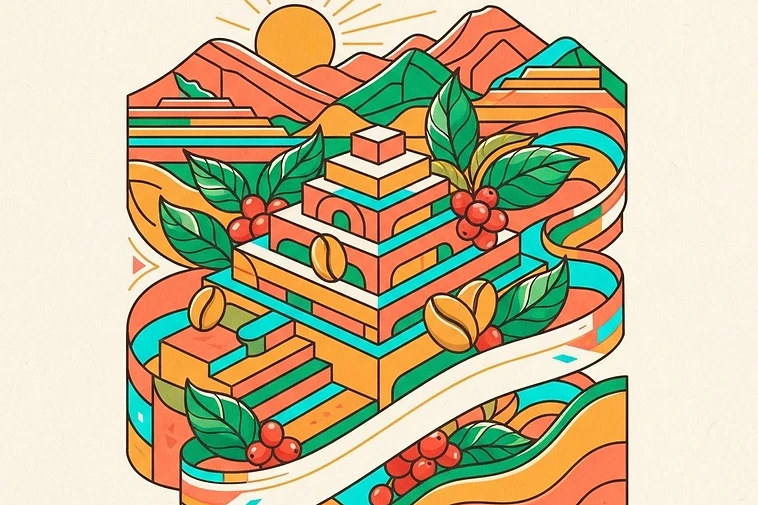
Kirinyaga County, named after the Kikuyu word for Mount Kenya, stands as a cornerstone of Kenya’s specialty coffee industry. Located in the Central Highlands, the region benefits from high altitudes ranging from 1,400 to 1,800 meters above sea level. The landscape is defined by the southern foothills of Mount Kenya, where rich, red volcanic soils provide the essential nutrients and drainage required for high-quality coffee cultivation. This unique terroir, combined with a cool climate, allows coffee cherries to mature slowly, resulting in the high density and complex aromatic oils that define the region's output.
The coffee production model in Kirinyaga is deeply rooted in the cooperative system that emerged following Kenya's independence. Smallholder farmers, who typically manage small plots of 200 to 300 trees, aggregate their harvests through Farmer Cooperative Societies (FCSs). These societies manage 'factories'—the local term for wet mills—where cherries are processed. Organizations like the Baragwi Farmers’ Cooperative Society, which manages 12 wet mills and represents over 18,000 members, exemplify the scale and historical significance of these institutions in maintaining quality standards across the region.
Processing in Kirinyaga is synonymous with the 'Kenyan process,' a rigorous method that includes sorting, floating, depulping, and a signature double fermentation. After fermentation, the coffee is washed and soaked, then dried on raised beds for approximately two weeks. This meticulous approach is designed to highlight the inherent qualities of the varieties grown, which include the classic SL28 and SL34 cultivars, as well as newer, disease-resistant varieties like Ruiru 11 and Batian. The result is a cup profile often described as having a syrupy body, vibrant acidity, and distinct notes of blackcurrant, red currant, and grapefruit.
Harvesting in Kirinyaga follows the typical Central Kenya calendar, which features two distinct cycles. The early crop is generally harvested between May and July, while the main late crop occurs from October to December. Because the region is situated between Nyeri and Embu, it shares some characteristics with its neighbors but is frequently noted by coffee professionals for being slightly more fruit-forward than Nyeri, while maintaining the legendary consistency that makes Kenyan AA grades highly sought after by international buyers.
Beyond the technical specifications, the region's success is tied to the infrastructure of its cooperative unions. The Kirinyaga County Cooperative Union Limited plays a vital role in supporting the industry, ensuring that the thousands of smallholder farmers have access to the resources needed to maintain their trees and processing facilities. This collective effort ensures that the 'factory' system remains the heartbeat of the region, allowing for the traceability and quality control that specialty roasters demand.
Today, Kirinyaga remains a benchmark for quality in the global coffee market. Whether it is the famous Kii factory or the expansive operations of the Baragwi FCS, the region continues to produce lots that command premium prices. For the drinker, a Kirinyaga coffee offers a quintessential Kenyan experience: a bright, intense, and deeply complex cup that reflects the dedication of thousands of smallholders working in the shadow of Mount Kenya.
This topic connects to broader guides. Follow the sequence, or return to the complete TAG directory to explore other subjects.
Who grew it, and where?
Start with the growing landscape, move into origin guides, then inspect farm and producer records. Not every coffee names an individual farmer.
 Editorial illustration


 Editorial illustration
 Editorial illustration
 Editorial illustration


 Editorial illustration


Learn something new, follow the people behind your cup, or explore by flavor and tags.


