
5.0
🇨🇴Colombia
Colombia · Quindío
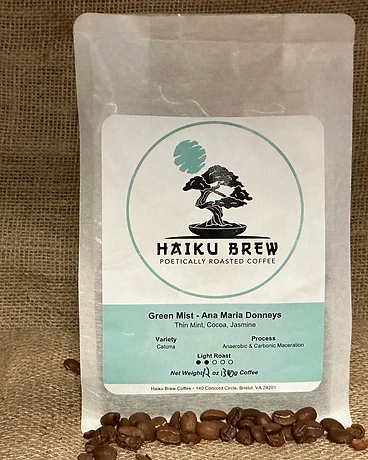
Green Mist — Ana Maria Donneys
Ana Maria Donneys
Café Primitivo
Caturra· Carbonic Maceration
Read the review →Caturra is a natural dwarf mutation of the Bourbon variety, first discovered on a plantation in Minas Gerais, Brazil, in the early 20th century. Genetically, it is a single-gene mutation that results in a compact plant with short internodes, allowing farmers to plant trees at significantly higher densities than traditional varieties. This structural change made it a workhorse for the Latin American coffee industry, as it offered higher yields and easier harvesting without the need for ladders. In the cup, Caturra is known for a bright, clean, and solid profile, though its quality is highly dependent on elevation. Because it is extremely susceptible to coffee leaf rust, it has also served as a vital genetic parent for many modern disease-resistant hybrids, including Catimor and Catuai. For producers, it remains a foundational variety that balances productivity with a reliable, specialty-grade flavor profile.
Caturra's dwarf stature let farmers plant trees far more densely, and it spread across Latin America in the mid-20th century as the workhorse of quality-focused farming — for decades the default 'specialty' variety.
Clean and sweet with bright red fruit, gentle citrus and a balanced structure.
Compact, short trees with tight internodes; adapts well to dense planting and wind.
Reliable yields, manageable stature, and a clean, sweet, balanced cup that cuppers trust as a baseline.
Editorial record last reviewed: . Sources document specific claims, not guarantees about every coffee sold under this variety name.

 Editorial illustration
 Editorial illustration

 Editorial illustration
 Editorial illustration


 Editorial illustration
Learn something new, follow the people behind your cup, or explore by flavor and tags.


