Worth the Price?
Understand bag sizes, cost per brew and documented coffee differences before judging value.
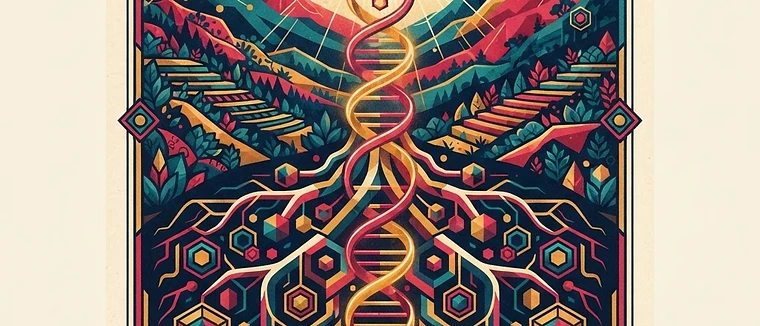
As the global climate shifts, the future of our morning cup depends less on chance and more on the precise, molecular engineering of resilient coffee varieties.
To survive rising temperatures and unpredictable rainfall, scientists are moving beyond traditional cross-breeding to develop coffee varieties that can withstand climate stress while retaining premium flavor. This matters because the iconic arabica bean is increasingly vulnerable, meaning the future of your favorite brew relies on these new, genetically resilient plants.
For decades, the industry has relied on a handful of high-quality varieties like Bourbon and Typica. However, these plants are notoriously sensitive. They prefer stable temperatures and consistent rainfall, conditions that are becoming increasingly rare in traditional coffee-growing regions. This fragility creates an existential risk for farmers who depend on high-yield, high-quality crops to sustain their livelihoods.
The industry is now pivoting toward a more scientific approach. Rather than simply hoping for ideal weather, researchers and agronomists are working to decode the genetic makeup of coffee to identify traits that confer resilience against pests, diseases like coffee leaf rust, and the heat stress induced by a warming planet.
Historically, coffee breeding was a slow, hit-or-miss process. A breeder might cross two varieties, wait years for the resulting tree to mature, and then test the quality of the cup. Today, the process is being accelerated by marker-assisted selection—a technique where scientists identify specific segments of DNA associated with desirable traits, such as drought tolerance or high sugar content, before the tree is even fully grown.
This is not about laboratory-grown coffee, but rather precision agriculture. By mapping the genetic landscape, breeders can select parents that hold the best promise for a resilient offspring. Organizations like World Coffee Research (WCR) have been instrumental in this, creating libraries of genetic data that help farmers understand exactly what they are planting and how those varieties will likely perform in their specific microclimates.
Much of the global coffee supply is genetically narrow, meaning many farms grow the exact same few types of plants. This lack of diversity is a dangerous liability; if a single disease evolves to target that specific genetic profile, it can devastate entire regions. The future of coffee relies on reintroducing lost diversity, including wild Ethiopian landraces, into modern breeding programs.
These landraces—varieties that have developed naturally in their home environment over centuries—often contain the 'missing link' in the genetic chain. They possess innate resistances that have been bred out of modern 'prestige' coffees in favor of yield or size. By integrating these genes, we are building a new generation of coffee that doesn't just survive in the future; it thrives.
The biggest challenge for the future of coffee is the 'quality gap.' Often, highly resilient varieties are robust but lack the complex acidity and sweetness that specialty drinkers expect. The mission for modern plant breeders is to find the intersection of durability and sensory excellence—a task that requires collaboration between botanists, chemists, and professional cuppers.
This is why the 'Who' in this equation is so critical. It is the farmers who act as the final judges, deciding whether a resilient new variety actually produces a cup worth selling. Their feedback loop ensures that as we engineer for survival, we do not lose the very qualities that make coffee a global obsession.
No directly verifiable external source links are recorded for this story. Its research claims require further verification.
Explore documented coffee differences, then choose a brewing method. Related profiles are research connections, not proof that we tasted each coffee.
Understand bag sizes, cost per brew and documented coffee differences before judging value.
Follow documented origins to farms and the people behind the coffee. A profile is distinct from an original interview.
Separate tasting vocabulary from processing claims, then explore coffee profiles and brewing methods.
Learn something new, follow the people behind your cup, or explore by flavor and tags.