Worth the Price?
Understand bag sizes, cost per brew and documented coffee differences before judging value.
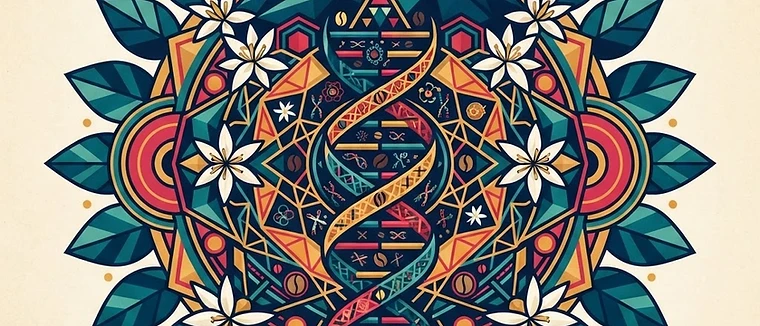
As rising temperatures threaten traditional farms, a global race is underway to decode the coffee genome and secure the future of your morning cup.
Climate change is making traditional Arabica coffee harder to grow in many regions. Scientists and farmers are now using advanced genetics and breeding to create hardier coffee varieties that can survive heat and disease while maintaining the high quality we love. This means you will still have a flavorful cup of coffee in the coming decades even as the planet warms.
Coffee is surprisingly sensitive. The most common commercial species, Arabica, is a 'self-pollinator' with very low genetic diversity, making it highly susceptible to pests like coffee leaf rust and environmental stress. For decades, the global industry relied on a handful of varieties, creating a vulnerability that is now being tested by erratic weather patterns and shifting rainfall.
Who decides which plants get to live? In the past, this was often determined by yield and disease resistance. Today, the focus has shifted toward flavor-profile preservation. Breeders are working to protect the delicate aromatic compounds—the invisible molecules that give your coffee its floral or fruity scents—even as they introduce genes from more rugged, wild coffee species.
Modern breeding isn't just about cross-pollinating in a field; it’s about using molecular markers to 'see' the traits of a plant before it even sprouts. By mapping the coffee genome, researchers can identify which seeds carry the blueprint for heat tolerance without needing to grow them to maturity, a process that used to take years.
This approach allows for the creation of 'climate-resilient' varieties that don't sacrifice the complex cup quality associated with prized cultivars like or Bourbon. It’s a precise, scientific game of mix-and-match that ensures the next generation of coffee is as delicious as it is durable.
To find the 'super-genes' of the coffee world, scientists are turning back to the source: the wild forests of Ethiopia and beyond. These wild varieties have evolved over millennia to survive extreme conditions that cultivated plants simply cannot handle.
By integrating these wild traits—such as natural drought resistance—into domestic lines, researchers are effectively 'vaccinating' the coffee crop against future climate shocks. This is a collaborative effort involving geneticists, local farmers, and sustainability organizations working to ensure that the genetic diversity of coffee is preserved as an insurance policy for the entire planet.
For a smallholder farmer, a bad harvest isn't just an inconvenience; it’s an existential threat. When a crop is wiped out by a heatwave or a fungal disease, the economic ripple effect is devastating. Developing resilient, high-yielding varieties is a form of direct economic support, ensuring that producers have a reliable product to sell regardless of the weather.
This shift towards genetic security also empowers farmers to move away from heavy chemical dependence. When a plant is naturally equipped to resist local diseases, the farmer saves money on inputs, creating a more stable and sustainable livelihood in the long run.
While we often focus on the brewing technique or the , the most important innovation is happening long before the bean reaches your grinder. As our understanding of coffee genetics matures, we are entering an era where your favorite flavor profile is backed by robust biological science.
Your cup of the future will be a marriage of tradition and technology—a drink that respects the history of the bean while utilizing the best of modern science to ensure it persists in a changing world.
No directly verifiable external source links are recorded for this story. Its research claims require further verification.
Explore documented coffee differences, then choose a brewing method. Related profiles are research connections, not proof that we tasted each coffee.
Understand bag sizes, cost per brew and documented coffee differences before judging value.
Follow documented origins to farms and the people behind the coffee. A profile is distinct from an original interview.
Separate tasting vocabulary from processing claims, then explore coffee profiles and brewing methods.
Learn something new, follow the people behind your cup, or explore by flavor and tags.