Worth the Price?
Understand bag sizes, cost per brew and documented coffee differences before judging value.
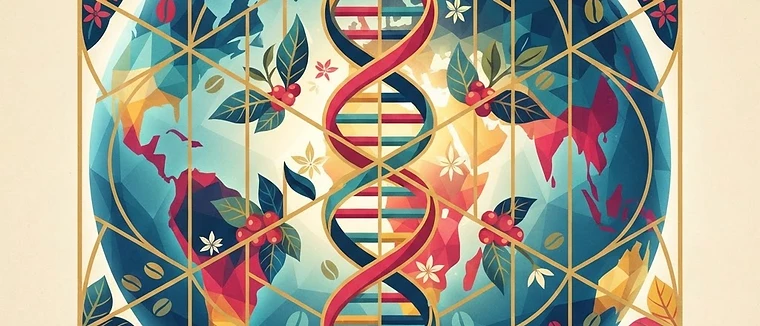
As the climate shifts, the secret to your favorite morning ritual lies in the hidden genetic diversity of forgotten coffee varieties.
As global temperatures rise, researchers are looking into the 'genetic library' of wild and heirloom coffee varieties to breed plants that are both climate-resilient and high-quality. This matters because it ensures that remains a sustainable crop for farmers and an affordable, delicious reality for you, avoiding a future of limited options or poor-quality harvests.
In the quiet corners of research stations across East Africa and Latin America, agronomists are essentially playing the role of high-stakes librarians. They are cataloging thousands of coffee strains—many of which have been sitting in the wild for centuries—to identify genes that can withstand drought, excessive heat, and the ever-shifting path of pests like the coffee berry borer.
Coffee plants are notoriously sensitive. The two most common commercial species, Arabica and Robusta, occupy narrow comfort zones. By diving into the 'genetic library' of these plants, scientists aren't just looking for survival; they are hunting for a rare intersection: the ability to endure stress without sacrificing the delicate aromatic oils that define a great cup.
Who decides which plants survive? Increasingly, it is a collaborative effort between dedicated botanists and the farmers themselves. Farmers have historically been the original curators of these varieties, selecting 'heirloom' types—naturally occurring coffee plants native to a region—based on the cup quality they observed year after year. Today, scientific organizations like World Coffee Research are formalizing this process.
By identifying robust genes in heirloom varieties, these experts are helping farmers move away from monocultures—fields dominated by a single, fragile plant type—and toward biodiverse farms that can absorb the shock of a bad season.
To understand the future, we have to grasp the vocabulary of the past. A 'variety' refers to a specific type of coffee plant within a species, often naturally occurring, while a 'cultivar' is a plant selected or bred by humans for specific traits. The future of coffee lies in blending these categories.
Scientists are now utilizing F1 Hybrids, which are the first-generation offspring of two genetically distinct parents. These plants are designed to be 'super-performers,' taking the best qualities of each parent—perhaps the intense, floral aromatics of a wild Ethiopian landrace and the hardiness of a robust highland cultivar—to create a plant that is ready for the unpredictable climate of the next fifty years.
You might worry that 'climate-resilient' coffee will taste like lab-grown compromise, but the trend is actually toward greater diversity in flavor. As we move away from global dependence on just a few varieties, the genetic library is opening the door to rare profiles that were once too difficult to grow commercially.
The shift isn't just about saving coffee; it's about expanding the palate of the average drinker. When we integrate these diverse genetic strands into modern farming, we aren't just avoiding a shortage—we are securing a future where you have access to a wider spectrum of sweetness, acidity, and body than ever before.
No directly verifiable external source links are recorded for this story. Its research claims require further verification.
Explore documented coffee differences, then choose a brewing method. Related profiles are research connections, not proof that we tasted each coffee.
Understand bag sizes, cost per brew and documented coffee differences before judging value.
Follow documented origins to farms and the people behind the coffee. A profile is distinct from an original interview.
Separate tasting vocabulary from processing claims, then explore coffee profiles and brewing methods.
Learn something new, follow the people behind your cup, or explore by flavor and tags.