Worth the Price?
Understand bag sizes, cost per brew and documented coffee differences before judging value.
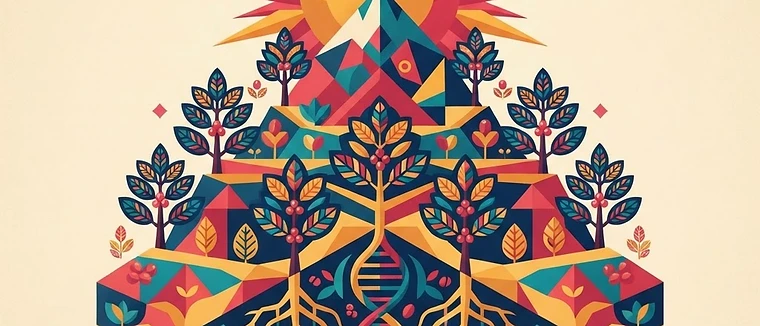
As climate change threatens the future of our favorite brew, a global scientific race is underway to breed the next generation of resilient coffee trees.
Climate change is making traditional coffee farming increasingly difficult, threatening both supply and farmer livelihoods. Scientists are now using advanced breeding techniques and genetic mapping to create new coffee varieties that can withstand heat, drought, and disease while maintaining the high quality we expect in our cups.
For most of us, coffee is a constant. But behind the scenes, the coffee industry is facing a massive challenge. Rising temperatures, unpredictable rainfall, and the spread of pests like coffee leaf rust—a fungus that can devastate entire plantations—are putting the world's coffee supply at risk. While there are over 120 species of coffee in existence, the global market relies heavily on just two: Arabica and Robusta.
Arabica, prized for its complex flavor, is notoriously sensitive to environmental shifts. Robusta, often viewed as the hardier sibling, has also been subject to recent scrutiny; new research suggests that the long-held belief in its inherent climate resilience may be more of an 'internet myth' than a biological certainty. This leaves the industry in a precarious position, necessitating a rapid evolution in how we approach coffee agriculture.
To combat these threats, organizations like World Coffee Research are spearheading the Innovea Global Coffee Breeding Network. This initiative unites coffee-producing countries to share data, tools, and expertise. The goal is to create a continuous pipeline of new coffee varieties that are tailored to local needs but capable of thriving in a changing global climate.
One of the most promising tools in this effort is the development of F1 hybrids. These are created by crossing two distinct parent plants to produce offspring that exhibit 'hybrid vigor'—a phenomenon where the new plant is more productive, resilient, and adaptable than either parent. Crucially, these are not genetically modified organisms (GMOs); they are the result of classic, manual plant breeding techniques.
Modern science is also looking inward at the coffee genome itself. By mapping the genetic code of Arabica, researchers are identifying specific markers responsible for desirable traits like disease resistance and heat tolerance. Think of it like a high-quality map of a city; it allows scientists to pinpoint exactly which genes to focus on when breeding new plants.
Companies and research institutions are leveraging data science and artificial intelligence to accelerate this process. Startups like Amatera are pushing the boundaries of in vitro culture—growing plant cells in a controlled laboratory environment—to speed up the selection and crossing of plants. This is a significant shift from traditional methods, which could take over 20 years to bring a single new variety to market.
The responsibility for this transition is shared. While large corporations like Starbucks have invested in developing and distributing climate-resistant varietals to farmers for free, the real work happens in the field. National coffee institutes and smallholder farmers are the ones who must adopt these new varieties and integrate them into their existing systems.
The ultimate goal is to move away from a reliance on a narrow genetic base. By fostering greater genetic diversity and utilizing wild coffee species that have evolved in harsh environments, scientists hope to build a more robust foundation for the future of coffee. It is a race against time, but one that is being run with the most advanced tools in agricultural history.
No directly verifiable external source links are recorded for this story. Its research claims require further verification.
Explore documented coffee differences, then choose a brewing method. Related profiles are research connections, not proof that we tasted each coffee.
Understand bag sizes, cost per brew and documented coffee differences before judging value.
Follow documented origins to farms and the people behind the coffee. A profile is distinct from an original interview.
Separate tasting vocabulary from processing claims, then explore coffee profiles and brewing methods.
Learn something new, follow the people behind your cup, or explore by flavor and tags.