Worth the Price?
Understand bag sizes, cost per brew and documented coffee differences before judging value.
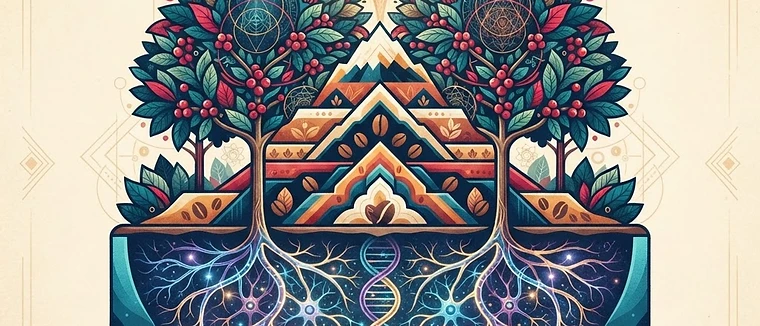
As climate change and persistent fungal diseases threaten the world's coffee supply, a new generation of 'super-trees' is being engineered to survive the heat and the blight.
Coffee scientists are using advanced genetic mapping to create new, resilient coffee varieties that can withstand devastating diseases like coffee leaf rust. For the average drinker, this means that the you love will remain available and affordable even as the climate becomes more challenging for farmers.
For decades, the coffee industry has been locked in an arms race against Hemileia vastatrix, better known as coffee leaf rust. This fungal pathogen is the most devastating biotic stress to Coffea arabica globally, capable of causing yield losses between 35% and 50% in regions like Brazil. Because the fungus constantly evolves into new races, traditional breeding methods—which can take years to yield results—have struggled to keep pace.
The stakes are immense. In Rwanda alone, 350,000 smallholder households rely on coffee for their livelihoods, yet nearly 40% of the country's coffee trees are over 30 years old and increasingly vulnerable to both rust and coffee berry disease. Without a shift in how we develop new plants, the market risks losing the very varieties that define its flavor profiles.
The era of 'trial and error' in coffee breeding is rapidly coming to a close. Today, researchers are utilizing high-throughput genetic markers and whole-genome sequencing to identify specific traits within the coffee plant's DNA. This allows scientists to pinpoint genes responsible for disease resistance and climate adaptability with unprecedented speed.
A groundbreaking 2025 study published in the journal Plants highlights this shift. Researchers successfully developed a population of coffee plants through artificial crossing that 'pyramided'—or stacked—five different resistance genes into a single genotype. The result? Plants that showed 100% resistance to leaf miner and 90% resistance to cercospora, proving that we can engineer plants with multiple layers of defense.
Who is leading this charge? Collaborative efforts like the Innovea Global Breeding Network, recognized as a TIME Best Invention of 2025, are uniting researchers across 11 countries. By sharing genetic resources and data, these institutions are moving away from a 'nation-centric' approach to a global, pre-competitive model.
This network is currently working to make breeding faster and cheaper by developing low-cost genetic markers for coffee leaf rust. By standardizing these tools, countries like Vietnam, Ghana, Peru, and Honduras can accelerate the distribution of healthy, resilient seedlings to their local farmers, ensuring that the benefits of modern science reach the field level.
While genetic engineering offers a powerful shield, it is not a silver bullet. Climate change is a complex, multi-faceted threat. Recent modeling studies, such as those using the G-DynACof framework, suggest that while new varieties are essential, they must be paired with smart agronomic management. For instance, the effectiveness of shade-grown coffee as a climate adaptation strategy remains a subject of intense study, as its impact on productivity varies significantly by region.
Ultimately, the future of your morning cup depends on a delicate balance. It requires the marriage of high-tech genomic research with the practical, on-the-ground knowledge of farmers who understand their specific microclimates. As we look toward 2030 and beyond, the goal is to provide farmers with a 'toolbox' of varieties that are not only resistant to disease but also capable of producing the high-quality cup profiles that consumers demand.
No directly verifiable external source links are recorded for this story. Its research claims require further verification.
Explore documented coffee differences, then choose a brewing method. Related profiles are research connections, not proof that we tasted each coffee.
Understand bag sizes, cost per brew and documented coffee differences before judging value.
Follow documented origins to farms and the people behind the coffee. A profile is distinct from an original interview.
Separate tasting vocabulary from processing claims, then explore coffee profiles and brewing methods.
Learn something new, follow the people behind your cup, or explore by flavor and tags.