Brazil component
- Country:
- Brazil
- Region:
- Cerrado Minas
- Farm / station:
- Lacador
- Research note:
- Current official Monaco product page; proportion not published.

A smooth, chocolaty blend that is pleasant and dependable without ever getting exciting. Milk chocolate leads, the black cherry stays in the background, and the graham cracker note shows up more as texture than flavor. A good everyday bag, not a memorable one.
This coffee combines separately grown lots. A producer named for one component is not the grower of the entire blend. Current official product page identifies components from Brazil (Cerrado Minas/Lacador), Colombia (Sierra Nevada/Asoprokan), Mexico (Huatusco/La Laja), and Ethiopia (Sidamo/Moredocofe); proportions are not published.
A blend contains several origin chains, not one farmer or country. The component records above show each documented origin; undisclosed details stay undisclosed.
The coffee is sourced from a selection of specialty Arabica beans grown across Latin American and East African regions.
La Colombe is a coffee roaster focused on sourcing specialty-grade beans and utilizing precise roasting techniques to highlight distinct flavor profiles. They emphasize freshness and offer a wide range of blends and single-origin coffees for various brewing preferences.
The name Monaco is derived from the Greek word for 'single house,' reflecting the roaster's intent for this to be a versatile, go-to coffee for home brewing. It is specifically crafted to bridge the gap between traditional chocolatey profiles and brighter, fruit-forward expressions.
Monaco opens exactly the way the box promises: smooth and chocolaty. The body is round and medium, the acidity is polite, and the first cup tastes like milk chocolate with a quiet dark edge underneath. It is a very easy coffee to drink and a very easy coffee to describe, and that is both its charm and its ceiling. Nothing about the first sip surprised us.
The bag lists milk chocolate, graham cracker and black cherry, and the cup split the difference. Milk chocolate is clearly the star and it holds through the whole cup. The black cherry is there if you go looking, a faint dark fruit note near the finish, but it never steps forward. The graham cracker reads mostly as a toasty, slightly sweet graininess in the middle rather than a distinct flavor. As the cup cooled the chocolate deepened and the fruit faded, which told us this blend is built for comfort and consistency, not for the glass. We brewed it as drip and as espresso, and espresso suited it best: the chocolate got denser and the cup felt more finished.
The back of the box says Monaco is named for the Principality of Monaco, a small place with a huge historical impact, and that it fulfills the chocolatey tradition of coffee while verging into fruit flavors. It also tells the La Colombe story, from its beginnings in a Philadelphia cafe to the roasting and packaging that still happens in Philadelphia, PA 19134. What the box never tells you is what is actually in the blend: no farms, no producers, no countries, not even a hint of component origins. It is a smooth story about a brand wrapping a blank space, and we marked all of those details as undisclosed rather than guess.
This is the bag for the espresso drinker who wants a chocolaty, low drama shot every morning, and for drip drinkers who like their coffee smooth and middle of the road. It is forgiving, widely available and consistent. If you want distinct fruit, farm level traceability or a story you can trace to a farmer, this blend will disappoint on all three. 3.8 stars, earned.
Monaco is at its best as espresso: start at a 1 to 2 ratio in about 30 seconds and expect a dense, chocolaty shot. As drip it is smooth and easy, though the cherry note mostly disappears. Let the beans rest a few days after roasting for the best balance.
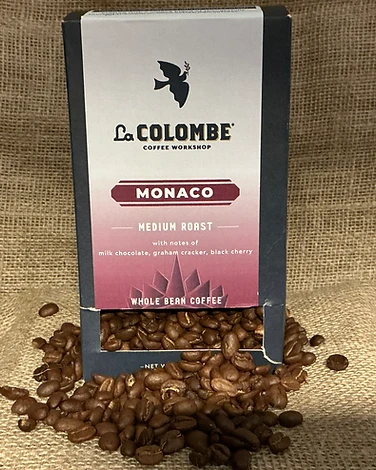
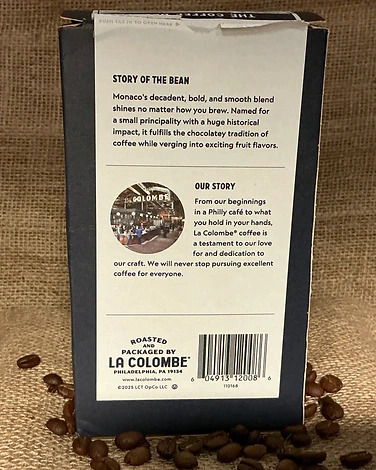

Editorial illustration

Editorial illustration
Our research pipeline scanned public reviews, videos, forums and discussions for this coffee (last pass 2026-10-25) and found no independent review of this exact release that meets our verification standards. When qualifying sources appear, they'll be published here.
Non-exact, seller, directory, generic-roaster, different-release, duplicate, and older-release sources were excluded. No qualifying independent exact-release review remains.
Until then, meet the people behind it:
Learn something new, follow the people behind your cup, or explore by flavor and tags.

