
4.5
🇲🇲Myanmar
Myanmar · Shan Plateau
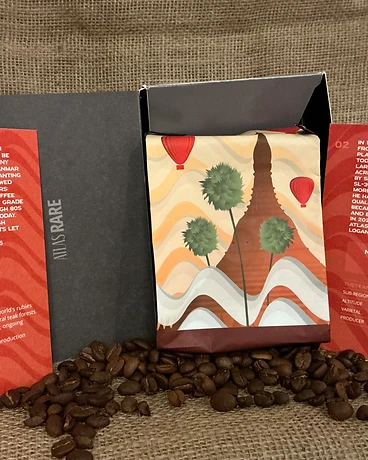
Myanmar — Atlas Rare
U Sai Wan Maing
Green Land Coffee Estate
SL28· Washed
Read the review →SL28 is an iconic Arabica variety selected in 1935 by Scott Agricultural Laboratories in Kenya from a drought-tolerant population originally discovered in the Moduli district of Tanganyika (modern-day Tanzania). Often described as a Bourbon selection or hybrid, the plant is characterized by its tall, open-branching stature, broad leaves, and bronze-tipped foliage. While the variety is highly valued for its deep root system and remarkable drought tolerance, it remains susceptible to coffee leaf rust and coffee berry disease, leading many modern producers to supplement it with more resistant cultivars. In the cup, SL28 is world-renowned for its intense, complex profile, typically featuring bright citrus and blackcurrant acidity, wine-like structure, and deep berry notes. Its enduring popularity among both producers and drinkers stems from this exceptional cup quality, which has defined the standard for Kenyan coffee for nearly a century.
SL28 was selected in 1935 by Scott Agricultural Laboratories in Kenya from a single tree within a population known as Tanganyika Drought Resistant. The parent material was originally identified in 1931 by A.D. Trench in the Moduli district of Tanzania for its apparent tolerance to drought and pests. This selection became the prize of the laboratory's breeding program during the 1930s and is genetically related to the Bourbon group.
Intense blackcurrant, citrus and wine-like acidity — one of the most distinctive flavor signatures in coffee.
Tall trees with broad leaves; adapts to dry conditions remarkably well.
Kenya's auction prices reward quality — and SL28 produces Kenya's signature cup.
Editorial record last reviewed: . Sources document specific claims, not guarantees about every coffee sold under this variety name.
 Editorial illustration


 Editorial illustration
 Editorial illustration


 Editorial illustration
 Editorial illustration

 Editorial illustration
 Editorial illustration


 Editorial illustration


 Editorial illustration
Learn something new, follow the people behind your cup, or explore by flavor and tags.


