Worth the Price?
Understand bag sizes, cost per brew and documented coffee differences before judging value.
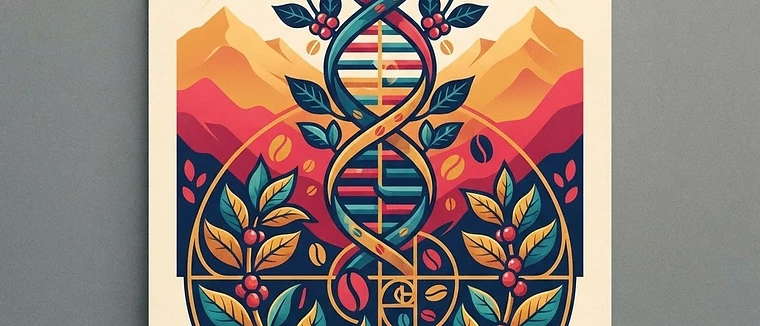
As the climate shifts, the very DNA of the coffee in your cup is undergoing a transformation to ensure it survives the next century.
Climate change threatens the traditional Arabica coffee plant, which requires specific, stable temperatures to thrive. Scientists and breeders are now working to develop resilient hybrids that maintain high-quality flavor while standing up to heat, drought, and disease, ensuring that coffee remains a viable crop for future generations.
Most of the coffee consumed globally comes from the species Coffea arabica. While celebrated for its complex flavor profile, it is notoriously finicky. It requires precise conditions, generally found in high- tropical climates, to produce the seeds we grind for our daily brew. This specific niche makes it highly vulnerable to rising temperatures and erratic rainfall.
For decades, farmers have relied on a relatively narrow genetic base. When one variety encounters a persistent threat—like coffee leaf rust or prolonged drought—an entire regional economy can be jeopardized. The future of coffee security lies in diversifying this genetic makeup.
Plant breeding in coffee is a slow, methodical science. Unlike annual crops that can be tweaked in a few seasons, coffee is a tree that takes several years to reach maturity. Breeders are currently focused on identifying 'traits of interest,' such as heat tolerance or disease resistance, found in wild coffee relatives or older, hardier varieties.
Researchers are using advanced genomic mapping to accelerate the selection process. By identifying the specific genes that allow a plant to handle water stress, scientists can 'breed' those traits into high-quality cup varieties without sacrificing the sensory characteristics that lovers demand.
One of the most promising avenues in the future of coffee agriculture is the use of F1 hybrids. These are the first-generation offspring of two genetically distinct parents. When crossed correctly, these plants display 'hybrid vigor,' meaning they are often more robust, higher-yielding, and better adapted to changing environments than their parents.
Who decides which varieties get planted? It is a collaborative dance between international research organizations like World Coffee Research and local producers. Producers must weigh the long-term sustainability of a new variety against the immediate demands of the market for specific flavor profiles.
The future also involves preserving the genetic library of wild coffee species, particularly from Ethiopia, the plant’s birthplace. These wild populations contain an untapped wealth of genetic information—some of which might hold the secret to surviving a warming planet.
Protecting these wild stands is an urgent priority. By integrating these unique genetic sequences into commercial breeding programs, the industry is creating a diversified 'insurance policy' that keeps coffee farms productive despite the increasing uncertainty of the global climate.
No directly verifiable external source links are recorded for this story. Its research claims require further verification.
Explore documented coffee differences, then choose a brewing method. Related profiles are research connections, not proof that we tasted each coffee.
Understand bag sizes, cost per brew and documented coffee differences before judging value.
Follow documented origins to farms and the people behind the coffee. A profile is distinct from an original interview.
Separate tasting vocabulary from processing claims, then explore coffee profiles and brewing methods.
Learn something new, follow the people behind your cup, or explore by flavor and tags.