Worth the Price?
Understand bag sizes, cost per brew and documented coffee differences before judging value.
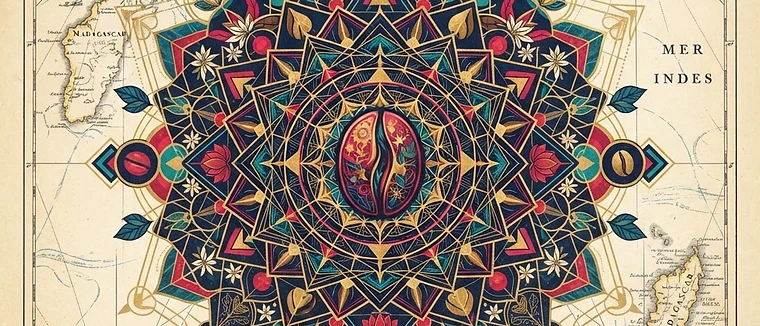
Tracing the path of the world's most beloved coffee variety reveals a tale of accidental mutation, colonial botany, and the enduring quest for the perfect cup.
Bourbon is a descendant of the original Typica variety and is revered for its exceptional sweetness and balanced acidity. Understanding its history helps drinkers appreciate why this specific lineage forms the backbone of production globally today.
The story begins on the remote island of Bourbon, now known as Réunion, located in the Indian Ocean east of Madagascar. In the early 18th century, the French established coffee plantations there, importing plants from Yemen. This isolated environment acted as a natural laboratory, where the plants evolved distinctly from their mainland African ancestors.
It was here that a natural mutation occurred, leading to the plant now known globally as Bourbon. This variety proved to be more productive and robust than the original stock, catching the eye of colonial botanists who soon began spreading the seedlings to other tropical French colonies in the Americas and beyond.
Why do enthusiasts obsess over Bourbon? Unlike its progenitor, the Typica variety, which often requires very specific conditions, Bourbon is celebrated for its versatility and its signature cup profile. It is frequently noted for a medium-to-heavy body and an inherent sweetness that can range from chocolatey to fruit-forward, depending on where it is grown.
Because it is a 'parent' variety, many other cultivars—such as , Pacas, and even modern hybrids like Catuaí—have Bourbon in their genetic makeup. When you drink a cup that tastes deeply sweet or syrupy, you are often tasting the enduring legacy of this specific botanical branch.
As farmers sought to increase yields and combat disease, they began selecting specific 'color mutations' of the Bourbon plant. This led to the emergence of variations like Yellow Bourbon and the highly sought-after . These aren't just aesthetic differences; the color of the cherry skin often hints at subtle differences in ripening speed and sugar concentration.
Farmers in regions like the Colombian Coffee Axis have embraced these variations to distinguish their output in a crowded market. By isolating and nurturing these mutations, they have essentially created a library of flavor profiles that were all born from that single, accidental mutation on a remote island centuries ago.
It is common for drinkers to confuse Bourbon with its descendants. A pure Bourbon plant tends to have relatively low yields compared to modern, lab-bred cultivars, but it compensates with higher cup quality. This 'quality over quantity' trade-off is why it remains a staple for specialty growers.
When browsing a menu, keep an eye out for terms like 'Red Bourbon' (the standard) versus newer, niche selections. While they share the same DNA, the —the specific combination of soil, climate, and —will always ensure that no two Bourbon crops taste exactly the same.
Today, the survival of the Bourbon lineage is a central concern for agriculturalists. Because traditional Bourbon is more susceptible to pests like Coffee Leaf Rust, scientists are working on breeding programs that retain the plant's legendary flavor while introducing stronger resistance.
The goal is not to replace the classic Bourbon, but to ensure that the genetic characteristics we love remain available to future generations of coffee drinkers. It is a balancing act between protecting history and embracing the scientific reality of a warming planet.
No directly verifiable external source links are recorded for this story. Its research claims require further verification.
Explore documented coffee differences, then choose a brewing method. Related profiles are research connections, not proof that we tasted each coffee.
Understand bag sizes, cost per brew and documented coffee differences before judging value.
Follow documented origins to farms and the people behind the coffee. A profile is distinct from an original interview.
Separate tasting vocabulary from processing claims, then explore coffee profiles and brewing methods.
Learn something new, follow the people behind your cup, or explore by flavor and tags.