Worth the Price?
Understand bag sizes, cost per brew and documented coffee differences before judging value.
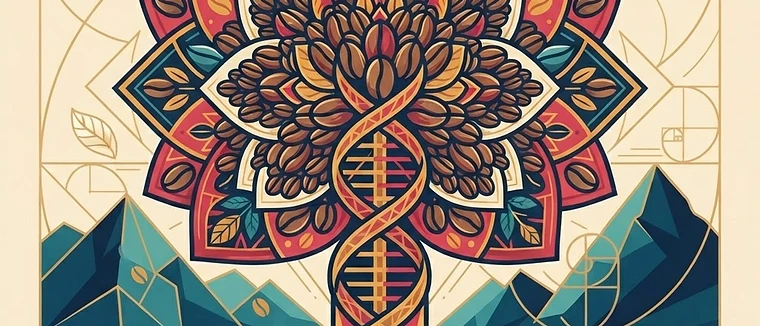
The coffee you drink tomorrow will likely be born from a high-tech game of botanical chess that is currently unfolding in nurseries across the tropics.
As climate change threatens traditional coffee regions, plant scientists are using advanced breeding techniques to develop varieties that are both resistant to disease and delicious. By understanding the genetic potential of wild coffee, the industry is shifting from relying on a few vulnerable plants to a diverse, resilient future that secures both supply and flavor quality.
For decades, the global market has relied on a remarkably narrow genetic pool. Many of the most celebrated coffees, such as Bourbon or , belong to the Arabica species, which is famously susceptible to rising temperatures and a fungal disease known as coffee leaf rust. Because most of these plants share a common ancestry, a single pathogen or weather extreme can threaten entire regions.
The future of coffee isn't just about discovery; it is about intentional design. Scientists and farmers are no longer waiting for nature to provide the next breakthrough. They are actively hunting for wild relatives in remote forests that hold secrets to heat tolerance, drought resistance, and improved cup profiles.
Traditional breeding is a slow, multi-generational process that can take decades to bear fruit. However, today's breeders are utilizing molecular markers—a kind of genetic shorthand—to identify desirable traits in seedlings almost immediately. Instead of waiting for a tree to mature to see if it produces high-quality beans, researchers can now scan the DNA to see if the plant possesses the genes for disease resistance and flavor complexity.
This shift empowers the producer. By selecting varieties like Starmaya or modern hybrids, farmers can cultivate plants that require fewer chemical inputs, directly impacting both the economics of the farm and the long-term health of the surrounding ecosystem.
While geneticists work in high-tech laboratories, the real testing ground remains the farm. The 'Who' in this narrative is the partnership between agricultural researchers and the farmers who actually grow the plants. These producers are essentially conducting decentralized trials, observing how new hybrids adapt to unique microclimates and soil conditions.
This bottom-up approach ensures that coffee development remains grounded in reality. It is a transition from high-yield, low-resiliency monocultures toward a future where diversity is the primary shield against climate instability.
Critics once feared that breeding for resistance would result in bland, uninspiring coffee. Fortunately, the opposite is proving true. Many new hybrid varieties are being crossed with legendary flavor progenitors, such as Ethiopian landraces, to ensure that the coffee of the future retains the floral, fruity, and acidic notes that consumers value today.
As we look toward the next twenty years, the coffee in your cup will be the result of a scientific collaboration that prioritizes flavor as much as viability. It is a convergence of botany and craft, ensuring that our daily rituals remain possible even as the world around them changes.
No directly verifiable external source links are recorded for this story. Its research claims require further verification.
Explore documented coffee differences, then choose a brewing method. Related profiles are research connections, not proof that we tasted each coffee.
Understand bag sizes, cost per brew and documented coffee differences before judging value.
Follow documented origins to farms and the people behind the coffee. A profile is distinct from an original interview.
Separate tasting vocabulary from processing claims, then explore coffee profiles and brewing methods.
Learn something new, follow the people behind your cup, or explore by flavor and tags.