Species · genetics
Learn what's inside the bean
Arabica, Robusta, Gesha—or a blend?
Learn species and varieties before comparing individual coffee profiles. A label alone cannot prove a lot's genetic identity.
10 pages on this site carry this tag — reviews, profiles, answers and stories. Tags are derived from our documented data, never invented.
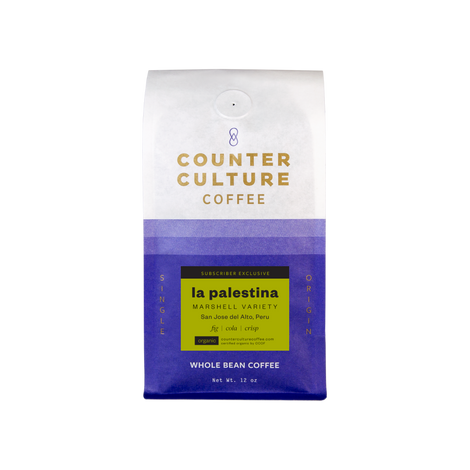
Marshell is a rare coffee cultivar discovered in the Cajamarca region of Peru in 1997, noted for its exceptional cup quality and resilience. It is significant in specialty coffee for its ability to produce high-scoring, competition-winning lots while demonstrating notable resistance to local plant diseases.
Research entry updated 2026-10-06 · not source-audited · 2 sources
The Marshell variety represents a compelling, albeit scientifically complex, chapter in contemporary coffee agriculture. First identified in 1997 on the farm of Grimanés Morales Lizana in San Ignacio, Cajamarca, Peru, the plant gained prominence after surviving an outbreak of 'ojo de pollo' (Cercospora coffeicola) that decimated surrounding crops. This initial observation of resilience, combined with its distinct physical appearance, established Marshell as a variety of interest for producers seeking both quality and durability in the field.
The genetic lineage of Marshell remains a subject of ongoing investigation and debate within the industry. The most widely cited theory suggests that Marshell is a natural mutation of the Bourbon cultivar, a conclusion drawn from shared visual characteristics. However, this classification is not universally accepted. Because Bourbon is a traditional variety, its mutation would typically result in a plant with similar genetic markers, yet the observed hardiness of Marshell has led some researchers and roasters to question this lineage.
Alternative hypotheses suggest that Marshell may possess a more complex genetic background, potentially involving the Timor Hybrid. Some private genetic testing commissioned by roasters has identified samples of Marshell as a rare form of Catimor, a group known for its introgression of Robusta DNA to provide rust resistance. This discrepancy between the 'Bourbon mutation' theory and the 'Catimor-related' findings highlights the challenges of identifying specific cultivars in the field without rigorous, standardized genomic sequencing.
In the field, Marshell is characterized by its ability to thrive in the specific microclimates of the Peruvian highlands. Its reputation for disease resistance—specifically its survival during the aforementioned fungal outbreaks—makes it a valuable asset for farmers operating in regions where chemical intervention is limited or undesirable. For the producer, the choice to cultivate Marshell is often driven by the balance between its agricultural robustness and its potential for high-value market performance.
From a sensory perspective, Marshell is highly regarded by roasters and consumers for its sophisticated cup profile. It has demonstrated the ability to compete at the highest levels of specialty coffee, most notably winning the Cup of Excellence in Peru in 2019 with a score of 92.28. In that instance, it outperformed established, high-prestige varieties like Geisha and Catuai, cementing its status as a 'hidden gem' capable of producing complex, high-scoring coffees that appeal to discerning palates.
For the drinker, Marshell offers a unique experience that bridges the gap between traditional heirloom flavors and the performance-oriented characteristics of modern hybrids. Its success in competition has driven increased interest among specialty roasters, who value the variety for its distinct aromatic profile and the narrative of its discovery in the remote mountains of Peru. As more data is collected, the industry continues to refine its understanding of whether Marshell is a singular, stable mutation or a broader category of regional hybrids.
Ultimately, the story of Marshell serves as a case study in the evolution of coffee varieties. It illustrates how a single, resilient plant discovered by a producer can transition from a local anomaly to a recognized, high-value cultivar. While its exact genetic origins remain somewhat murky, its impact on the specialty market is clear, providing a tangible example of how biodiversity at the farm level can lead to exceptional outcomes in the cup.
This topic connects to broader guides. Follow the sequence, or return to the complete TAG directory to explore other subjects.
Arabica, Robusta, Gesha—or a blend?
Learn species and varieties before comparing individual coffee profiles. A label alone cannot prove a lot's genetic identity.
Learn something new, follow the people behind your cup, or explore by flavor and tags.