
🇪🇹Ethiopia
30 pages on this site carry this tag — reviews, profiles, answers and stories. Tags are derived from our documented data, never invented.
Ethiopian landraces are indigenous coffee varieties that have evolved naturally within Ethiopia's forests, representing the primary source of the world's Arabica genetic diversity. They are essential to the coffee industry because they offer unique, complex flavor profiles and a vast, largely untapped reservoir of genetic traits that are critical for future climate resilience and disease resistance.
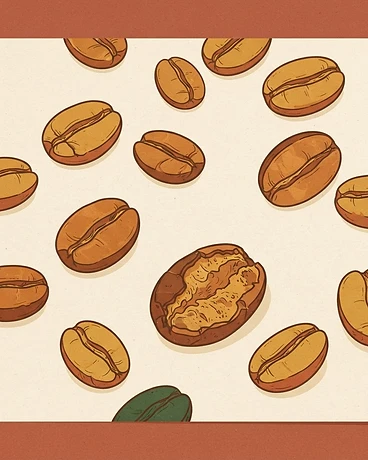
Ethiopian landraces represent the ancestral foundation of all Coffea arabica. As the center of origin and diversity for the species, Ethiopia is home to an estimated six to ten thousand distinct varieties that have developed through centuries of natural selection within the country's diverse mountainous forest ecosystems. Unlike commercial cultivars developed through controlled breeding programs, landraces are shaped by environmental heterogeneity and local adaptation, resulting in a level of genetic variability that is unmatched anywhere else in the coffee-producing world.
In the field, these plants exist as a complex mosaic of genetic material. While the terms 'landrace' and 'heirloom' are frequently used interchangeably in the specialty coffee trade, they describe slightly different phenomena. Landraces are typically wild or semi-wild populations that have adapted to specific local microclimates, whereas heirlooms often refer to varieties that have been traditionally cultivated and passed down through generations by local farmers. Both categories are characterized by their high genetic diversity, which stands in stark contrast to the narrow genetic base of global commercial varieties like Bourbon or Typica.
For the producer, these varieties are both a heritage and a challenge. Because many landraces remain unclassified and genetically diverse, they do not always exhibit the uniform growth patterns or predictable yields associated with modern, lab-developed hybrids. However, this diversity is a vital asset for long-term sustainability. As climate change and pathogens like coffee leaf rust threaten global production, the genetic traits found within Ethiopian landraces—such as drought tolerance or specific disease resistance—are increasingly viewed as the 'genetic library' necessary to secure the future of the coffee industry.
From a sensory perspective, Ethiopian landraces are celebrated for their extraordinary complexity. They are frequently associated with vibrant, floral, and fruit-forward notes that are distinct from the more muted or chocolate-heavy profiles of other Arabica lineages. Because these coffees are often categorized by their region of origin—such as Yirgacheffe, Sidamo, or Jimma—rather than a specific botanical name, the cup profile is often a reflection of the unique terroir and the specific mix of wild varieties present in that local forest or garden.
In practice, the coffee industry has historically struggled to categorize these plants. The lack of widespread genetic testing has led to the use of 'heirloom' as a catch-all marketing term, which, while helpful for consumer recognition, obscures the true botanical diversity of the region. Recent efforts by organizations like the Ethiopian Institute of Agricultural Research and World Coffee Research are working to bridge this gap by identifying and cataloging specific commercial varieties developed from these landrace populations, such as those released by the Jimma Agricultural Research Center.
Ultimately, the story of the Ethiopian landrace is one of transition from a wild, regional resource to a globally recognized standard of quality. As roasters and consumers move toward greater transparency, the industry is shifting away from generic labels toward a more nuanced understanding of these varieties. By recognizing the value of this genetic diversity, the coffee community is not only celebrating the birthplace of Arabica but also investing in the biological tools required to adapt to an uncertain environmental future.